No products in the cart.


Newsletter
[contact-form-7 id=”4235″ title=”Contact form 1″]

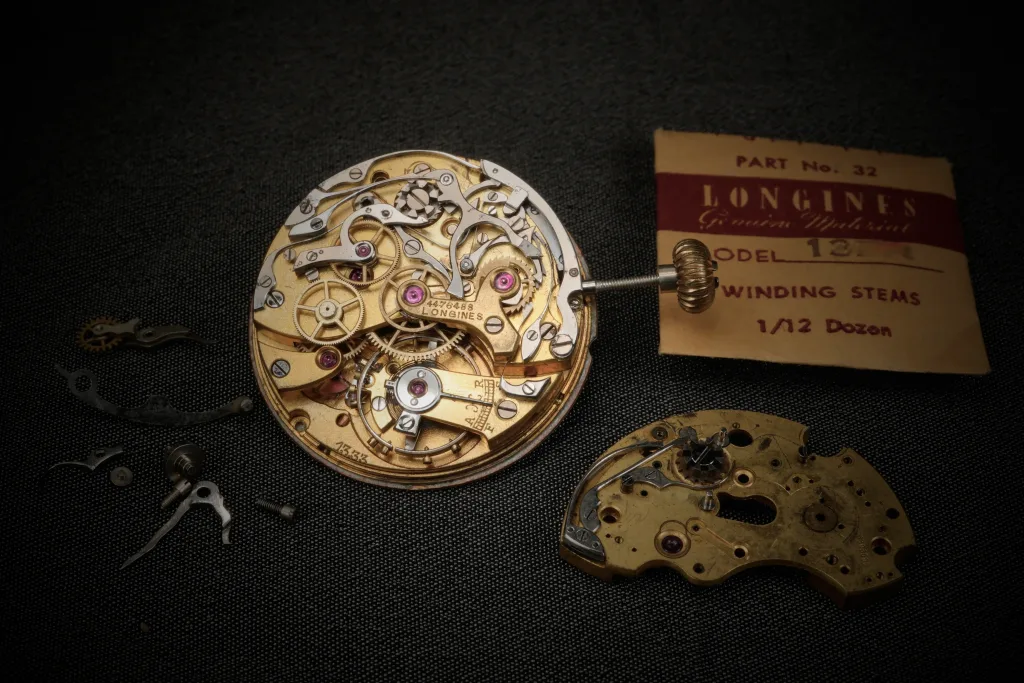
A man walked into our workshop carrying a Rolex Daytona ref. 6239. He wanted to sell it. The watch ran perfectly. It had just come back from Rolex’s official service centre, invoice in hand: CHF 14,000. (at the current exchange approx. 15 k euros / 17.500 US$) He was proud of it. We looked at the watch and the work receipt. Then we told him what Rolex had done with his money.
New case. New dial. New hands. New pushers. New crown. New crystal. The only original component left in the entire watch was the movement — the one part a collector cannot see. On a reference where the market pays a significant premium for untouched originality, Rolex had effectively built him an expensive replica of what he used to own.
Conservative estimate: fifty percent of the value, gone. Permanently. With an official receipt. This is not an isolated incident. It is manufacturer service policy.
Rolex Daytona 6239


When a brand service centre takes in your vintage watch, it does not ask what matters to you as a collector. It applies its own standard — which is an industrial one. The objective is to return the watch to factory specification. Not the configuration that makes the piece desirable to an expert. Cases are regularly (poorly) polished.
Dials Hands, crowns, pushers, crystals are replaced if they show wear. — all treated as consumables. Original components are usually not returned. The service papers document the work done, and what was destroyed in the process.
AUDEMARS PIGUET ROYAL OAK JUMBO AO 5402
Rolex is not alone. As an example, Audemars Piguet runs a dedicated service programme for the Royal Oak ref. 5402ST — one of the most collectable references in the AP catalogue, and one where the difference between an original dial and a service replacement can represent a significant value difference. AP service technicians routinely replace the date disc, crown, hands, and occasionally the dial. These replacements are identifiable to any experienced eye. AP knows this, but they do it anyway.


There is a specific scenario that catches collectors off guard, particularly those sending watches to Switzerland for manufacturer service.
Rolex 1680 ORIGINAL matte dial – HQ Milton
Vintage watches produced before circa 1997 — most collectable Rolex sports references, any earlier producion AP Royal Oak, JLC, IWC, and Universal Genève watches — carry tritium or, in earlier pieces, radium on their dials and hands.Vintage watches produced before circa 1997 — most collectable Rolex sports references, any earlier producion AP Royal Oak, JLC, IWC, and Universal Genève watches — carry tritium or, in earlier pieces, radium on their dials and hands. Rolex 1680 SERVICE dial

Both are (more or less) radioactive. Swiss occupational safety regulations are explicit: watchmakers in authorised service centres are required to replace these components and dispose of them. Rolex has confirmed this policy in writing, and it binds every authorised concessionaire in its network.
Royal Oak 5402ST ORIGINAL dial


The practical consequence is that is you send a pre-1998 Submariner, GMT-Master, or Daytona to Rolex service most ikely the watch comes back with a SuperLuminova service dial.
Royal Oak 5402 SERVICE dial
The original tritium patina — that warm cream-to-ochre ageing that collectors seek and price accordingly — is gone. You do not receive your original dial back. In Rolex’s own classification, the older dial is damaged goods. Collector disagree, sharply, and price the difference accordingly.
Royal Oak 5402 Top – ORIGINAL date disc Watchprosite


There is another dimension to manufacturer service: parts availability for older pieces is increasingly problematic. Rolex guarantees spare parts availability for at least 35 years after a reference is discontinued from the catalogue. Beyond that threshold, support becomes discretionary. In practice, Rolex has now discontinued factory support for the Cal. 1500 series and older — which covers a significant portion of vintage collecting territory.
A watch from the late 1970s or early 1980s that requires local service centre attention may simply be escalated to Rolex’s Restoration Atelier in Geneva — the only facility equipped to handle it — with costs that routinely are eye-watering and turnaround times that can stretch to a year or beyond.
A watch sent in for what appears to be routine service can disappear into a manufacturer’s system for the better part of a year, particularly if the reference is old enough to require specialist handling, parts sourcing, or restoration work rather than standard overhaul.
ROLEX DATE Ref. 1500, 1962 , Cal. 1570
Understanding why manufacturer service takes so long — and costs so much — requires understanding how Rolex has structured its service network. There are three tiers.
Authorised local dealers handle the most current production calibre families: references based on movements such as the Cal. 3135, 3285, and 3200 series can in principle be serviced at the local service point. National service centres handle a wider range of calibres, including older but still-supported movements such as the Cal. 1500, 3035, and 4030 families.
Everything else — anything pre-dating those calibres, like the 1030, 1215, 1161 and 2030 caliber familes requiring parts no longer stocked at national level — goes to Geneva. This escalation is not merely logistical. It reflects a fundamental difference in who is doing the work.
Standard service at dealer is usually done by the retailer`s watchmaker who starts and finishes the job At the national level servicing is organised along production-line principles: each technician performs one defined task — cleaning a specific component, fitting a specific part — and moves to the next watch.
ROLEX 6564 OYSTER PERPETUAL Cal.1030


This way training time is short, the role is easily replaceable, and compensation is structured accordingly.
The Restoration Atelier in Geneva operates on an entirely different model. These are complete watchmakers in the traditional sense: they handle the entire service process from disassembly to regulation, combine hands-on technique with historical research on period-correct components.
They are scarce, well paid and difficult to replace. This is the primary reason restoration work in Geneva carries both a five-figure price tag and a waiting list that can extend beyond a year. This scarcity is structural — and it is not going away.
ROLEX COSMOGRAPH DAYTONA Ref. 6239 II


If you choose manufacturer service — these steps will protect your watch. Put it in writing before the watch is accepted: no parts is to be replaced without prior written authorisation. If a replacement is deemed indispensable, the service centre must contact you first and obtain explicit approval.
Request that any parts removed — dial, hands, crown, pushers — be returned to you rather than disposed of. Not all service centres will agree to this, and some will refuse the job entirely on those terms.
Document the watch thoroughly before it leaves: photographs of the dial, hands, case, and any distinguishing characteristics. Reference and serial. If a dispute arises later over what was original and what was replaced, this documentation is the only evidence you will have. Finally, ask for a written estimate of both cost and timeline before authorising any work. On watches from the 1970s back, both figures can vary considerably depending on what the movement reveals once opened.

A competent independent watchmaker operates from a different premise: preservation over restoration. The movement is serviced without substituting period-correct components. Dials and hands are – if possible – left untouched, stabilised where lume is flaking, or lighly cleaned at best. Cases ultra-sound cleaned and are not polished unless requested.

The watch that leaves the bench is mechanically sound and aesthetically intact — which is a combination manufacturer service cannot consistently deliver on vintage pieces.
Before authorising any independent service, consider these three questions.
What is the watchmaker’s policy on dial and hand replacement?
Do they photograph the watch in full before disassembly?
Have they worked on this specific reference before?
The answers tell you more than any certification.
Not every manufacturer service is a story of destruction. Patek Philippe operates on a materially different philosophy — and for a collector, that difference matters. The first thing to understand is that escape from the official service network is considerably harder with Patek than with Rolex. This is not a policy decision so much as a practical one: Patek Philippe movements use proprietary components that are more difficult to source on the open market. An independent watchmaker working on a vintage Calatrava or a perpetual calendar has a limited access to genuine parts, which limits what can be done and, critically, what can be replaced if something is worn beyond serviceability. For serious complications especially, the official service route is often the only viable one.

The good news is that Patek approaches vintage pieces with considerably more sensitivity than the industry norm. The brand’s stated service philosophy on vintage watches — those typically over 45 years old, handled by the restoration atelier in Geneva — is preservation of original condition, technically and aesthetically. In practice, this means original dials are treated as untouchable unless structurally compromised. Hands are a different matter: if worn, corroded, or out of specification, Patek will replace them — but replacement hands on a Patek service are period-correct in form and finish in a way that, for example, Rolex service hands are not. Where the hands are original and intact, they stay. Case polishing and dial refinishing are listed in Patek’s own documentation as optional, not default — a meaningful distinction from the Rolex approach. Mechanical service — disassembly, cleaning, lubrication, regulation — is mandatory. Pricing is steep by any absolute measure, but broadly proportional to what the brand represent. A full service on a time-only reference runs significantly less than the equivalent Rolex job on a comparable complication, and the transparency of the process — written estimate, customer
approval before any work begins, itemised invoice — reflects a house that understands its clientele.

For a collector who has no alternative to manufacturer service, Patek is the least damaging major brand to deal with. That is not faint praise in this context. It is simply the most accurate thing that can be said.For a collector who has no alternative to manufacturer service, Patek is the least damaging major brand to deal with. That is not faint praise in this context. It is simply the most accurate thing that can be said.

[contact-form-7 id=”4235″ title=”Contact form 1″]