No products in the cart.

Newsletter
[contact-form-7 id=”4235″ title=”Contact form 1″]


In 1989, François-Paul Journe left his one-man workshop in the Saint-Germain-des-Prés quarter of Paris and moved to Sainte-Croix, a small town in the Swiss Jura known for its concentration of movement makers and automaton workshops.

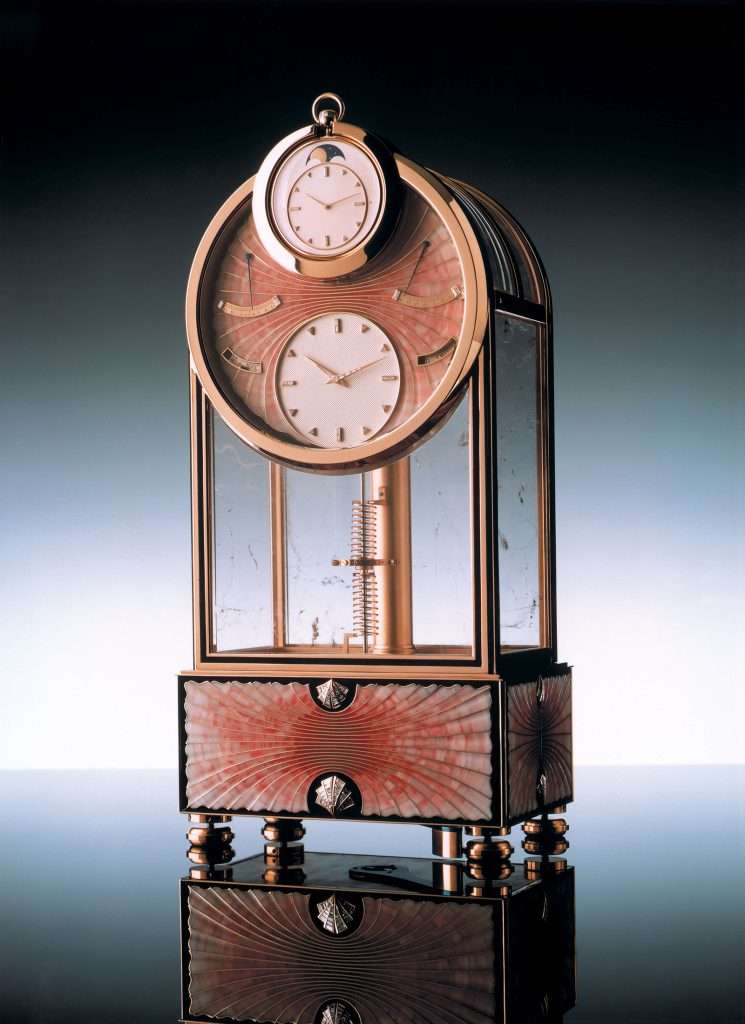
He had been manufacturing complicated watches alone since his early twenties — pocket tourbillons, chronometers, a planetarium — but he had reached the limits of what a single pair of hands could produce. The immediate catalyst was a commission from John Asprey to produce a series of Sympathique clocks: elaborate table clocks, based on an Abraham-Louis Breguet concept, that could wind, set, and regulate a docked wristwatch.
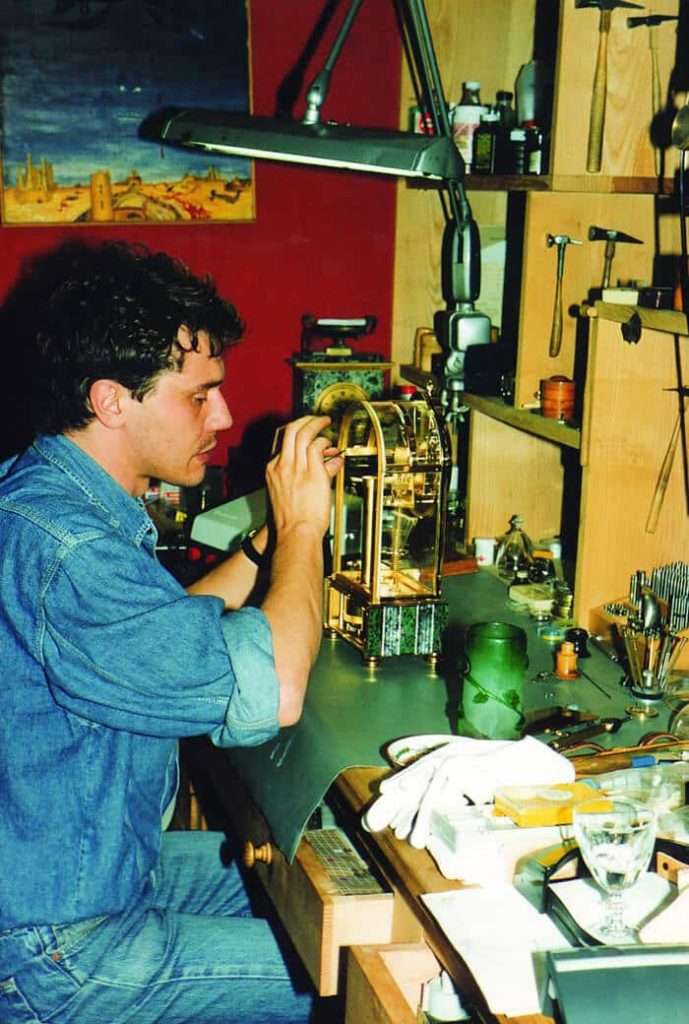
Journe early years. Escapement magazine
Journe had already built three for Asprey in Paris. He believed there were enough clients for a commercial series, but producing them alone was, as he later put it, “risky.”
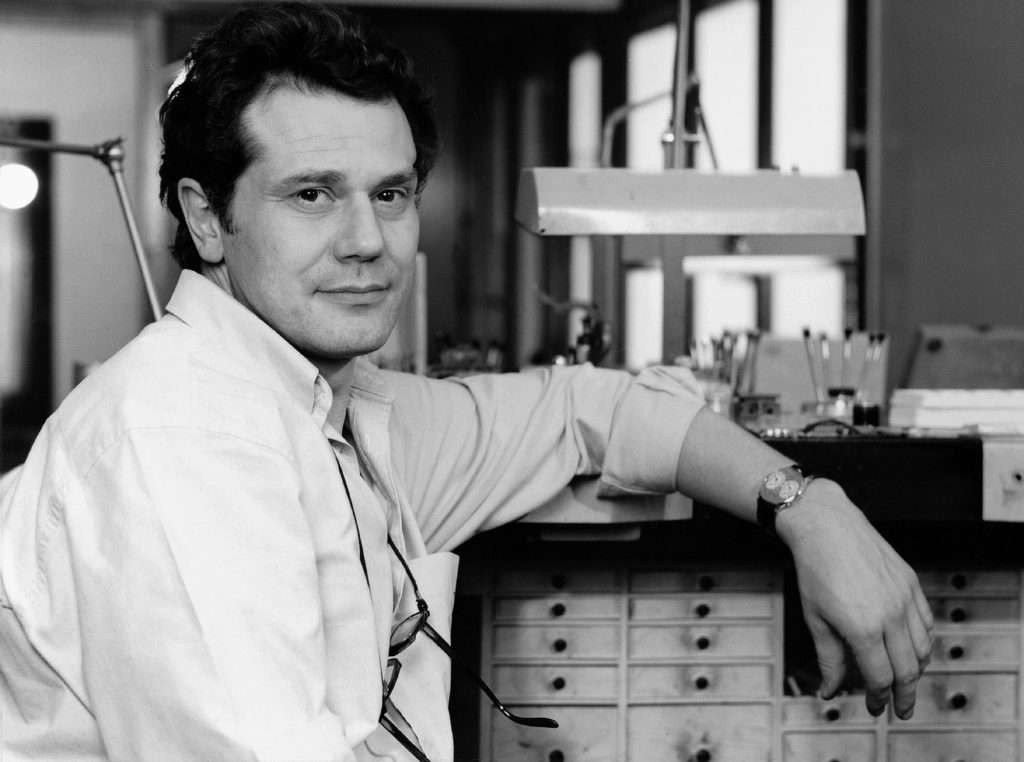
François Paul Journe porte son – Chronomètre à Résonance
©F.P.Journe
He contacted Denis Flageollet, a fourth-generation French watchmaker from the Vosges who had trained in Switzerland, studied micro-engineering, and worked alongside Michel Parmigiani on the restoration of antique complicated watches at the Musée du Locle.
Journe sympathique asprey 1988 – SJX Watches
Together they established Techniques Horlogères Appliquées — THA. Vianney Halter, a fellow graduate of the École d’Horlogerie de Paris who had been running a restoration workshop in the capital, joined shortly after, urged by Journe to seize the opportunity. Additional members included Dominique Mouret, Pascal Courteault, the automaton specialists Nicolas Court and François Junod.
Denis Flageollet in his THA period assembly of a unique clock- with 3 rock crystal wheels.
Behind the bench is singing bird clock specialist Pierre Andre Grim – Monochrome.
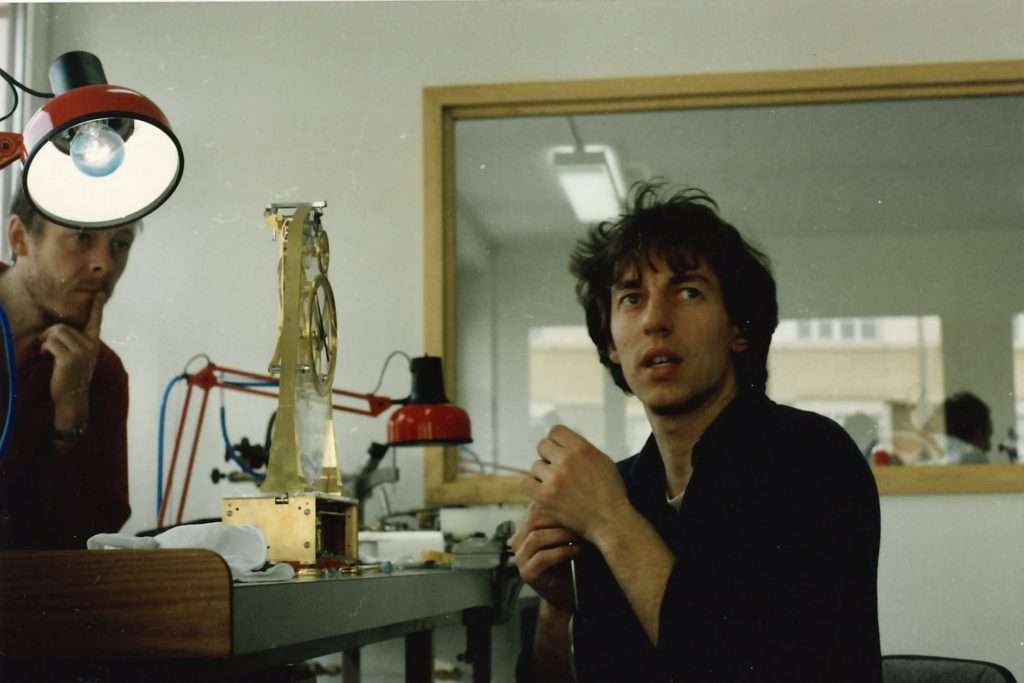
The purpose of THA was twofold: to develop and produce complicated movements for established Swiss brands, and to create an environment where independent watchmakers could work at the highest technical level without bearing the commercial risk of launching their own names.
Vianney Halter – Revolution
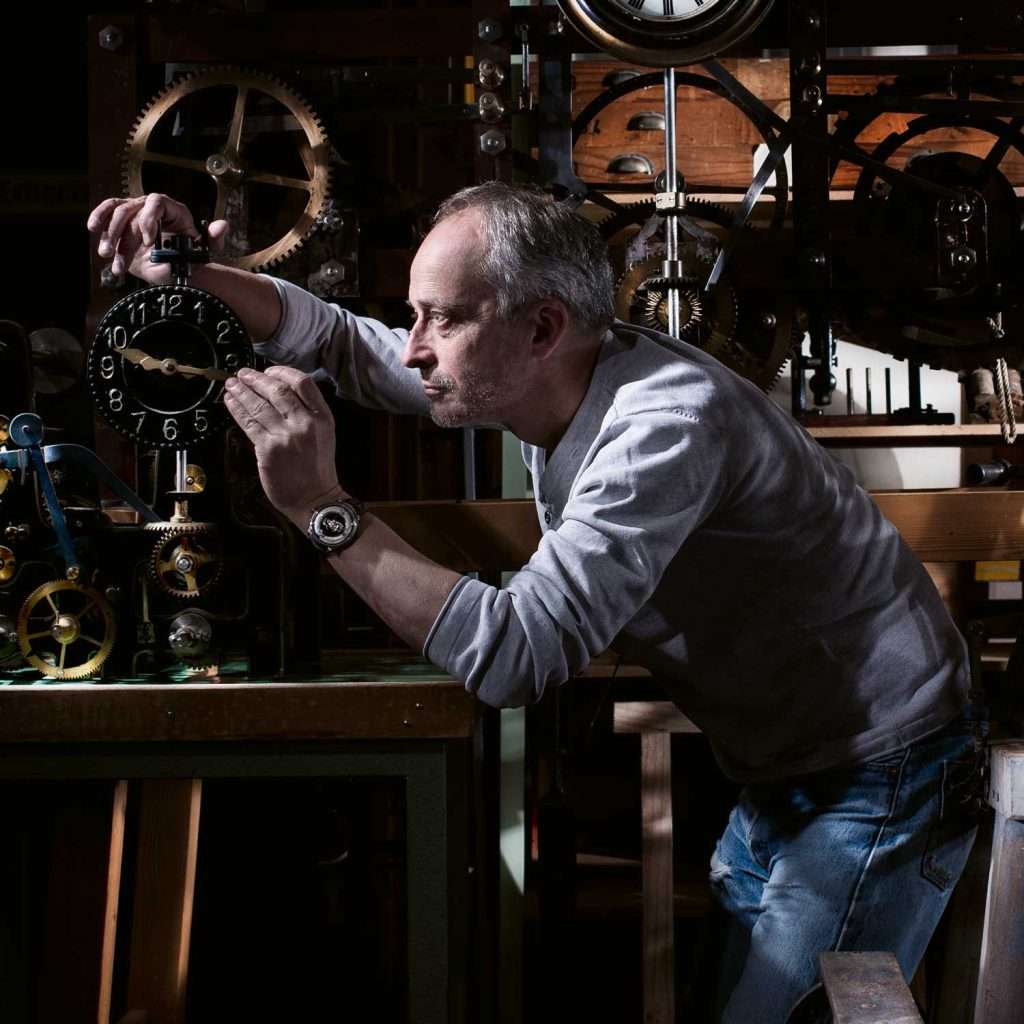
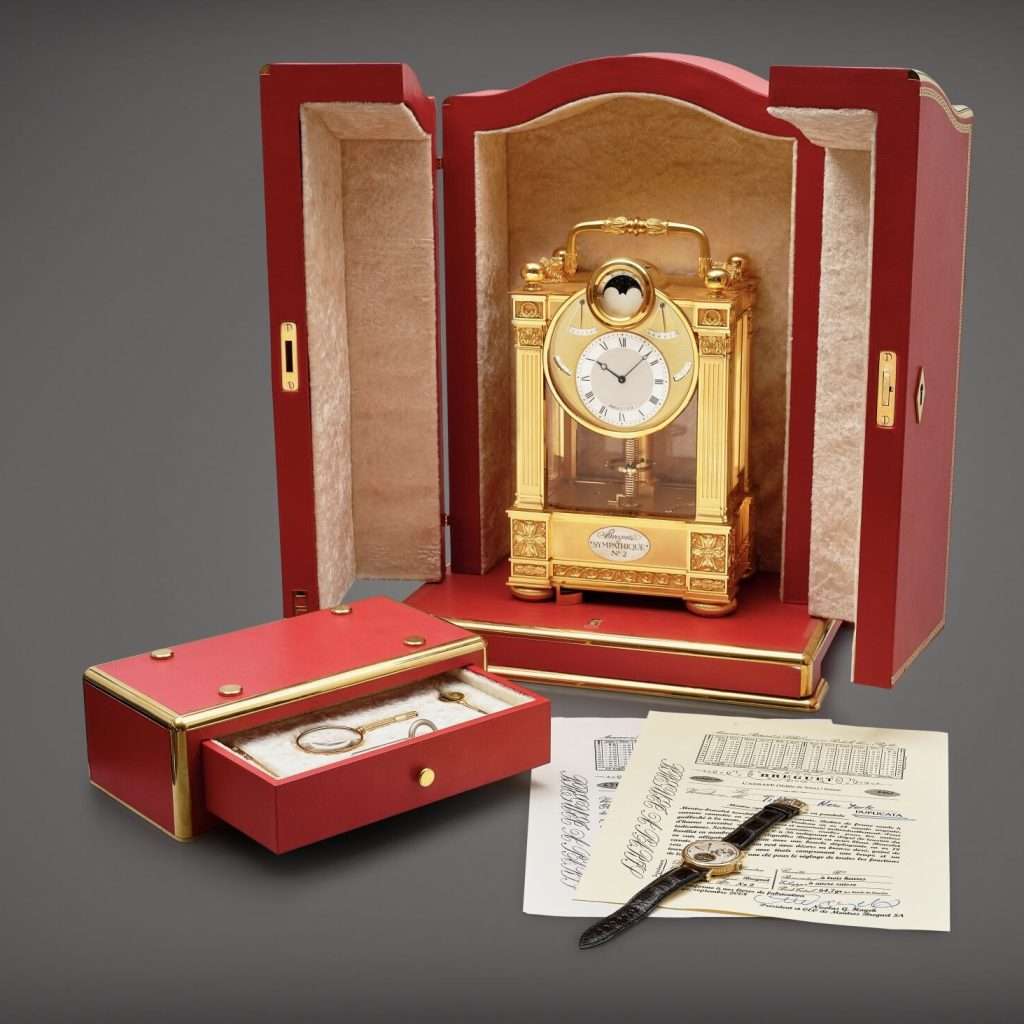
THA’s first major commission was the production of 19 Sympathique clocks for Breguet, which by then was under the ownership of Investcorp. Each clock weighed approximately 15 kilograms. The docked wristwatch was fitted with a gold cylindrical hairspring and a detent escapement — components that required hand-fabrication at a level that few workshops in Switzerland could deliver.
Halter later recalled working 72 hours without stopping. Journe provided the technical direction: he had already built the prototype, and the team at THA needed his guidance on the gold hairsprings, which none of them had worked with before.
The Sympathique project established THA’s reputation. It also revealed the tension at the heart of the enterprise. Journe had conceived the clock, designed it, and built the first examples. The 19 production pieces were made by his colleagues at THA. The clocks went to market signed Breguet.
Breguet Sympathique – Sotheby`s
THA’s second defining project came from Cartier. In the mid-1990s, as Cartier was developing what would become the Collection Privée Cartier Paris (CPCP), THA proposed the revival of the Tortue Monopoussoir chronograph — a single-pusher chronograph first produced by Cartier in 1928. Flageollet later confirmed to Phillips’ Arthur Touchot that the idea originated at THA, not at Cartier:
“At the time the heads of product did not have extensive knowledge of their heritage. We gave them the idea to remake the chrono-monopoussoir Tortue.”
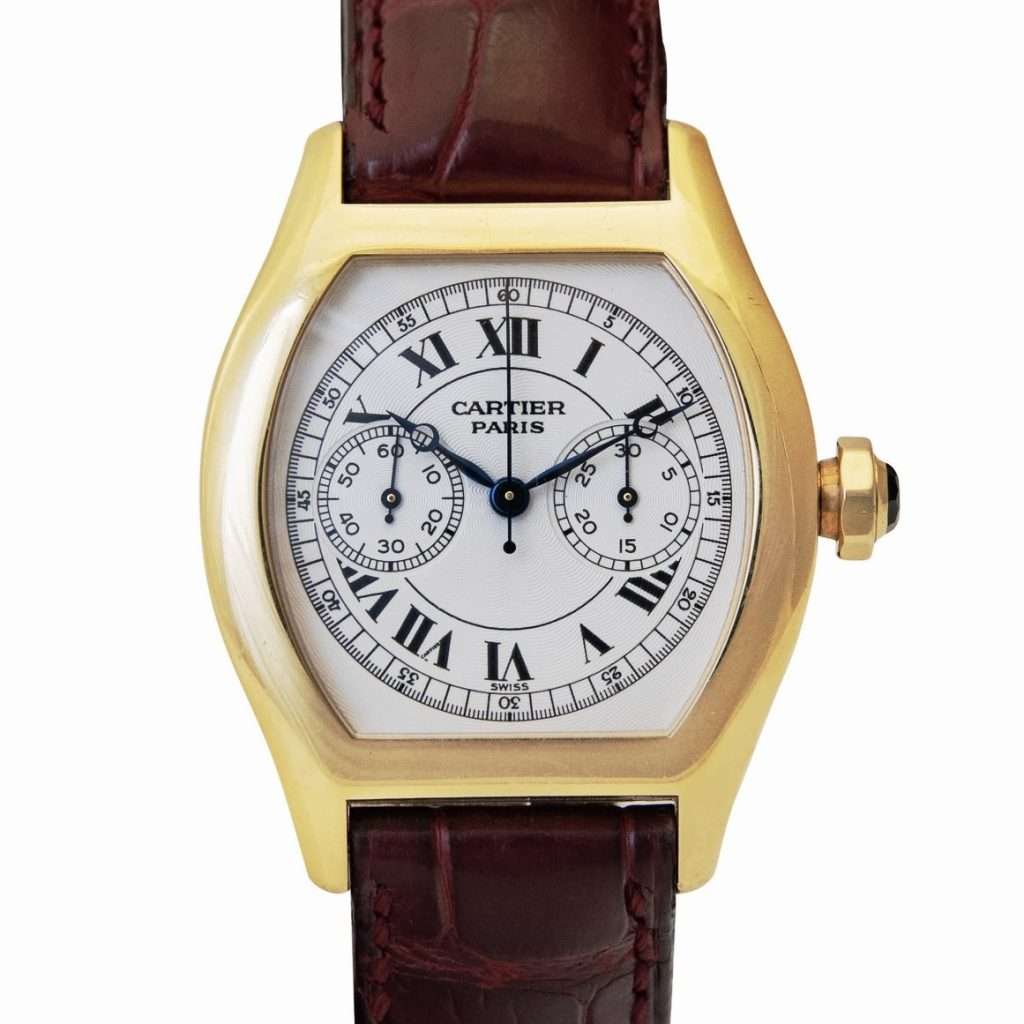

The 045MC was produced in two execution levels: an early version (Mk1) using wire springs, and a later, higher-specification version. The bridges were decorated with Cartier’s interlocking double-C motif applied by laser engraving — a mid-tier decorative finish, noted editorially as inexpensive relative to traditional hand-applied decoration. Edges were bevelled and polished; chronograph levers were straight-ground; screw heads were polished.
Cartier cal 045MC – Keep the Time
THA could produce approximately 200 calibres per year. Over the decade of the CPCP’s existence (1998–2008), total production of the 045MC is estimated at under 2,000 units, distributed across the Tortue Monopoussoir (refs. 2356, 2396, 2661, 2714), the Tortue Monopoussoir XL (refs. 2762, 2781), and the Tank Monopoussoir (ref. 2846).
When asked about the technical challenges of the project, Flageollet was characteristically understated: “The movement is relatively simple, it didn’t pose any particular problems, it just took a little time to adapt to achieving the calibres that corresponded to Cartier’s watchmaking standards.
” The biggest difficulty, he said, was persuading Cartier’s technicians “to have less security on the casing to match the spirit of the original watch and avoid creating a monster.”
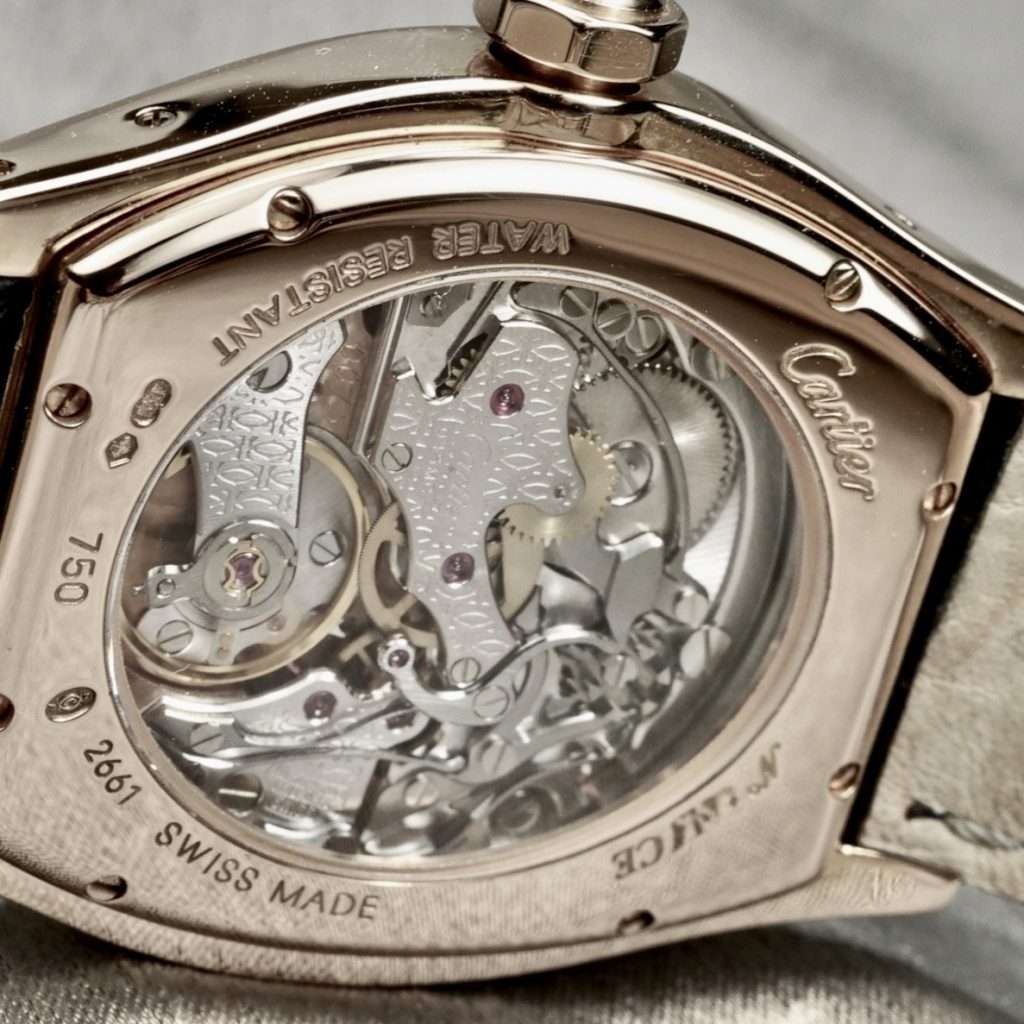
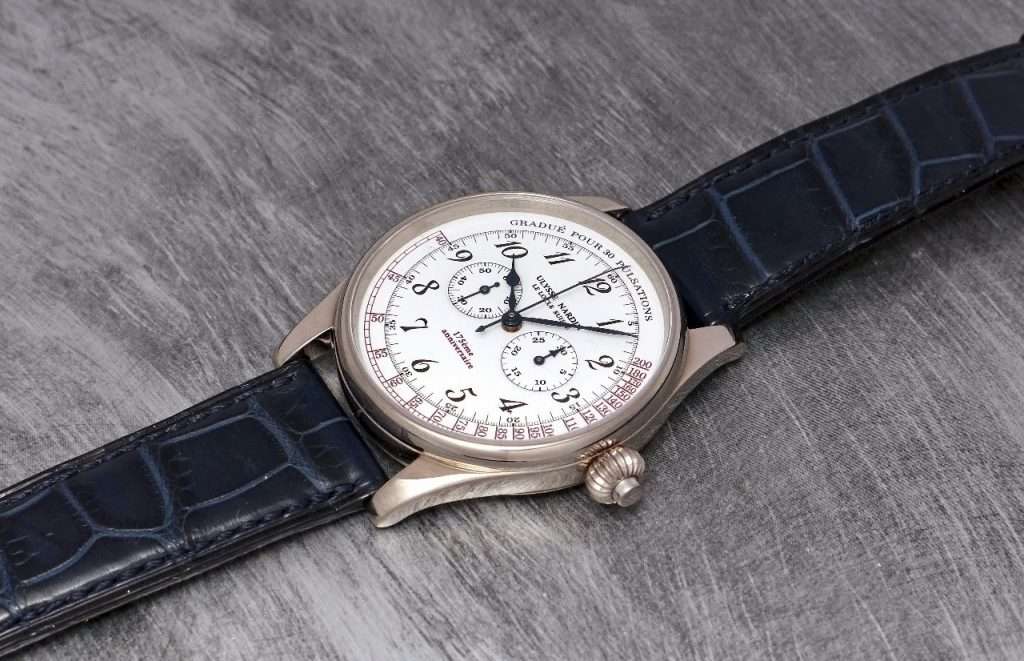
The Cal. 045MC debuted in the Tortue Monopoussoir in 1999 — the same year as the A. Lange & Söhne Datograph, placing it at the leading edge of the era’s return to in-house chronograph development.
Ulysse Nardin 175 anniversary – Watchprosite
The Cal. 045MC’s influence extended well beyond the Cartier CPCP and De Bethune. After THA’s founders departed, the movement found its way into monopoussoir chronographs for other brands like Ulysse Nardin, Franck Muller, Angelus, and Bucherer in the early 2000s. Most recently, Angelus uses the Calibre A5000, a significantly modified descendant that retains the oscillating pinion and vertical clutch system.
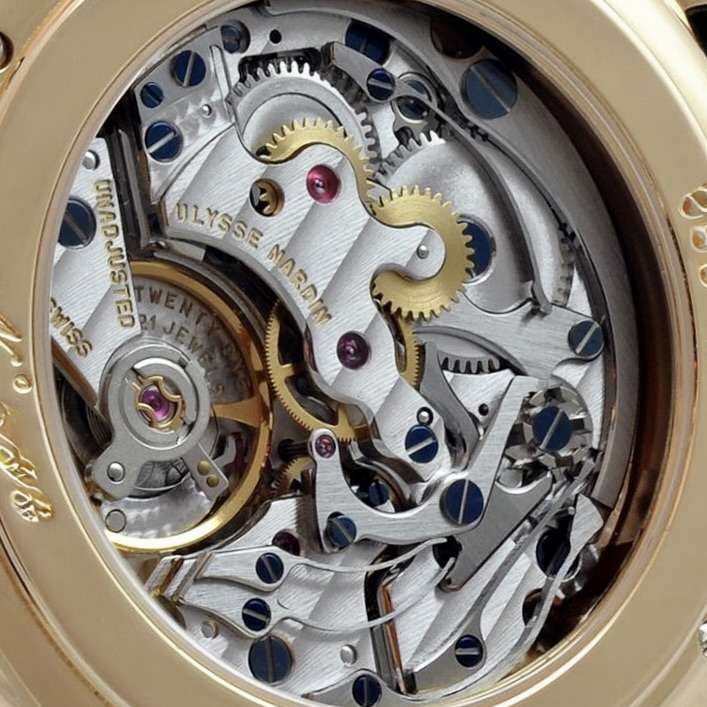
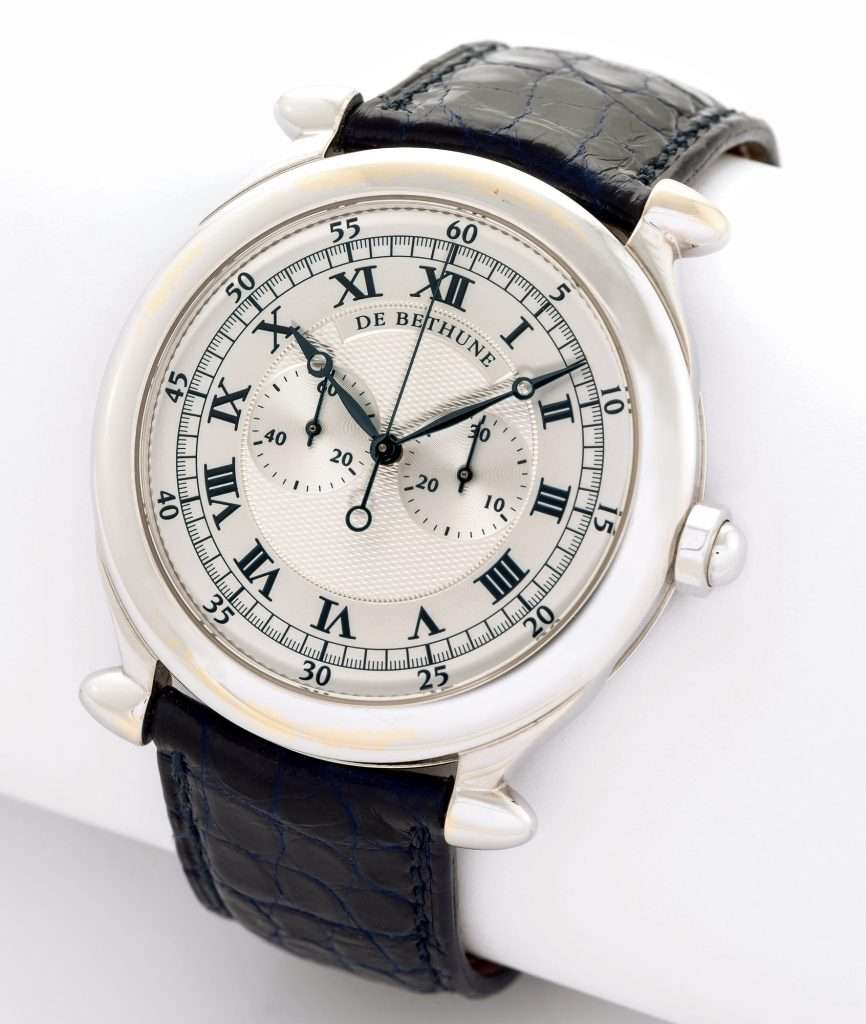
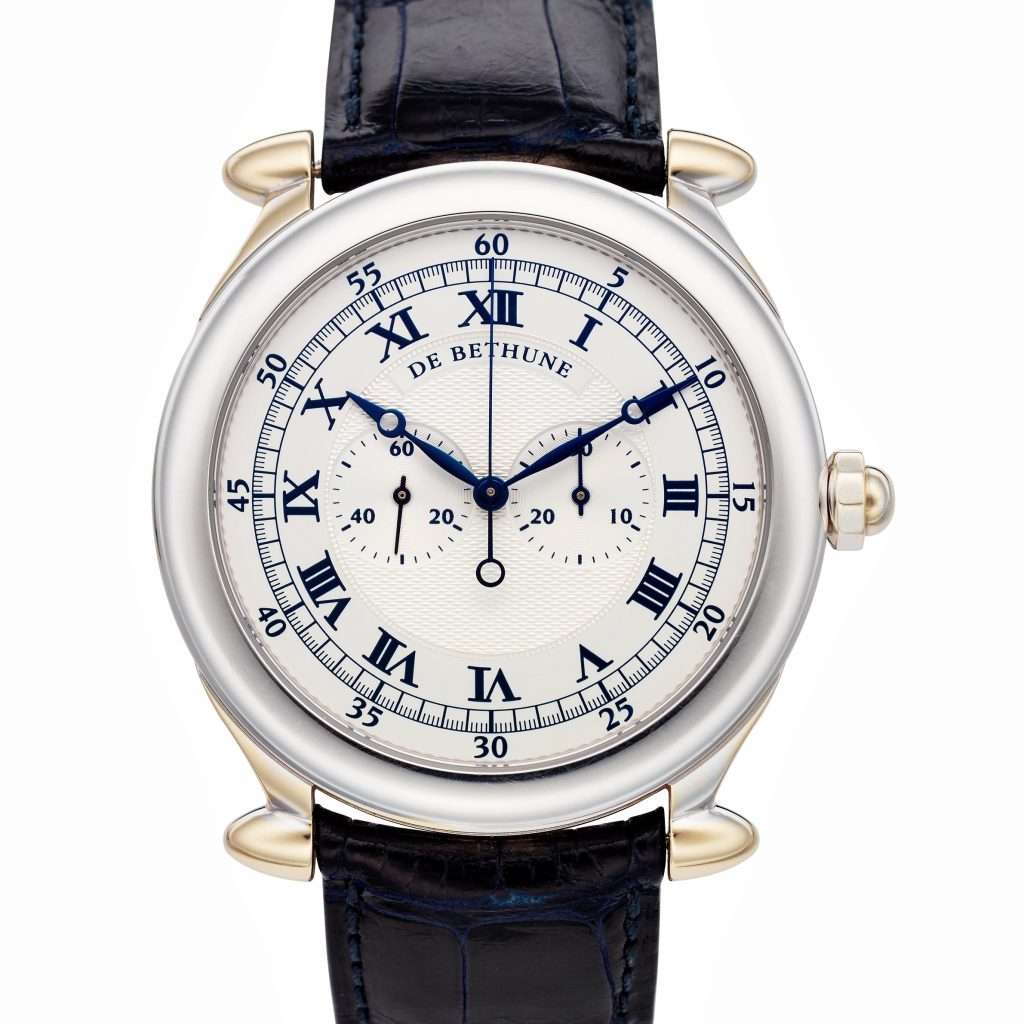
The De Bethune DB8’s single sub-dial at 6 o’clock is also worth noting: it is not a subsidiary seconds but a 45-minute chronograph counter — a so-called “soccer timer,” calibrated to one half of a football match.
De bethune DB1 Antiquorum
In total, a movement conceived by three young Frenchmen in a Sainte-Croix workshop in the 1990s has now appeared, in various forms, across at least eight different watch brands over three decades.

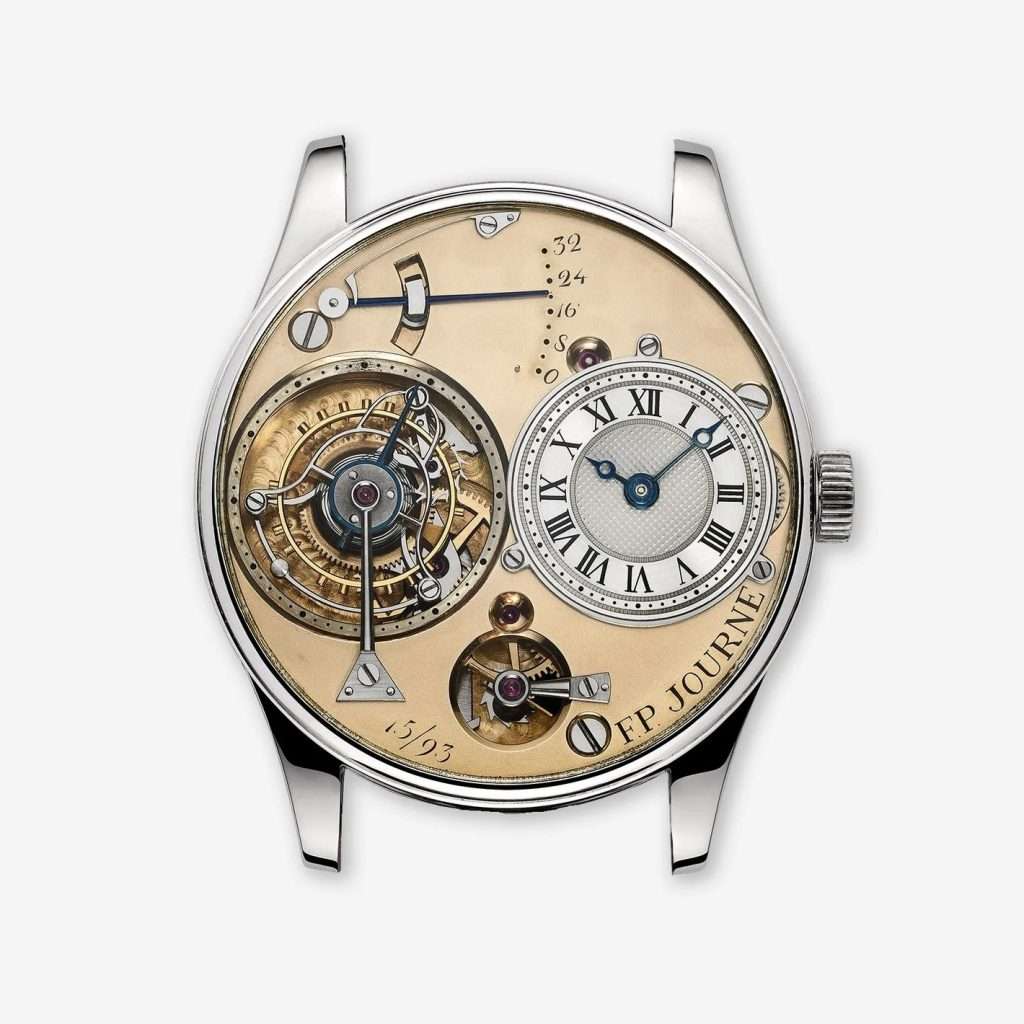
Journe left first. He had grown frustrated with the dynamics of producing movements that went to market under other brands’ names. In 1999, he presented his debut collection of chronometers at Baselworld under his own name: F.P. Journe — Invenit et Fecit. The Latin phrase — “he invented and he made” — was a pointed declaration of intent.
Flageollet left in 2002 to co-found De Bethune with David Zanetta, an Italian vintage watch dealer. Among De Bethune’s first models was the DB1, a monopoussoir chronograph whose architecture was adapted from the 045MC. Flageollet later acknowledged the lineage: “It was not exactly the same, but it’s a type of movement that I knew well and I trusted its reliability.” Only 50 DB1s were produced. The De Bethune version featured a higher standard of hand- finishing than the Cartier execution. In 2003, the architecture was adapted again for the DB8, which relocated the minute counter to 6 o’clock.
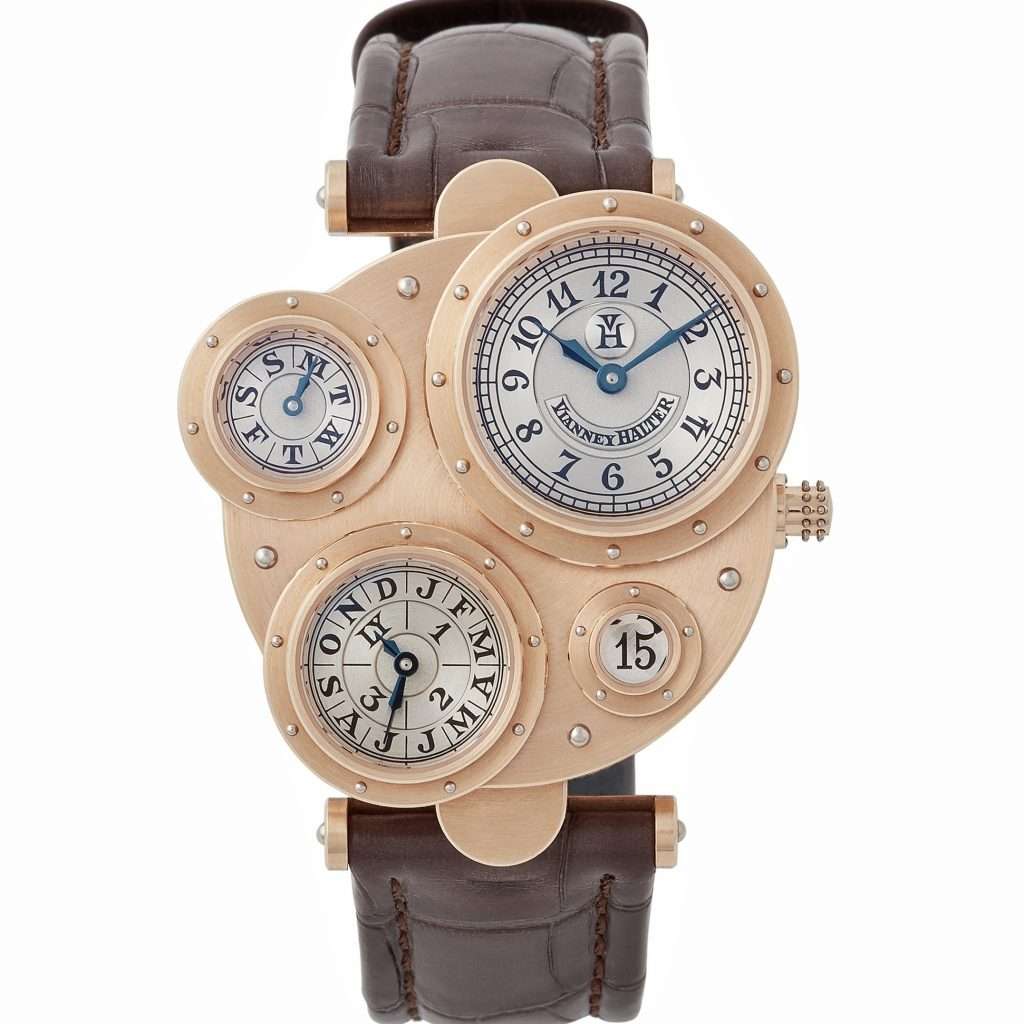
Halter left to establish Manufacture Janvier in Sainte-Croix, where he created the Antiqua — a wristwatch with perpetual calendar housed in a case whose aesthetic drew equally on Jules Verne and nineteenth-century marine chronometry. He was inducted into the AHCI (Académie Horlogère des Créateurs Indépendants) and won the Prix Gaïa.
THA continued operating in Sainte-Croix after all three founders had gone. In 2007, Carl F. Bucherer — which had been a THA client for over a decade — acquired the company. It was renamed Carl F. Bucherer Technologies SA in 2008 and became the movement development arm of the Bucherer watch brand, producing peripheral rotors, floating tourbillons with stop seconds, minute repeaters, flyback chronographs, and perpetual calendars. When Rolex acquired the Bucherer group in 2023, THA — the workshop where Journe, Flageollet, and Halter once built Sympathique clocks and monopoussoir chronographs — became a Rolex asset.
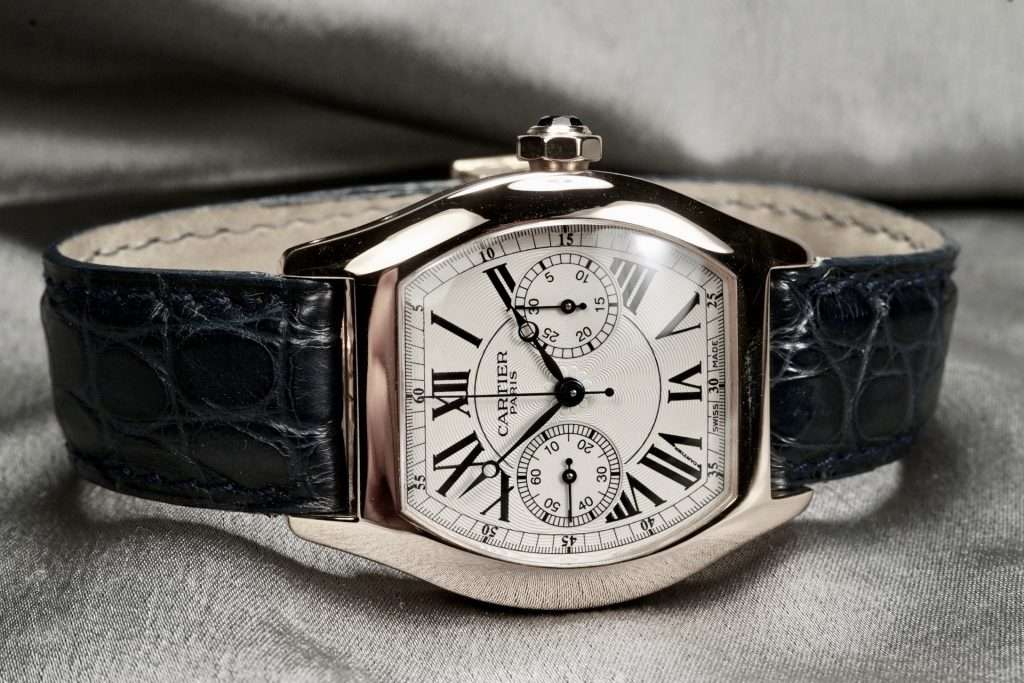
The three founders are now among the most celebrated independent watchmakers alive. Their watches sell for six and seven figures at auction. The Cartier watches that house the Cal. 045MC — once available at retail for the price of a well-specified Patek Philippe Calatrava — now trade at multiples of their original cost. And the workshop in Sainte-Croix, where the work was done, belongs to Rolex. The three houses they went on to create — F.P. Journe, De Bethune, and Vianney Halter — are now regarded as among the finest independent watchmakers of their generation. The workshop they left behind still stands in Sainte-Croix.
Sources cited in this article: Phillips (Arthur Touchot interview with Denis Flageollet, 2019); SJX Watches (François-Paul Journe interview, 2025); Monochrome Watches (Vianney Halter interview, 2021); Fondation de la Haute Horlogerie (FHH) encyclopedia entries for Journe, Halter, and Flageollet; A Collected Man (De Bethune history); Revolution Watch (Cal. 045MC technical analysis); Ineichen Auctioneers (045MC execution variants); Europa Star (Bucherer acquisition of THA, 2007); Watch Wiki (Carl F. Bucherer Technologies SA); Loupiosity (Flageollet biography); Wikipedia (Flageollet, Journe, Breguet).
[contact-form-7 id=”4235″ title=”Contact form 1″]