No products in the cart.

Newsletter
[contact-form-7 id=”4235″ title=”Contact form 1″]


In 1998, at the Salon International de la Haute Horlogerie (SIHH) in Geneva, Cartier presented a new series of mechanical wristwatches under the designation Collection Privée Cartier Paris.

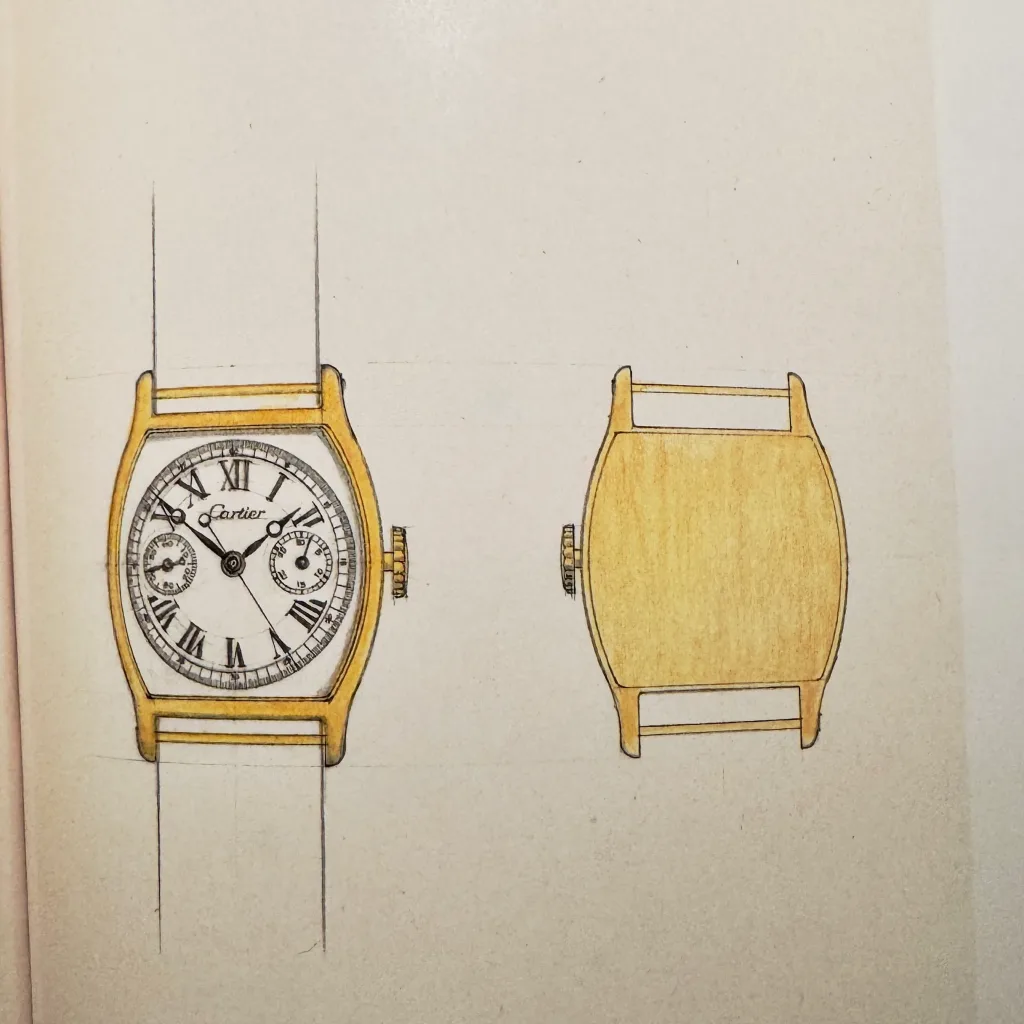
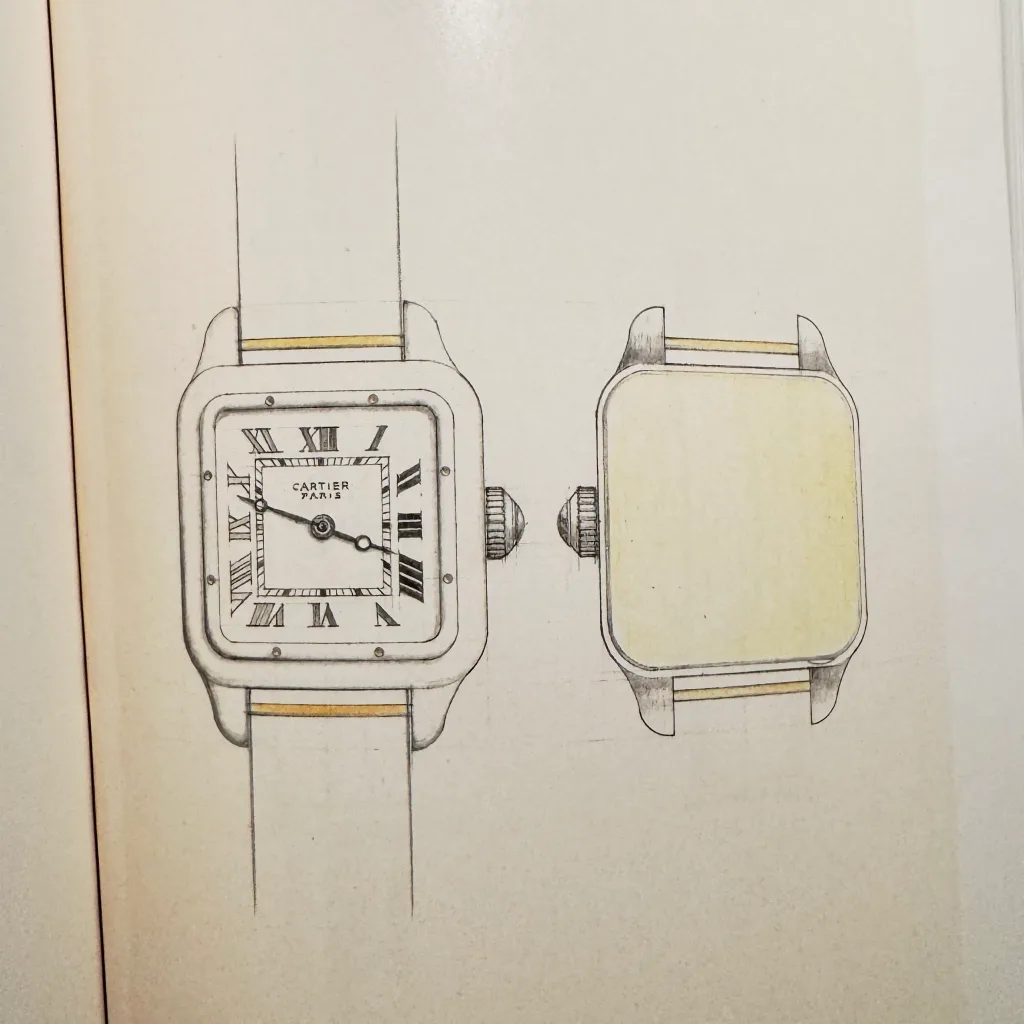
The programme, CPCP in short, marked a deliberate return to the house’s own design archive. Case shapes that had defined Cartier’s horological production in the first half of the 20th century — the Tortue, the Tonneau, the Tank Cintrée, the Santos-Dumont, the Crash — were reissued, fitted with hand-wound mechanical calibres, and produced in limited quantities.
The context was specific. The Swiss watch industry was still consolidating its recovery from the quartz crisis. Cartier, after decades of mass-market production and a strong association with quartz-powered ladies’ watches, had ground to reclaim as a maker of mechanical timepieces.

The CPCP was the instrument of that reclamation. It was aimed primarily at male collectors — a segment the house had not actively pursued in years — and positioned itself within a market occupied by Patek Philippe, Audemars Piguet, and the emerging independent watchmakers.
Cases were in 18-carat yellow gold, white gold, rose gold, and platinum, and were scaled slightly larger than the historical originals to accommodate contemporary wrist sizes. Movements were sourced from high-end Swiss ébauche manufacturers, decorated in Cartier’s workshops, and often displayed through sapphire casebacks.

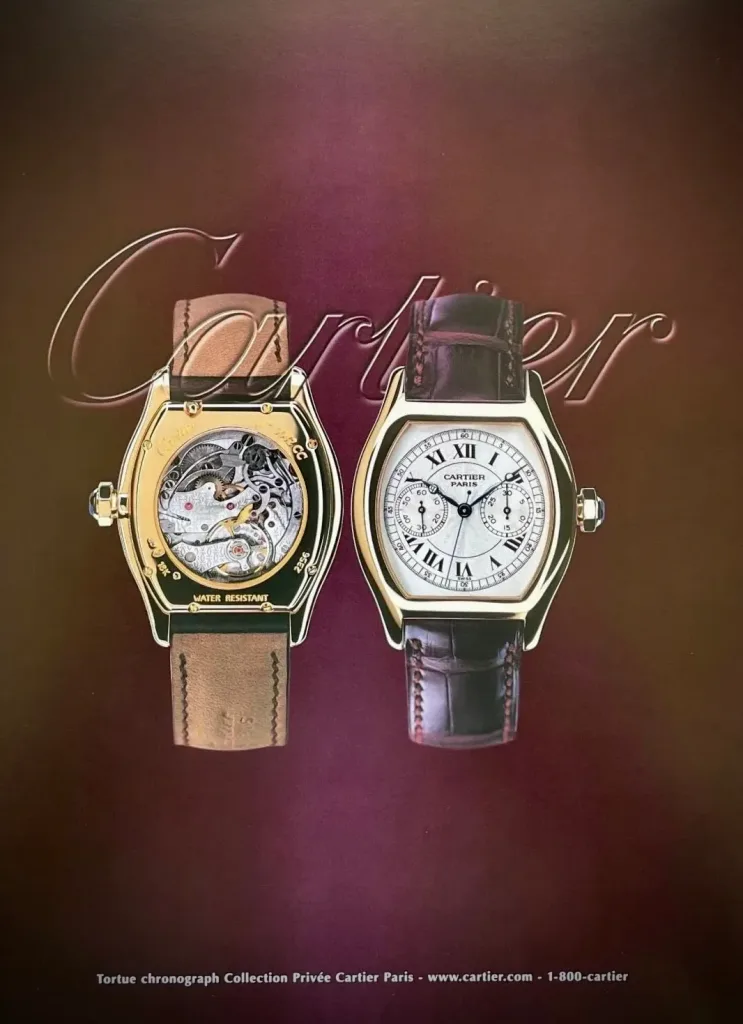
The collection ran for a decade, from 1998 to 2008, and encompassed more than fifteen distinct model families, multiple complications, and a range of regional and boutique-exclusive editions. Production was limited throughout: numbered series were capped at 50, 100, or 150 pieces, while unnumbered references are estimated to have reached between 200 and 500 units.
The CPCP operated within a controlled distribution framework. Allocation was managed centrally by Cartier, with senior executives selecting the retailers authorised to carry the collection. In the United Kingdom, Arnaud Bamberger, then Executive Chairman of Cartier UK, personally determined which jewellers would receive stock.
According to Malcolm Gillan, former co-owner of Hamilton & Inches in Edinburgh — one of the selected retailers — each participating store was expected to purchase approximately eight to nine pieces per year. Additional stock was supplied directly by Cartier on a discretionary basis. Retailers had limited influence over which specific references they received.

Demand was geographically concentrated with meaningful sales largely confined to London and Paris. The typical CPCP buyer was a collector who already owned a Patek Philippe and sought something with a different character — a precious-metal mechanical dress watch from a house with a deep but under-exploited horological heritage.
There was no comprehensive product catalogue for the collection. Boutiques were supplied with a small brochure, irregularly updated. In the pre-internet era, information about new CPCP releases circulated slowly and unevenly.

This informational opacity extended to the models themselves. Some references were produced exclusively for specific markets or occasions, with no communication beyond their territory of sale.
The Tank Chinoise Double Fuseau, for example, was made in two series of 100 pieces each (pink gold and white gold) to mark the relationship between France and China. Outside Asia, the model’s existence was essentially unknown.
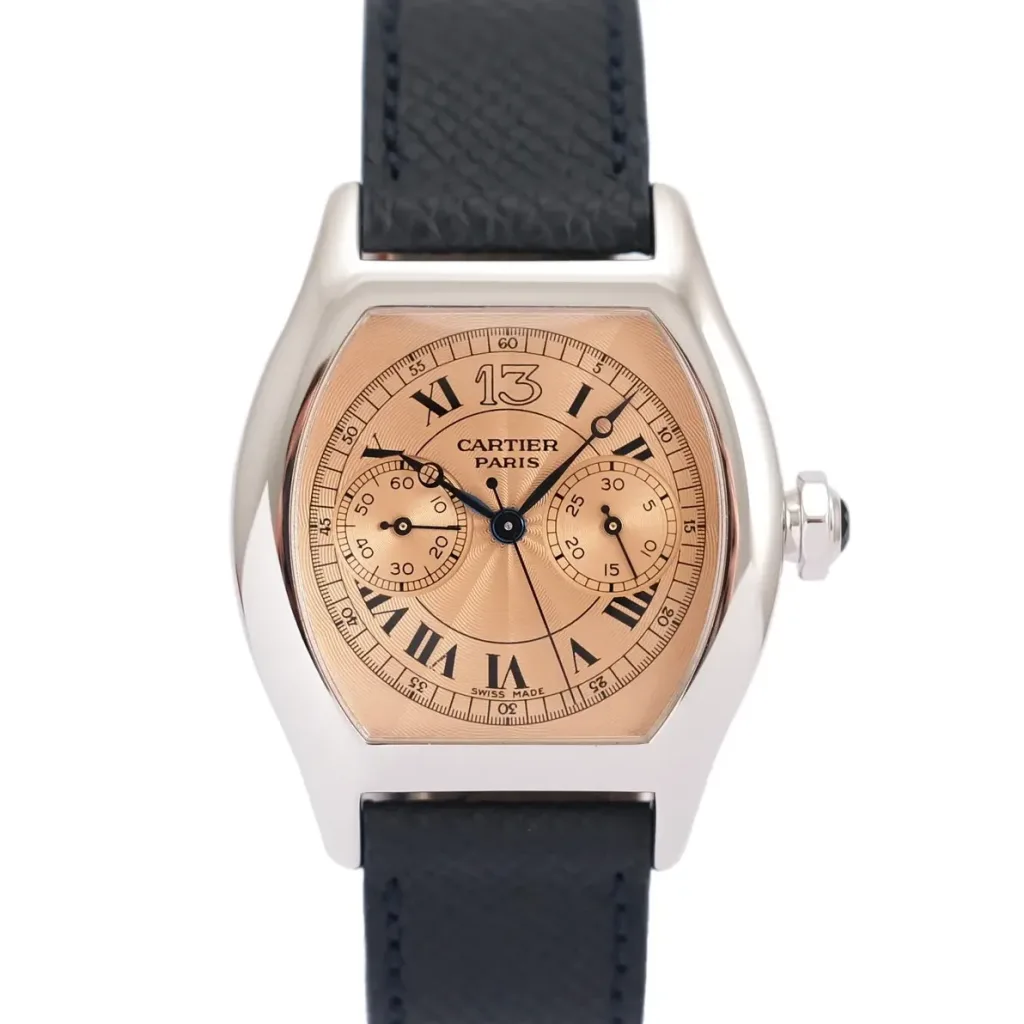
Similarly, a small number of pieces were created exclusively for the Cartier flagship at 13 Rue de la Paix in Paris, which reopened in 1999 after extensive renovation. Among the watches produced for that occasion was the Tortue Monopoussoir in white gold with a salmon dial and a large Arabic “13” in place of the standard Roman numeral — limited to 13 pieces.
The collection was presented in a dedicated red leather CPCP box, distinct from Cartier’s standard packaging. Certain complicated references — such as the Tortue Perpetual Calendar — were accompanied by a branded CPCP winder box, a detail noted by collectors as an additional mark of the programme’s separate identity within the house.
The dial, made from 18-carat gold and finished with hand-turned guilloché, carries the inscription “Cartier Paris” beneath the brand name — a reference to early 20th-century Cartier production dials.
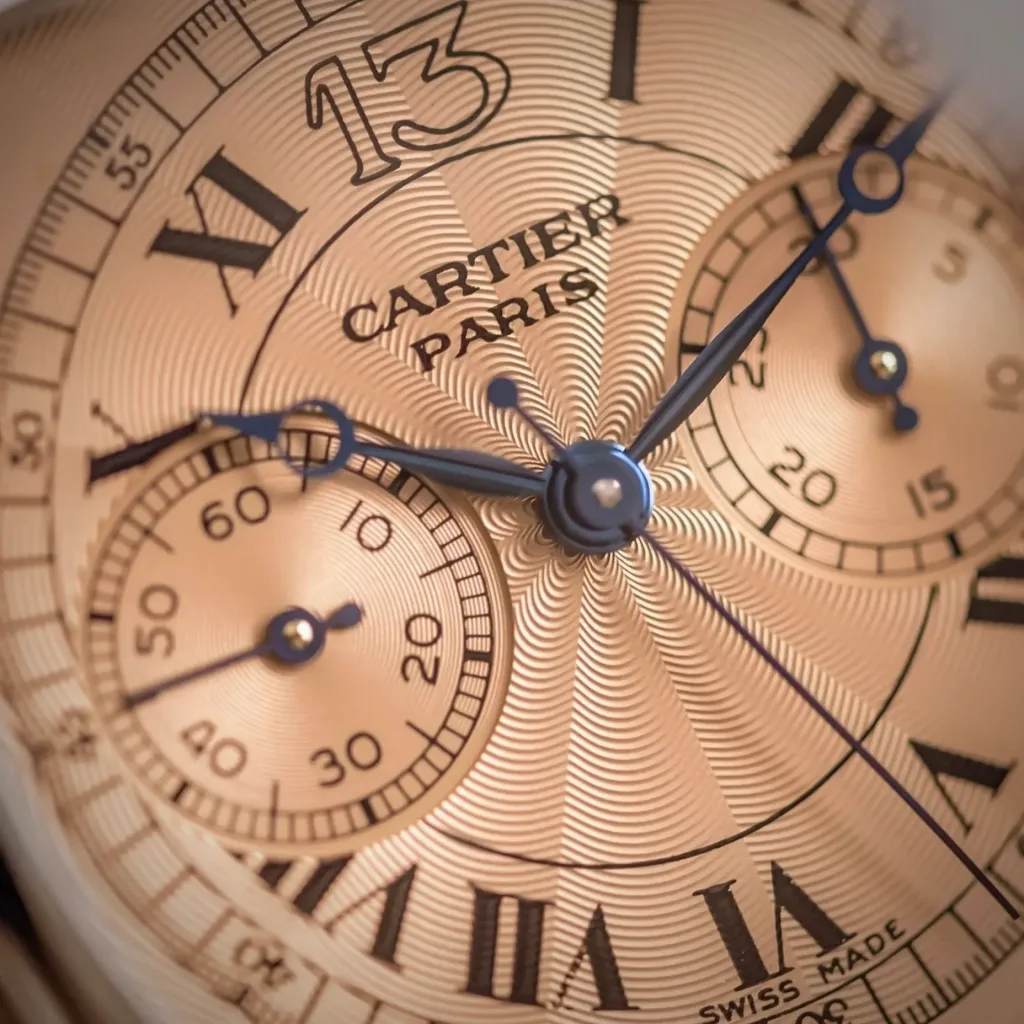
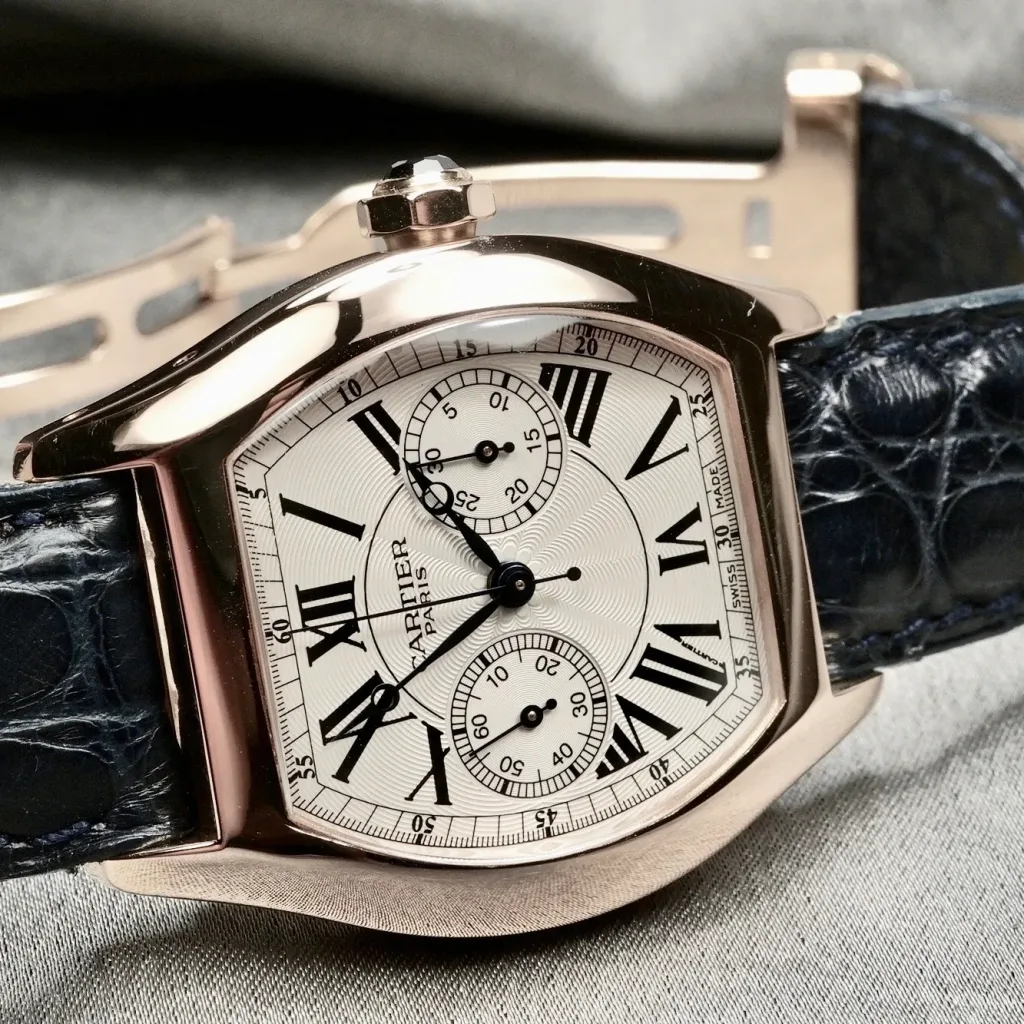
The use of solid 18-carat gold rather than the brass or base-metal blanks used in standard watch production — is a defining material distinction of the CPCP. The difference is visible. A brass dial is stamped or plated to achieve its final colour; the surface is uniform and tends toward a flat, consistent reflectivity.
A solid gold dial behaves differently under the guilloché tool: the metal is denser, softer, and more responsive to the engraving lathe. The resulting cut lines are deeper and more defined, with a tactile relief that stamped or CNC-machined patterns on brass cannot reproduce.
Light interacts with the guilloché in a way that produces depth and movement — the pattern shifts as the angle changes, and the underlying warmth of the gold gives the surface a tonal richness that plated finishes do not achieve. Plated dials can discolour, flake, or develop inconsistencies as the coating ages; a solid gold dial, finished with a thin silver layer and then engine-turned, is more stable.
One model was exempt: the Tank Cintrée with Arabic numerals, produced in yellow gold and platinum, which omitted the “Paris” inscription. The version with Roman numerals retained it.
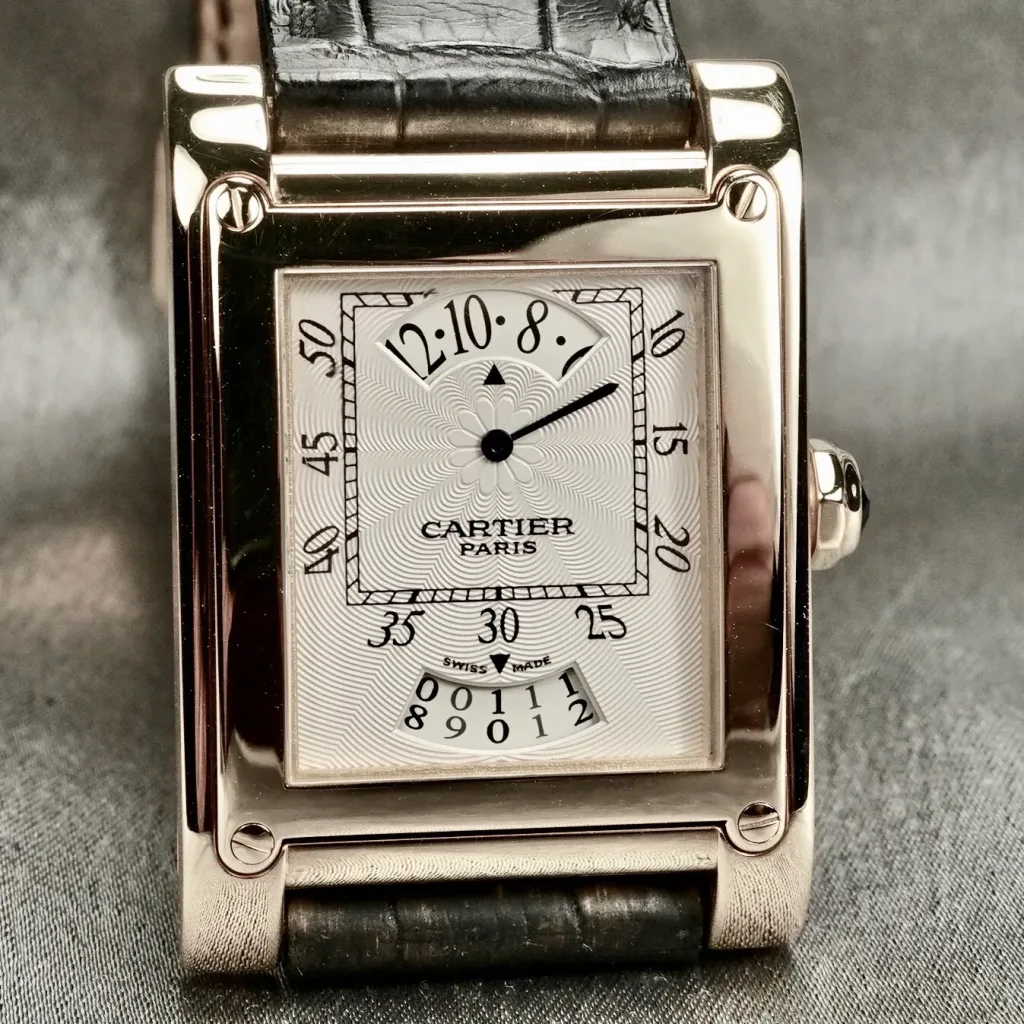

A central rose motif, executed in guilloché, became a recurring element across the collection. It was absent from the earliest 1998 releases — the Santos-Dumont, Tank Américaine, Tonneau, and Tank Obus were initially delivered without it — but was integrated into all subsequent and reissued references.
Additional shared features include blued steel Breguet-style hands (on select models), sapphire cabochon crowns, chemin de fer minute tracks, and Roman numeral indices.
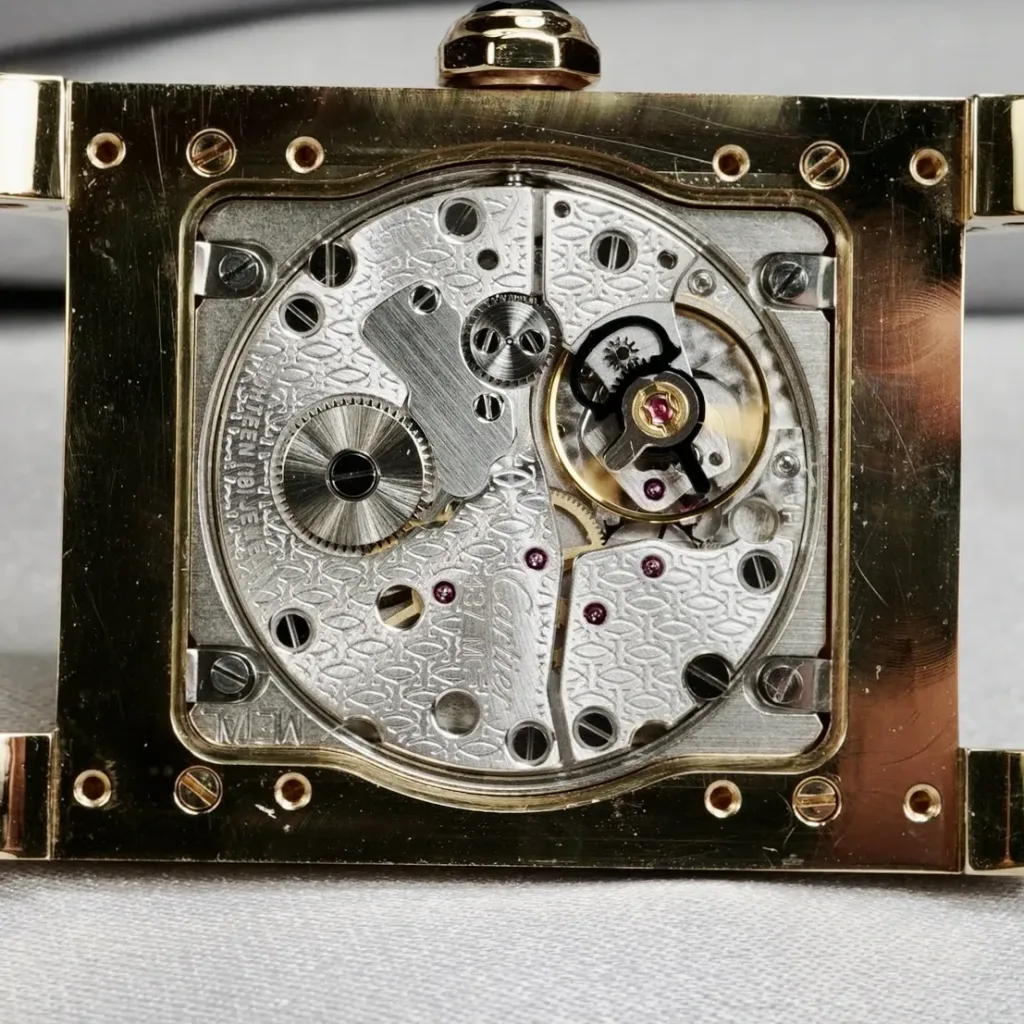
Movements are decorated with Côtes de Genève stripes, perlage, hand-bevelled edges, and the interlaced “double C” Cartier monogram applied by laser engraving across the bridges. On certain calibres — the 437 MC, 9901 MC, and 9902 MC — the regulator index is shaped as a blued steel “C”, angled and polished by hand.
It is worth noting that the interlaced “double C” decoration applied across the CPCP movement bridges, while visually distinctive, is a laser engraving — a process that is inexpensive relative to traditional hand-finishing techniques such as engraving, anglage, or Perlage.
In the context of a collection positioned at the upper end of Cartier’s output, the choice of laser engraving represents a mid-tier finishing decision. The maison had the option — and arguably the obligation, given the programme’s aspirations — to adopt a higher standard of movement decoration.
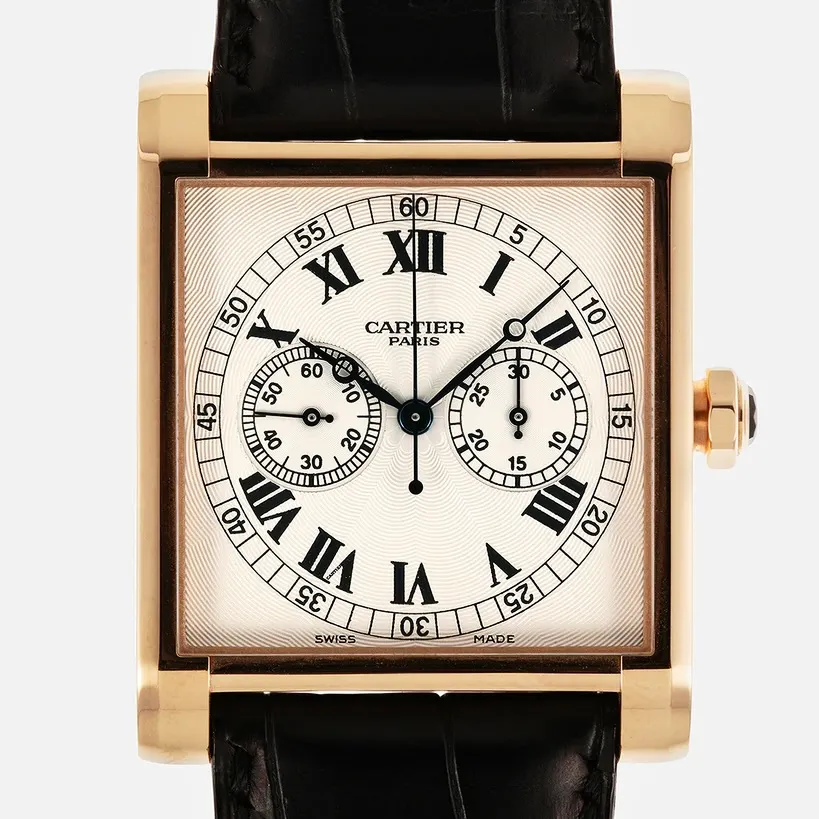
The CPCP’s commercial trajectory was uneven but, in retrospect, consequential. The Tortue was the collection’s anchor: it was recorded as the top-selling CPCP model in 1999, 2000, 2003, 2004, and 2005 — five of the ten years the programme was active. The Tank Monopoussoir, released in 2007 in rose gold (100 pieces) and 2008 in white gold (100 pieces), sold out almost immediately.
According to accounts from dealers active during the period, several pieces never reached the boutiques and were taken directly by collectors before allocation.
Other models moved at a slower pace. The niche appeal of precious-metal, hand-wound dress watches in the late 1990s and early 2000s limited the audience. The CPCP was, by design, a programme for a small circle of informed buyers. It was not widely advertised, and Cartier did not pursue aggressive promotion of the collection.
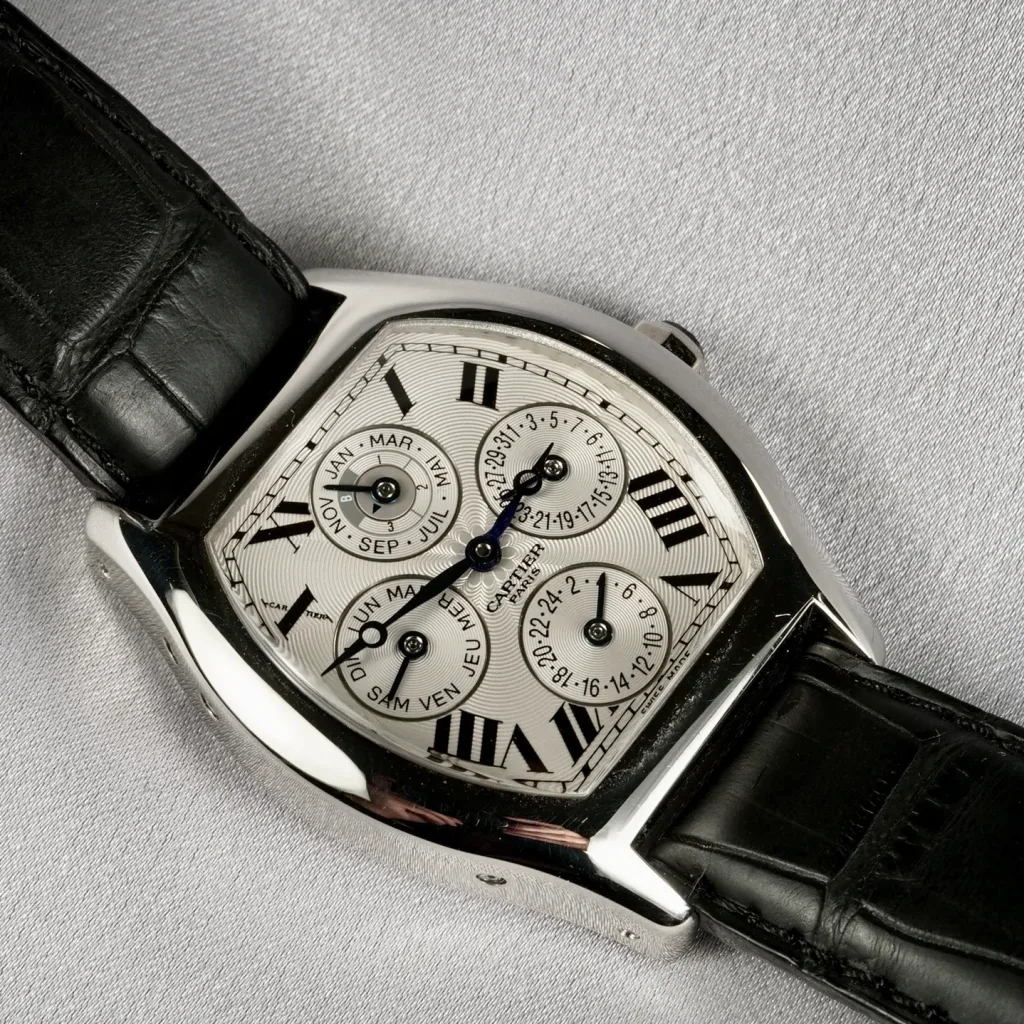
The programme concluded in 2008. The reasons were partly logistical — sourcing components across multiple independent suppliers (Piaget, Jaeger-LeCoultre, Frédéric Piguet, THA, Renaud & Papi, Dubois Dépraz) created a supply chain complexity that became increasingly difficult to manage — and partly strategic. Cartier was preparing to launch the Fine Watchmaking Collection (2008–2018), which shifted the emphasis toward in-house manufacture calibres and complications housed primarily in the Rotonde case.
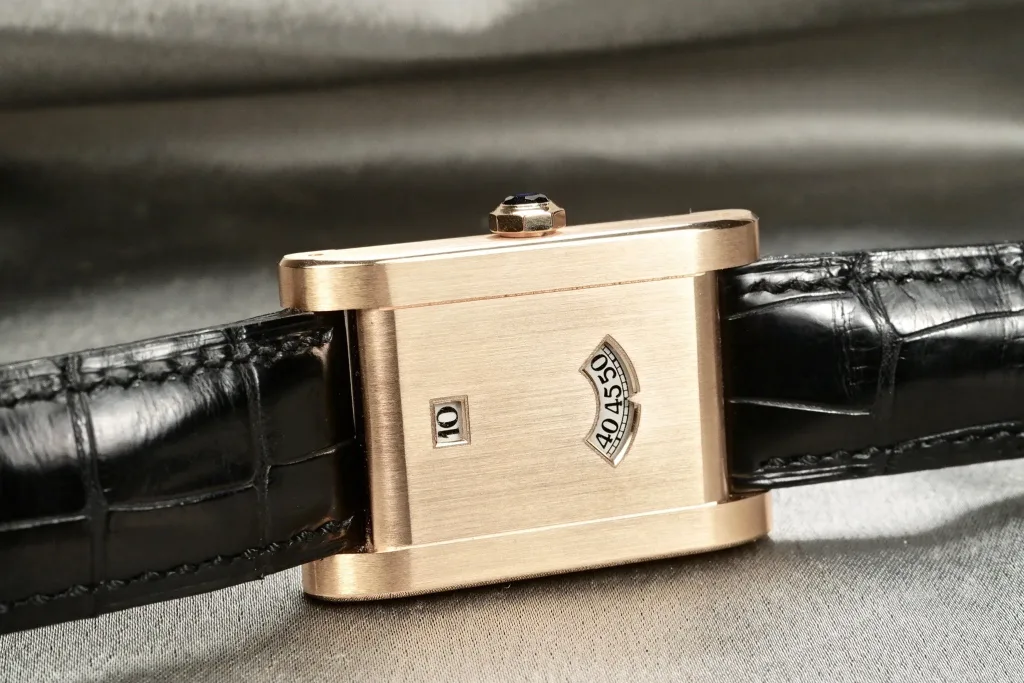
Since 2017, the Cartier Privé series has revisited many of the same case shapes — Tank a Guichét, Tank Cintrée, Tonneau, Cloche, Tank Chinoise, Tank Asymétrique, Tortue — in annual limited editions that explicitly reference the CPCP programme. The 2024 return of the Tortue Monopoussoir, now powered by the in-house Calibre 1928 MC, directly acknowledges its CPCP predecessor. The rights to the original 045 MC movement design have been acquired by movement manufacture La Joux-Perret.
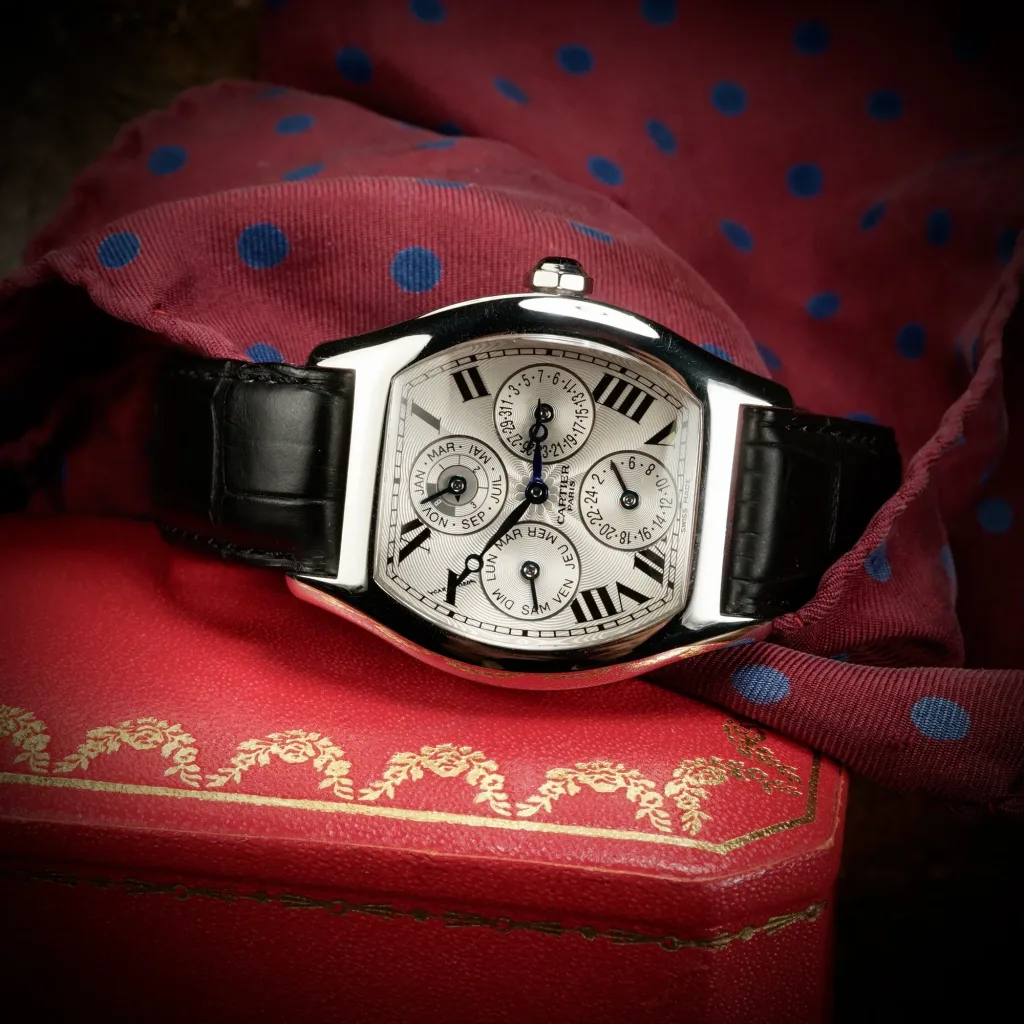
The calibres used across the CPCP collection were quality ébauches sourced from established Swiss manufacturers and finished to Cartier’s specifications. Piaget supplied the 021 MC, 430 MC, and 437 MC. Jaeger-LeCoultre provided the 9601 MC and 9780 MC. Frédéric Piguet contributed the 021 MC H3 and the base for certain minute repeater calibres.
Dubois Dépraz modules served the perpetual calendar functions. Renaud & Papi developed the Tortue XL Tourbillon Chronographe Monopoussoir and the Tortue Minute Repeater movements.
One calibre stands apart. The 045 MC — the hand-wound monopusher chronograph that powered the Tortue Monopoussoir and the Tank Monopoussoir — was not an adapted ébauche.
It was a purpose-built movement developed by Techniques Horlogères Appliquées (THA), a movement atelier founded in 1989 in Sainte-Croix by three watchmakers who would each go on to reshape the landscape of independent horology: François-Paul Journe, Denis Flageollet, and Vianney Halter.
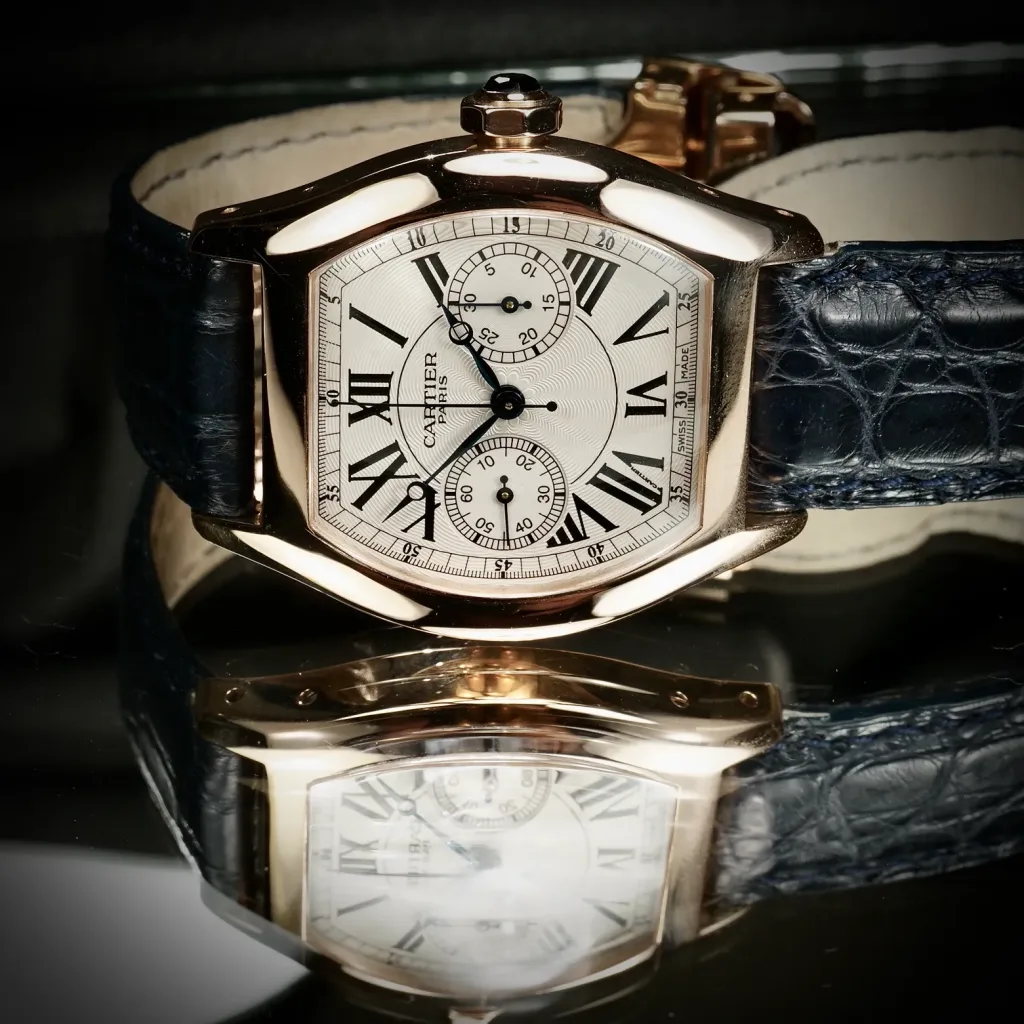

THA operated as a collaborative workshop producing complications and movement solutions for external clients — among them Breguet (the Sympathique clock programme), Audemars Piguet, Cartier, and Jaquet-Droz.
According to Flageollet, it was THA that proposed the Tortue Monopoussoir project to Cartier, based on the historical precedent of the original Tortue single-button chronograph from the late 1920s. Cartier’s own product team at the time, Flageollet noted, did not have extensive knowledge of the model’s existence in the archives.
The 045 MC is a column-wheel chronograph with an oscillating pinion clutch. This coupling mechanism — an arbor with a pinion at each end transmitting power from the going train to the chronograph — eliminates the seconds-hand jump that occurs on start in many lateral-clutch chronographs, and allows for a more compact movement. The calibre measures 25.6 mm in diameter and 3.8 mm in height, is made of 157 components and 22 jewels, operates at 21,600 vph (3 Hz), and delivers approximately 40 hours of power reserve with the chronograph disengaged (34 hours when active).
The single pusher is integrated into the crown — start, stop, and reset are managed through one control, a classy solution to preserve the silhouette of the Tortue case.
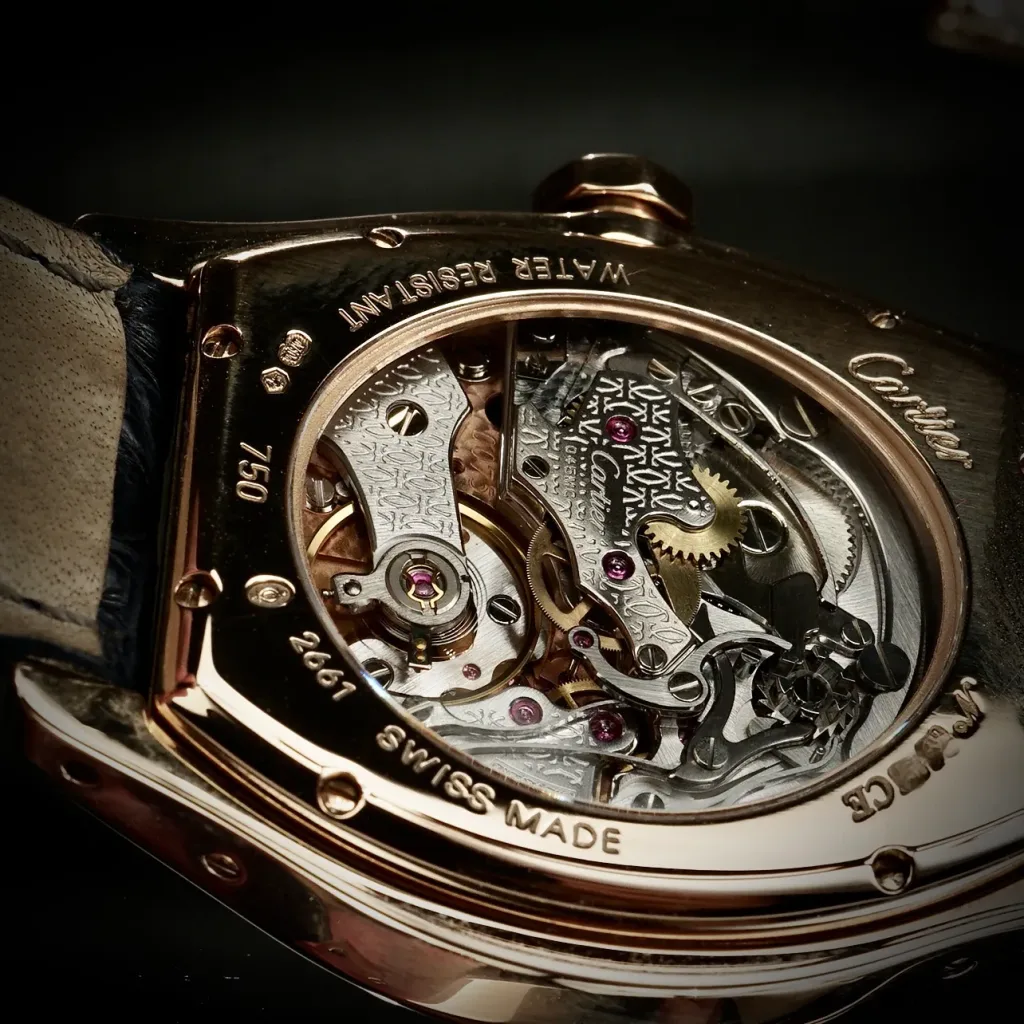
The movement was used in the CPCP Tortue Monopoussoir (in yellow, white, and rose gold, with multiple dial variants), the Tank Monopoussoir, and — outside Cartier — the De Bethune DB1. Its architecture subsequently informed the De Bethune DB8 and, in modified form, Journe’s own Chronographe Monopoussoir Rattrapante. This lineage — from a Sainte-Croix workshop in the late 1990s to two of the most collected independent brands of the 21st century — makes the 045 MC the single most consequential technical contribution within the entire CPCP programme.
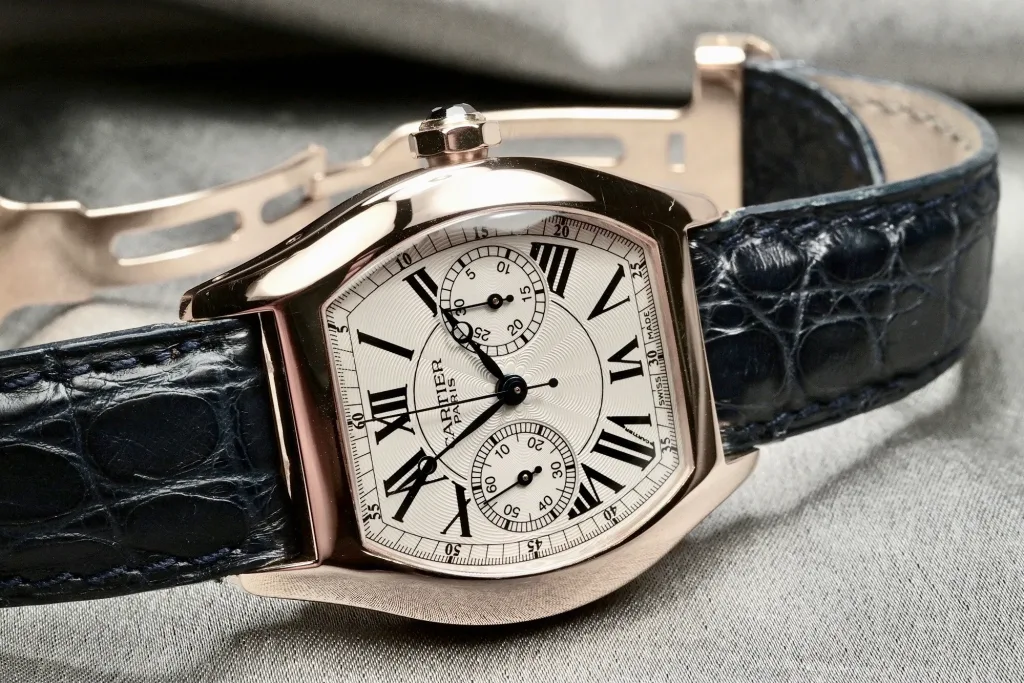
A dedicated article examining the THA monopoussoirs, their technical architecture, and their legacy across independent watchmaking will follow in a forthcoming instalment.
Next week: Part 2 — The Models. A reference guide to each CPCP model family, covering design origins, calibres, case metals, dimensions, production estimates, and notable variants.
[contact-form-7 id=”4235″ title=”Contact form 1″]