No products in the cart.


Newsletter
[contact-form-7 id=”4235″ title=”Contact form 1″]

The Santos-Dumont is one of the first models presented within the CPCP at its 1998 launch. Two versions are produced.
The larger of the two, measuring 27 × 36 mm with a thickness of 4.5 mm. Cases are made in 18kt yellow gold and platinum — the platinum version produced in smaller numbers than the gold. The movement is the Cal. 021MC, based on the Frédéric Piguet Calibre 21, a manual-wind ultra-thin ébauche measuring 20.4 mm in diameter and 1.75 mm in thickness. The dial is white or ivory guilloché with painted black Roman numerals, chemin de fer minute track, and blued steel Breguet-style hands.

The bezel has the inset screws that are the defining feature of the Santos design. The caseback is closed (no display back) and engraved “Cartier Paris” and “Mécanique.” The strap is crocodile with a signed 18kt gold deployant clasp. Production is estimated at 250–300 pieces per metal variant; the platinum version is significantly rarer.
A known limited edition is the Salmon Dial Santos-Dumont in Platinum — 90 pieces produced to celebrate the 90th anniversary of the Santos-Dumont model. It has the same Cal. 021MC and case dimensions as the standard ref. 1575B but with a distinctive salmon-coloured guilloché dial that has become one of the most sought-after CPCP configurations.

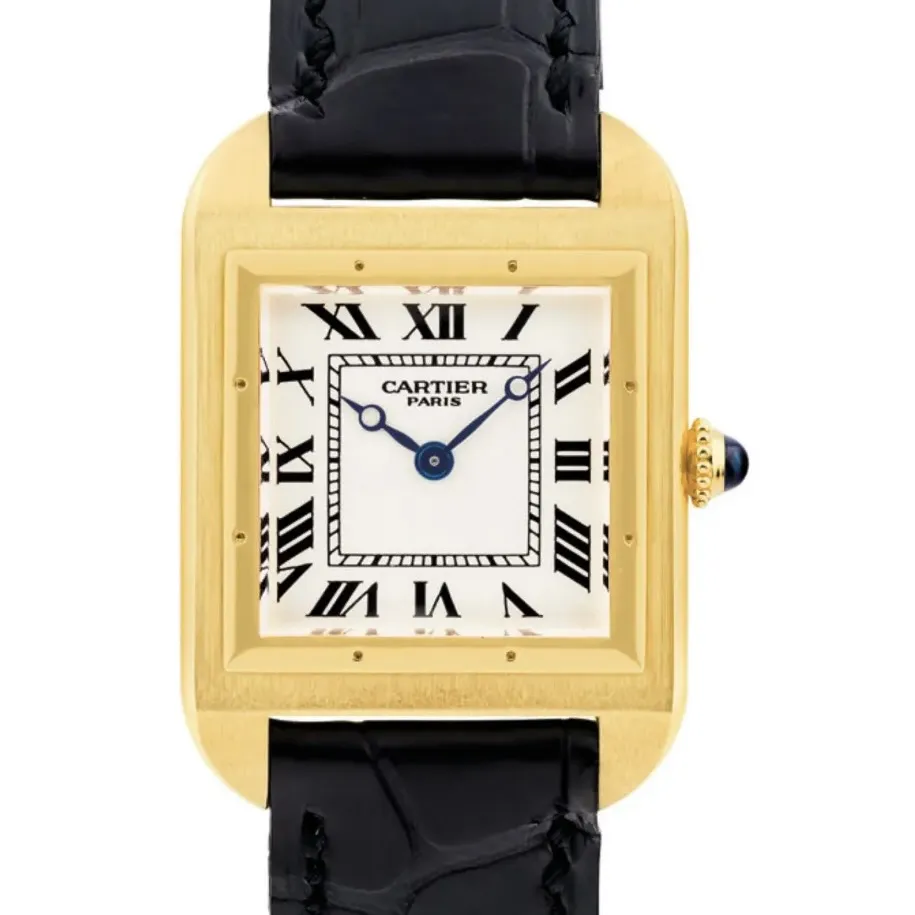
A faithful reissue of the original 1913 Santos-Dumont, produced in a limited edition of 100 pieces in 18kt yellow gold only. The case measures 24 × 34.5 mm — the same dimensions as the 1913 original, deliberately not enlarged to contemporary scale. The movement is the Cal. 9780MC, a Jaeger-LeCoultre-based manual-wind calibre 849. The crystal is a facet-cut sapphire — a period- correct detail reproducing the bevelled glass of the original.
The hands are blued steel Breguet- style. In keeping with the 1913 original, the watch is delivered with a non-adjustable folding buckle: the strap had to be custom-made to fit the client’s wrist. This is the smallest men’s model in the CPCP collection.
The Tonneau is Cartier’s second-ever watch design, first released in 1906, two years after the Santos. Its barrel-shaped case — wider at the centre than at the top and bottom — established a form that would influence fancy-shape watches throughout the twentieth century.
Within the CPCP, the Tonneau is offered in two production runs: an initial series dated 1998, and a larger XL version introduced in 2006 to mark the model’s centenary.
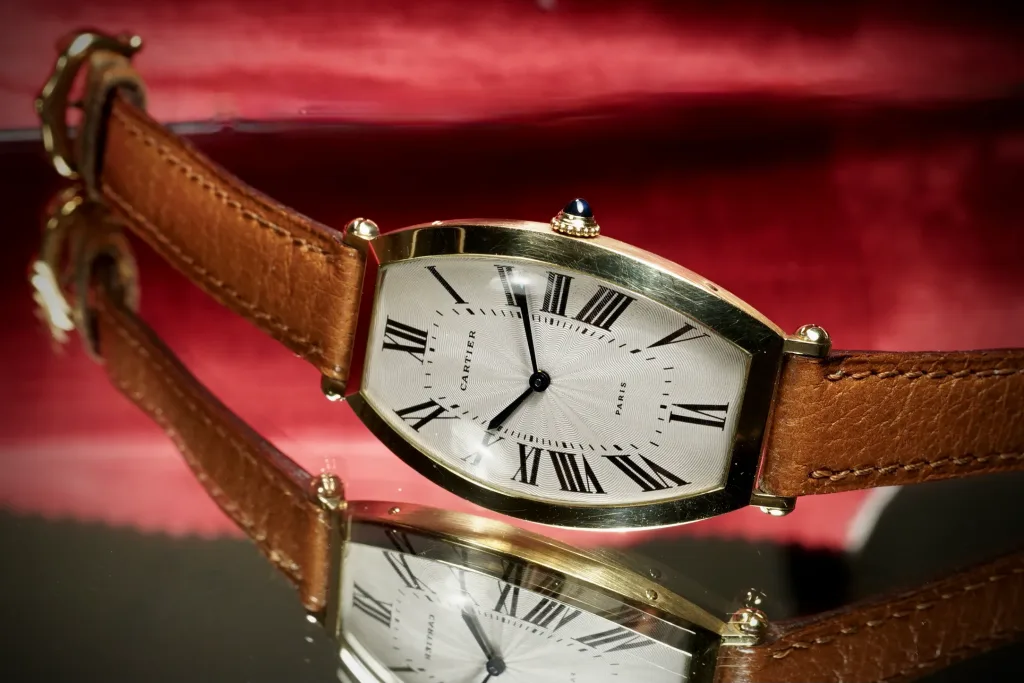
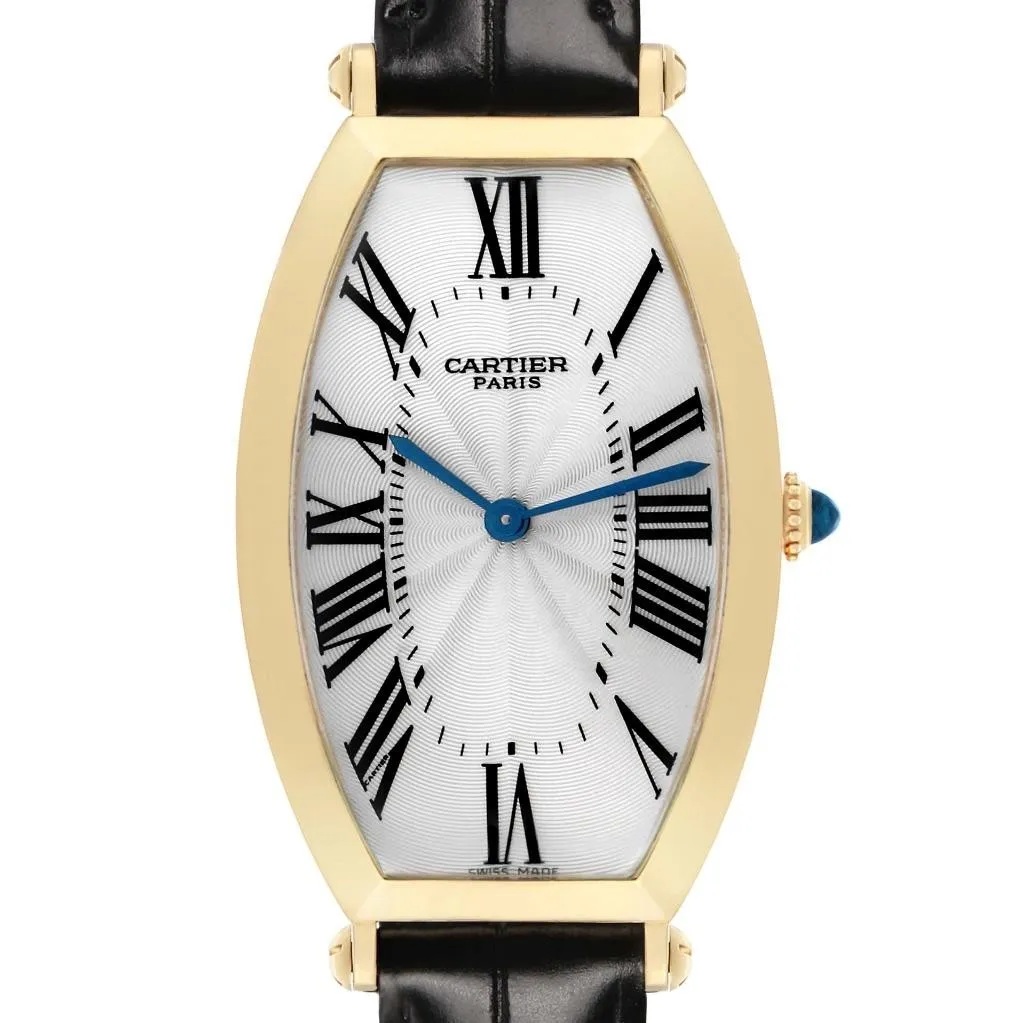
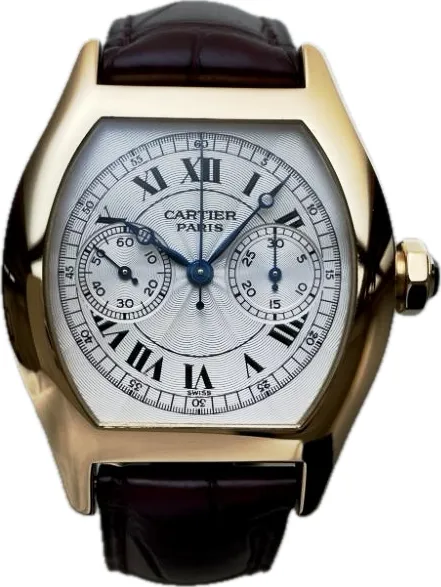
The initial CPCP Tonneau measures 39 × 21.5 mm (lug to lug × width), with a thickness of 7.5 mm. Cases are produced in 18kt yellow, white, rose gold, and platinum.
The platinum Tonneau (ref. W1514) is limited to 200 pieces. The movement is based on a Frédéric Piguet ébauche; the Cal. 060MC. The curved case followed the contour of the wrist, and the crystal is similarly curved.
The dial is silvered guilloché with the CPCP rose motif at the centre (on later examples), painted Roman numerals, and blued steel Breguet-style hands (on later examples; early CPCP Tonneau had sword-shaped hands).
Early CPCP pieces are distinguished from later ones by the absence of the rose motif on the dial and the use of sword-shaped hands rather than Breguet-style. The transition occurred during production, making early-dial tonneau a distinct sub-category.
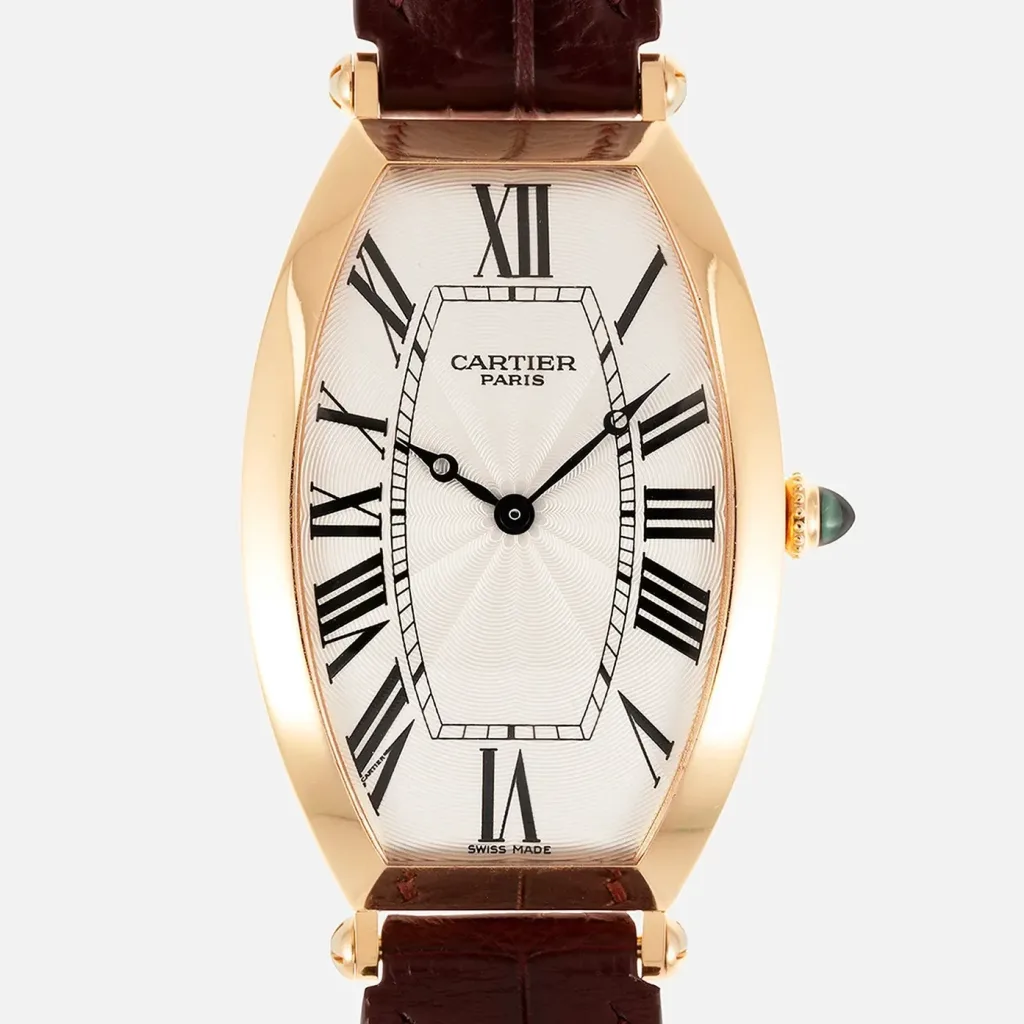
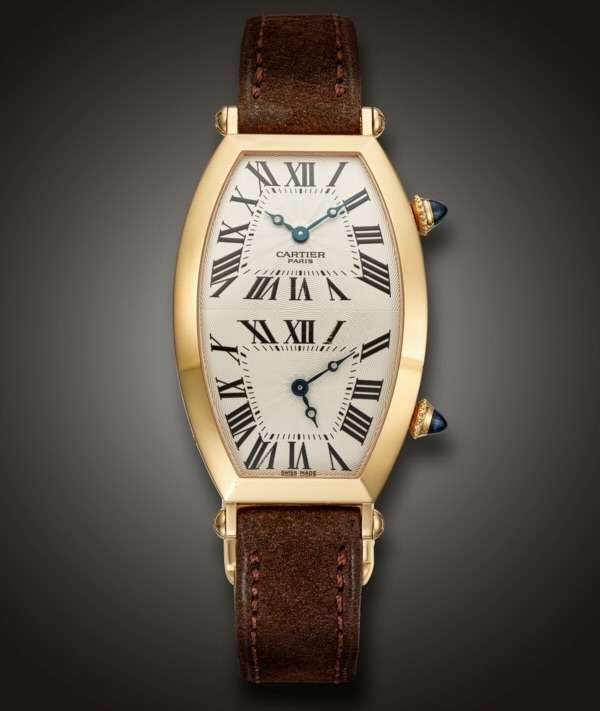
Introduced in 2006 for the Tonneau’s 100th anniversary. The XL measures 43.4 × 29.4 mm (51.4 mm lug to lug) — a significant increase over the standard CPCP Tonneau. It is produced in rose gold and as a numbered limited edition of 150 pieces. The movement is a Cartier cal. 9790MC. The dial has the full CPCP codes: guilloché pattern, rose motif, “Paris” inscription, and Breguet- style hands.
A complication rose gold variant with two separate hand-wound movements Cartier calibre 9770MC — one for home time, one for the second time zone.
The Tortue — French for “tortoise,” named for the case’s arched profile — was first produced in 1912 and became the single most commercially important model within the CPCP. It was the best-selling CPCP model in 1999, 2000, 2003, 2004, and 2005 — for half the period the collection was available.
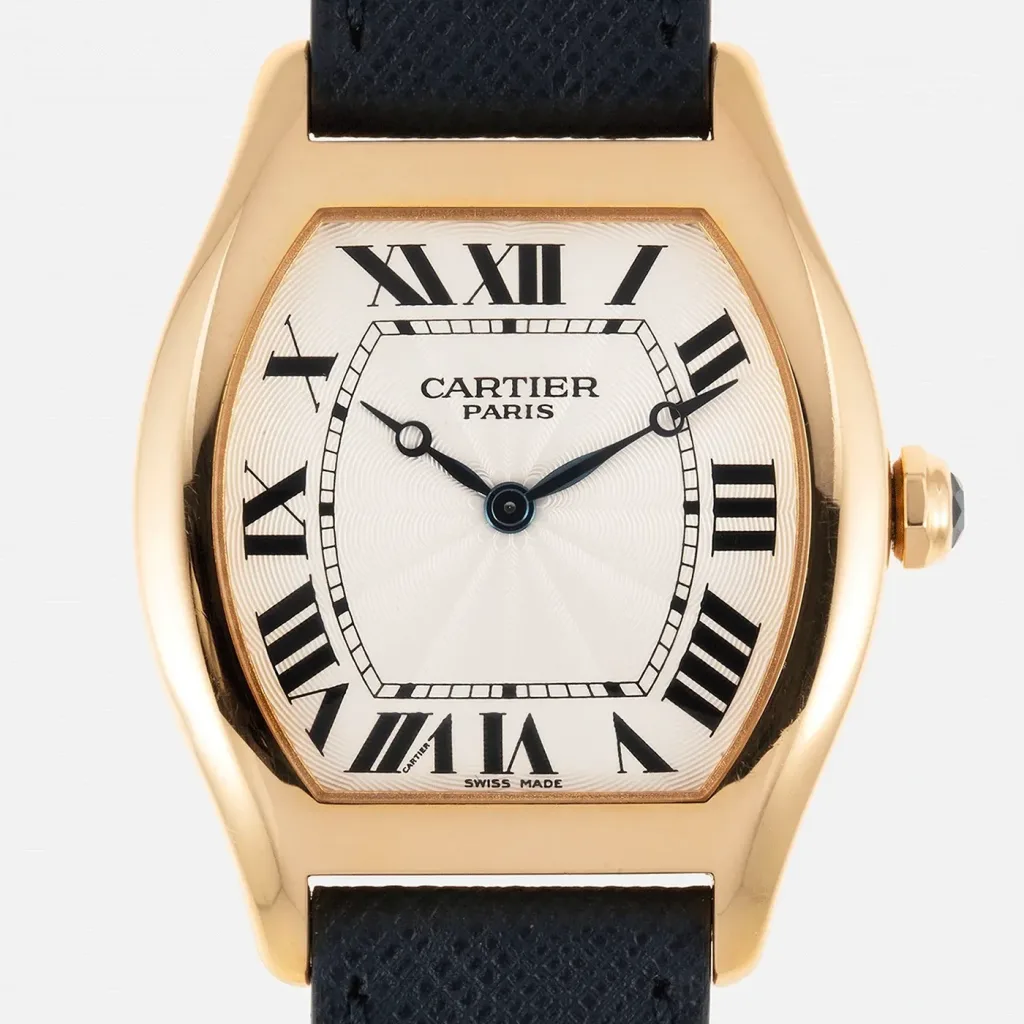
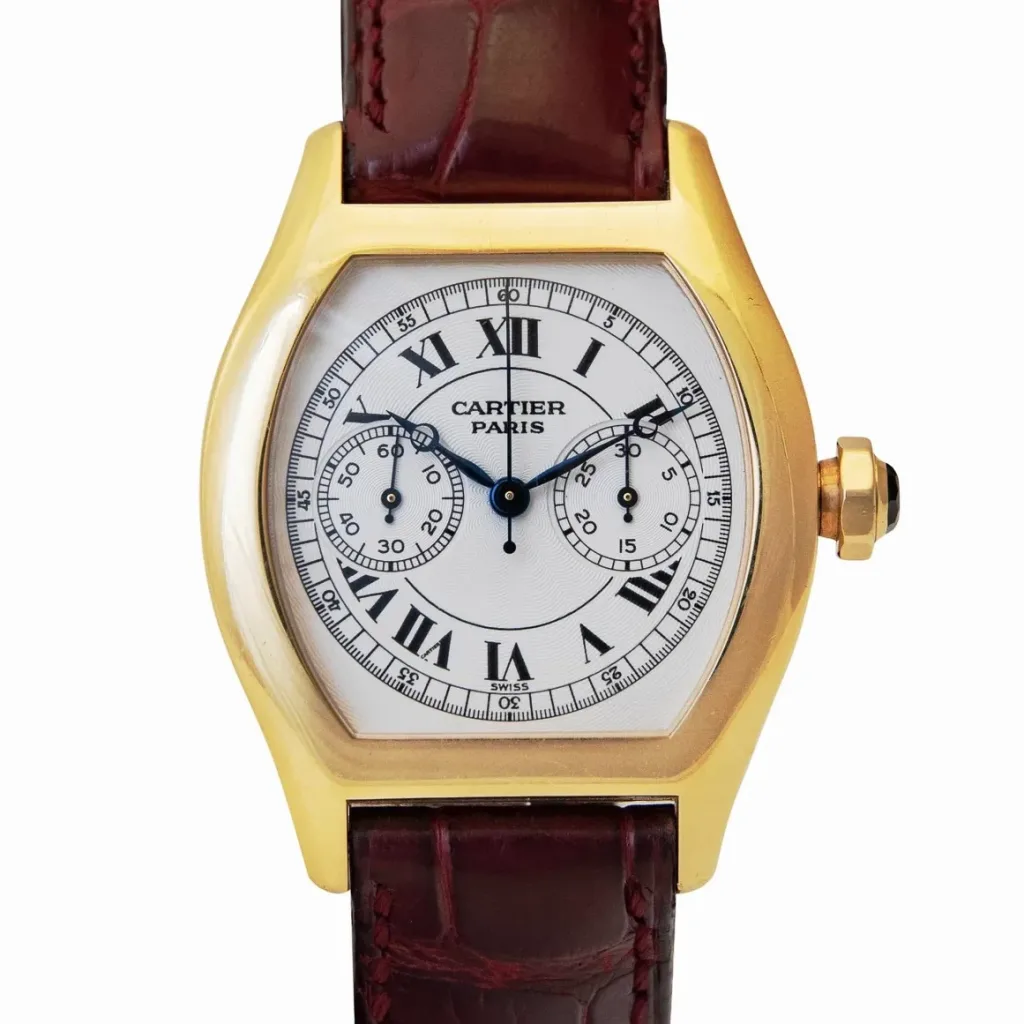
The time-only Tortue was among the first models presented at the CPCP launch in 1998. The case measured 43 × 35 mm. It was produced across two generations, distinguished by their movements and dial details.
The first time-only Tortues are fitted with the Cal. 437MC, based on a Piaget ébauche — a manual-wind movement visible through a sapphire caseback. References include the ref. 2498 (rose gold). These early pieces usually have sword-shaped hands and dials without the rose motif.
Subsequent time-only Tortues were fitted with the Cal. 9601MC, a manually wound movement with 20 jewels and a 40-hour power reserve, originally based on the self-winding 8000MC — the first movement developed for Cartier by Jaeger-LeCoultre.
The references are 2496 (yellow gold), 2498 (rose gold), 2518 (platinum), and 2763 (rose gold, later production). These later models carried the full CPCP codes. A Tortue XL was also produced — ref. 2764 (platinum), measuring 48 × 38 mm, fitted with the Cal. 9601MC. In all metals, the platinum versions has the smallest production numbers, followed by rose gold; yellow gold is the most common. Production is estimated at 250–300 pieces per reference.
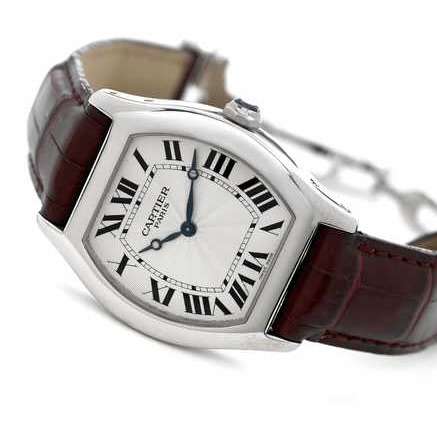

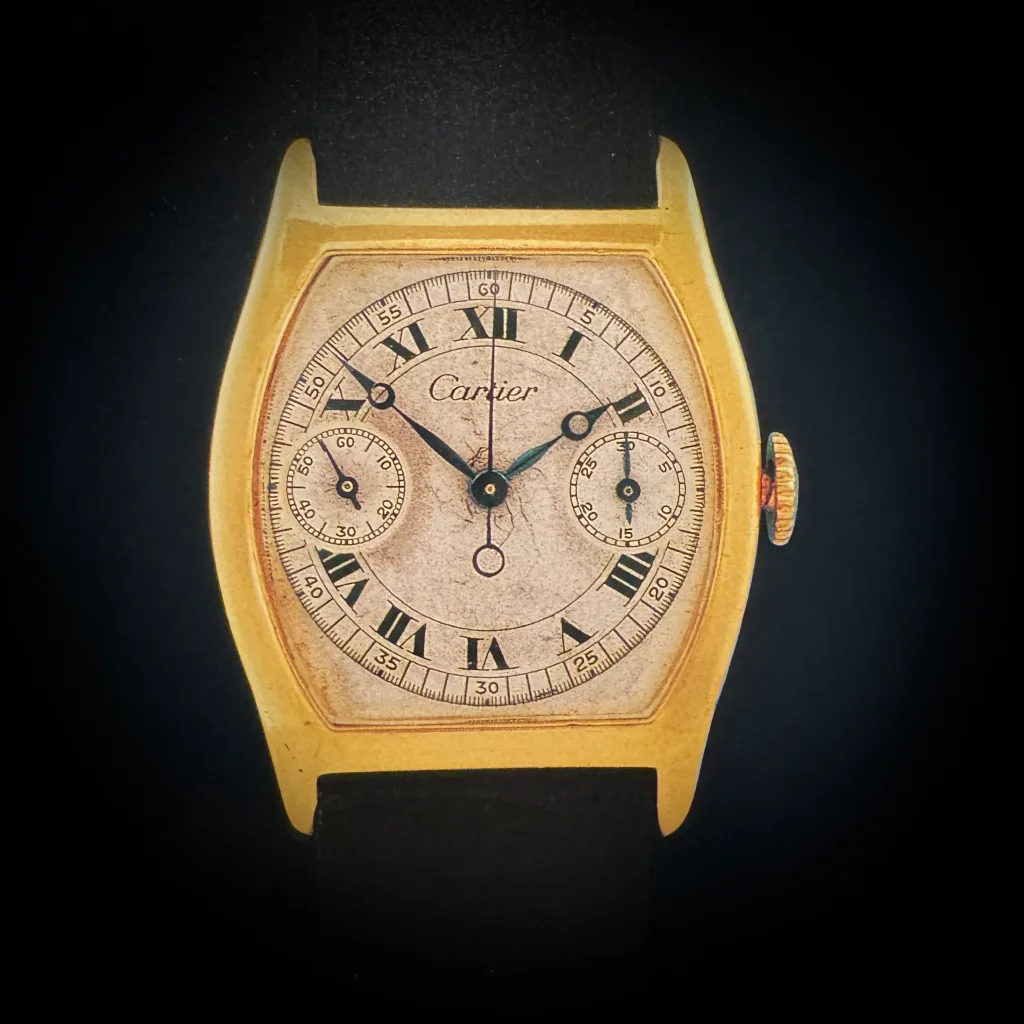
The most celebrated complication in the CPCP collection. The Monopoussoir (single-pusher chronograph) was first produced by Cartier in 1928, and the CPCP reissue debuted in 1999. The case measured 45 × 35 mm — larger than the 35 × 26 mm original from the 1920s.
The Cal. 045MC was developed by Techniques Horlogères Appliquées (THA), a movement manufacture founded in 1996 by Denis Flageollet, Vianney Halter, and François-Paul Journe.
In an interview with Phillips, Flageollet recalled that THA proposed the idea of reviving the Tortue Monopoussoir to Cartier, rather than the other way around: “At the time the heads of product did not have extensive knowledge of their heritage. We gave them the idea to remake the chrono- monopoussoir Tortue.”


The Cal. 045MC is a hand-wound column-wheel chronograph with an oscillating pinion clutch — a design that eliminates the jolt on the central seconds hand at engagement, prioritising smoothness over mechanical simplicity. Bridges and plates were finished with the Cartier logo, Côtes de Genève, and perlage. THA could produce approximately 200 calibres per year. Total production across the decade is estimated at under 2,000 units.
The Cal. 045MC debuted before the Lange Datograph (1999), placing it at the vanguard of the era’s return to in-house chronograph movement development. After leaving THA, Flageollet adapted the architecture for the De Bethune DB1 and DB8 monopoussoir chronographs.
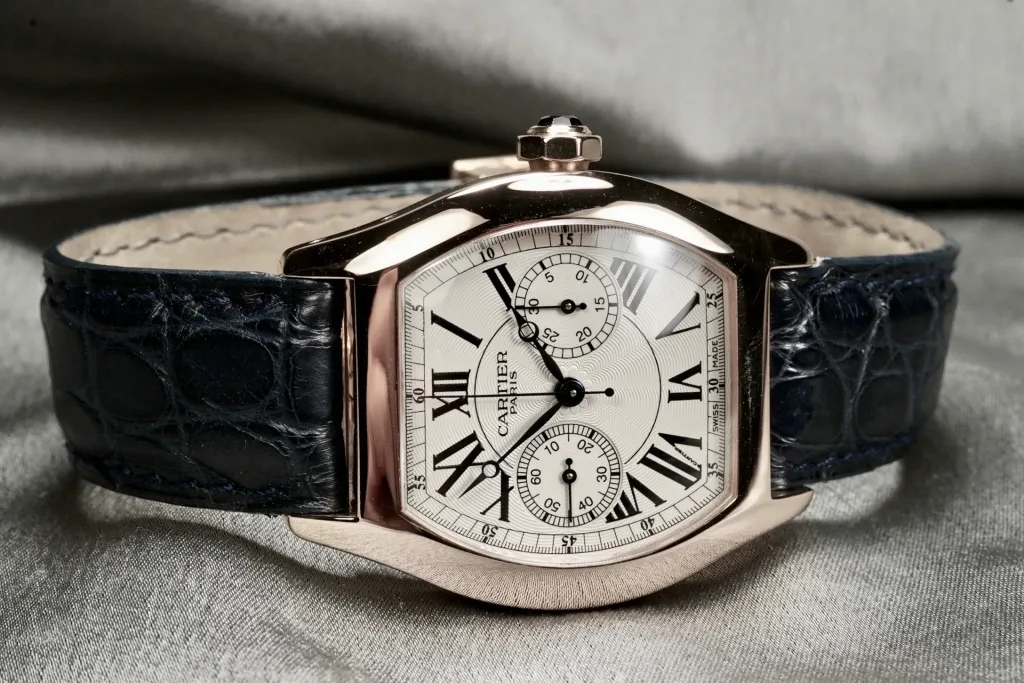
Case size for the standard Tortue Monopoussoir is 34 × 43 mm unless noted. All references: Cal. 045MC, manual-wind, column-wheel chronograph, oscillating pinion clutch, 22 jewels. Developed by THA (Flageollet, Halter, Journe). Total Cal. 045MC production estimated at under 2,000 units across all Cartier references and De Bethune DB1/DB8. The Cal. 045MC was fitted in three CPCP models: the Tortue Monopoussoir (from 1999), the Tortue Monopoussoir XL (from c. 2005), and the Tank Monopoussoir (2007).
| Ref. | Model | Metal Case | Size | Dial | Hands | Production | Period |
|---|---|---|---|---|---|---|---|
| 2356 | Tortue Monopoussoir | 18kt YG | 34 × 43 mm | Guilloché, circular chapter ring, black Roman numerals around full dial | Sword-shaped, blued steel | Est. 300–400 | 1999 onward |
| 2396 | Tortue Monopoussoir | 18kt WG | 34 × 43 mm | White/blue, circular layout, Roman numeral at 12 only | Sword-shaped, blued steel | Est. 300–400 | 1999 onward |
| 2661 | Tortue Monopoussoir | 18kt RG | 34 × 43 mm | Silvered guilloché, outsized black Roman numerals | Breguet, blued steel | Est. 300–400 | c. 2000 onward |
| 2714 | Tortue Monopoussoir | 18kt WG | 34 × 43 mm | Silvered guilloché, outsized Roman numerals, blue minute track | Breguet, blued steel | Est. 300–400 | c. 2005 onward |
| 2762 | Tortue Mono. XL | TBC | 38 × 43 mm | TBC | TBC | Limited | c. 2005 onward |
| 2781 | Tortue Mono. XL | 18kt RG | XL | Guilloché, rose motif | Breguet, blued steel | Limited | c. 2005 onward |
| 2846 | Tank Monopoussoir | 18kt RG | 34 × 43 mm | Guilloché | Breguet, blued steel | 100 pcs | 2007 |
| 2846 | Tank Monopoussoir | 18kt WG | 34 × 43 mm | Guilloché | Breguet, blued steel | 100 pcs | 2007 |
| — | Tortue Mono. “13 Rue de la Paix” | 18kt WG | 34 × 43 mm | Salmon guilloché, Arabic “13” at 12 | Breguet, blued steel | 13 pcs | 1999 |
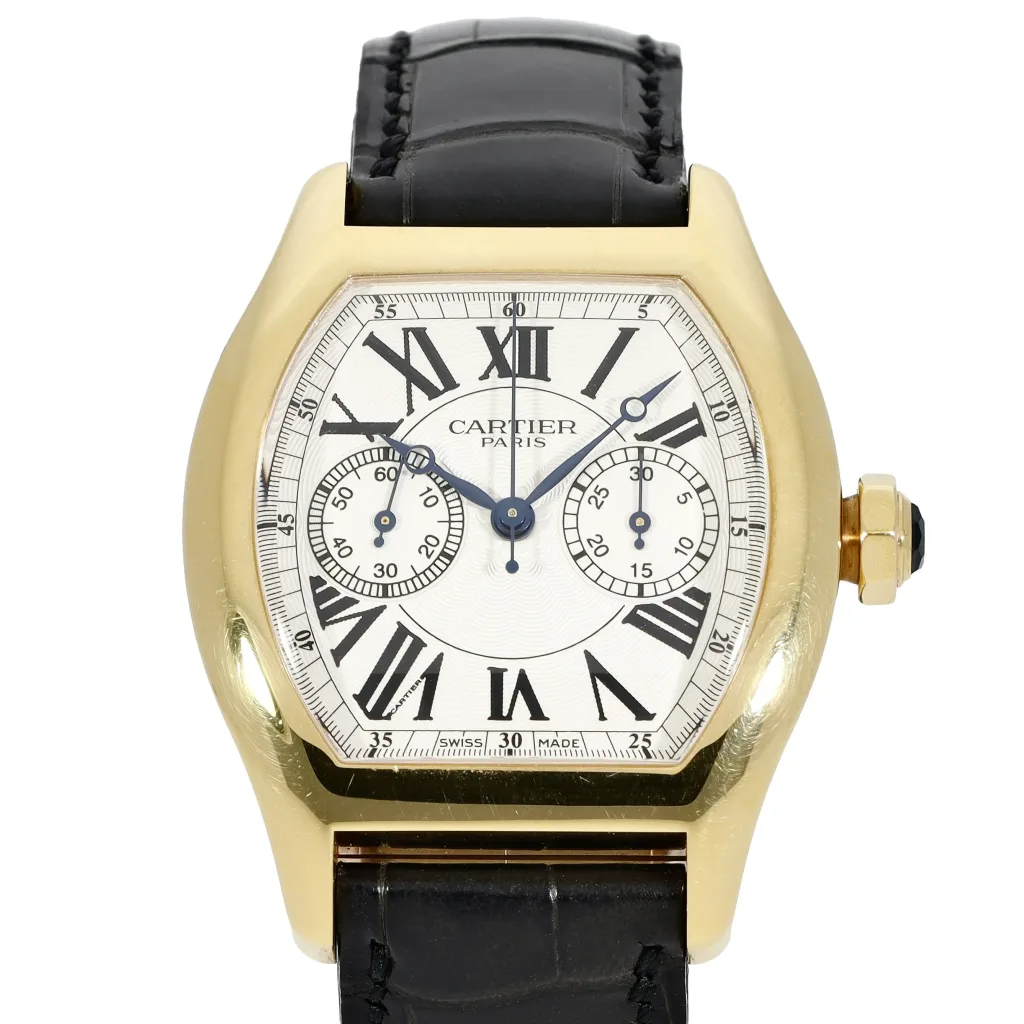
Introduced in 1999. Case size: 45 × 35 mm. The dial featured a circular chapter ring and minute track printed on the tonneau-shaped dial, reproducing the layout of the original 1928 Tortue Monopoussoir. Black Roman numerals were printed around the full dial. Blued steel sword- shaped hands.
This is the earliest and most historically faithful of the CPCP Monopoussoir references and also one of the easier to find. Multiple dial executions exist: classic Roman numerals, “Large XII” dial, beaded indexes, blue triangular motifs, silvered guilloché dials, salmon/cream variations depending on metal.
Also introduced in 1999. Same case dimensions. The dial layout was similar to the ref. 2356 but with a distinctive white and blue colour scheme — the blue accents giving the dial a porcelain-like quality. Roman numerals were present only at 12 o’clock; the remaining hours were marked by dots or indices. This is the reference most frequently encountered at auction.
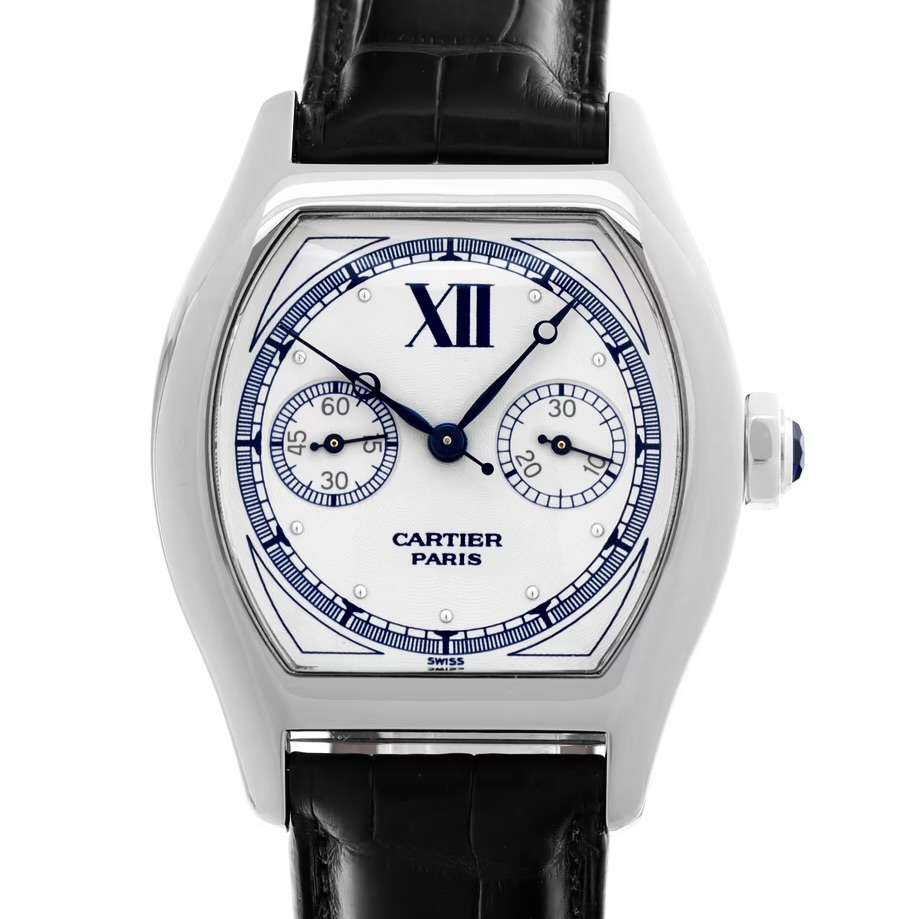

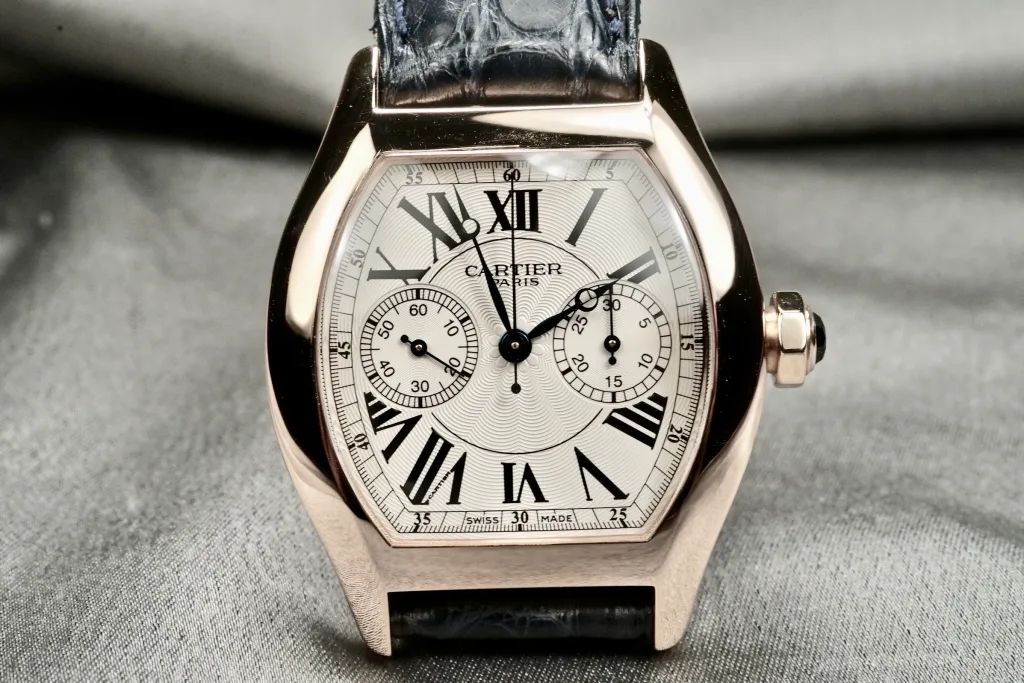
The ref. 2661 is the rose gold Tortue Monopoussoir with the later-generation dial design. Introduced after the initial 1999 launch references, the ref. 2661 replaced the circular chapter ring layout of the early models with a silvered guilloché dial featuring bold, outsized black Roman numerals that extend toward the edges of the tonneau-shaped dial.
The hands transitioned from the sword-shaped blued steel of the early references to Breguet-style blued steel. The case is 18kt rose gold, 34 × 43 mm, with a sapphire display back. The white gold counterpart with the same outsized numeral dial is the ref. 2714.
A later-production variant with a different dial design: bold, outsized Roman numerals skewed to follow the contour of the tonneau case. This execution was more contemporary in character than the refs. 2356 and 2396, and is considered a later evolution of the Monopoussoir within the CPCP run.
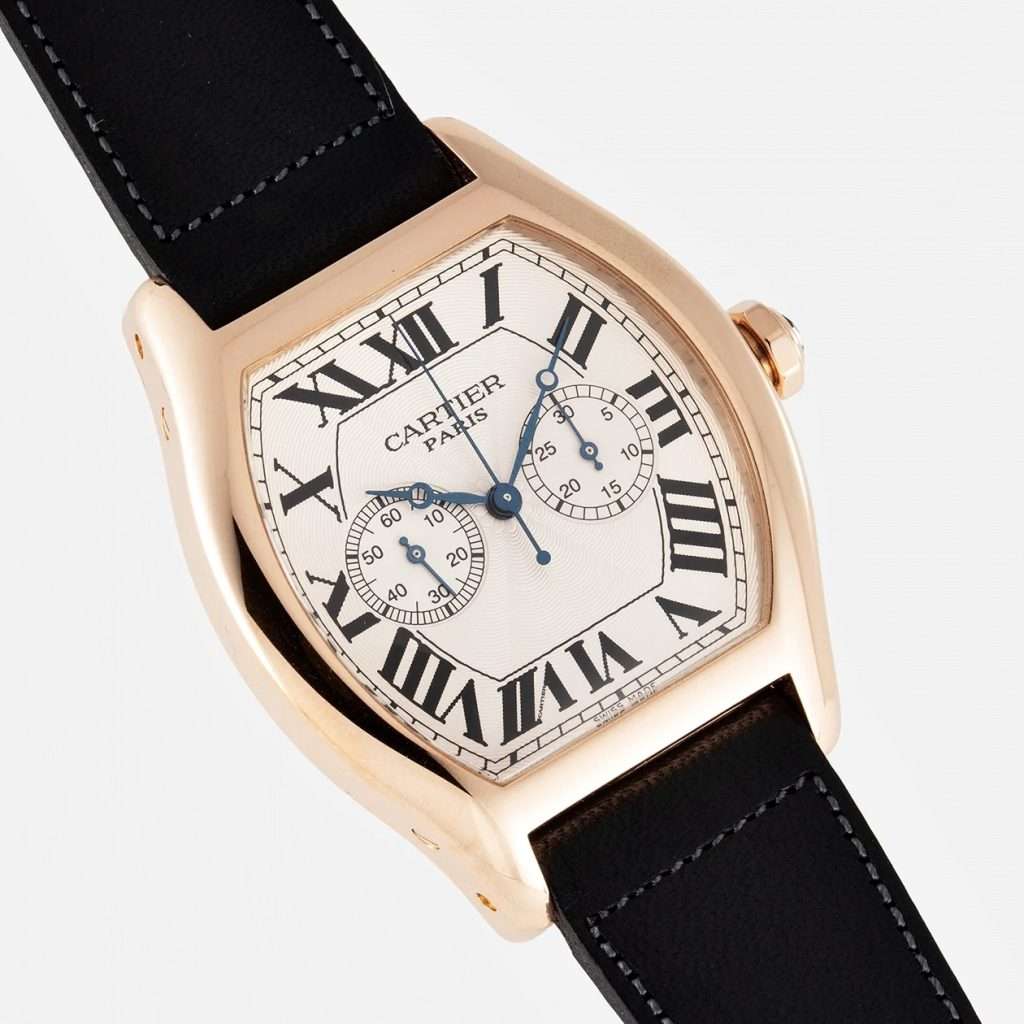
Two enlarged versions, c. 2005. Same Cal. 045MC. The XL size and the rose gold case give this variant a more modern presence on the wrist.
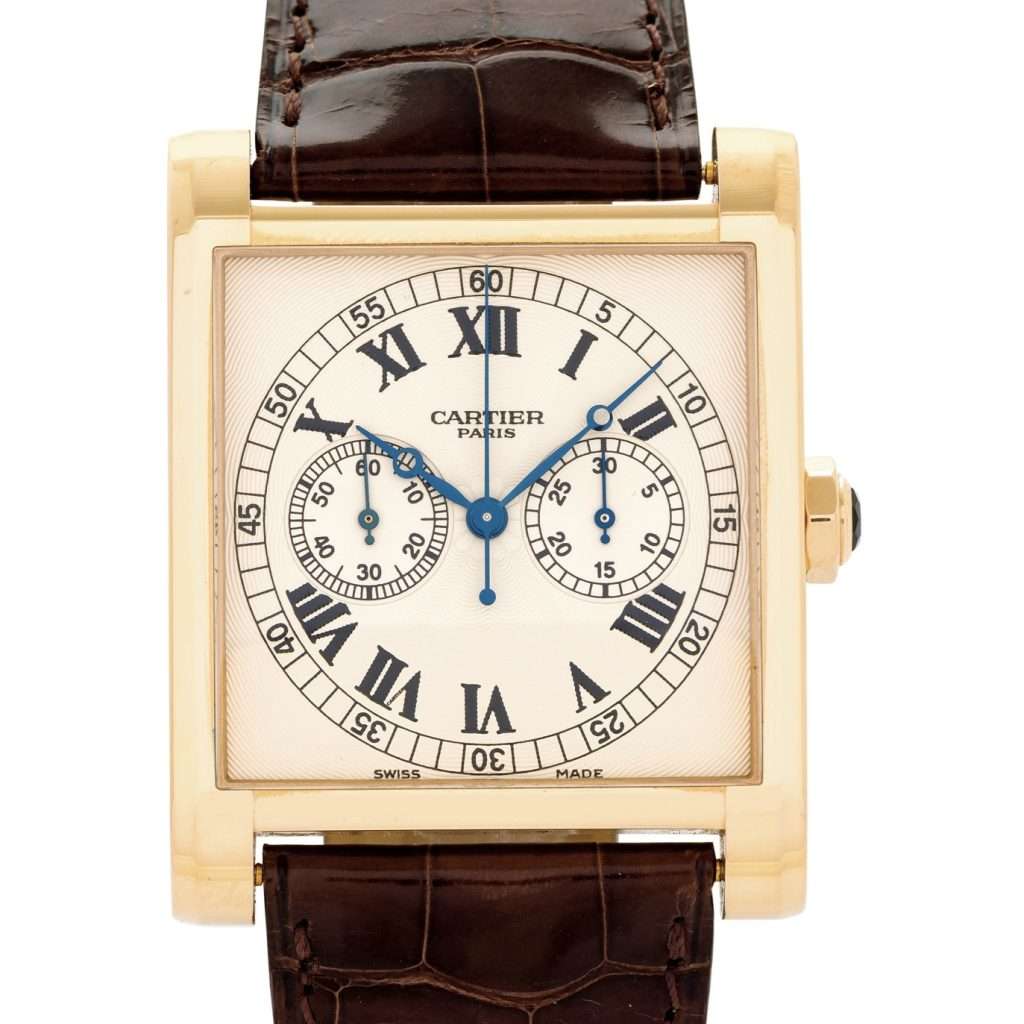
Released in 2007, in the penultimate year of the CPCP programme. Case size: 34 × 43 mm. Based on a unique 1935 Tank monopoussoir chronograph from Cartier’s archives that had remained virtually unknown until the CPCP team surfaced it. Limited to 100 pieces in rose gold and 100 pieces in white gold. Same Cal. 045MC — making it one of only two CPCP case designs (alongside the Tortue) to house this calibre.
Demand was immediate: according to A Collected Man, the entire production sold out almost instantly, with some Cartier boutiques unaware of the model’s existence before stock was exhausted.
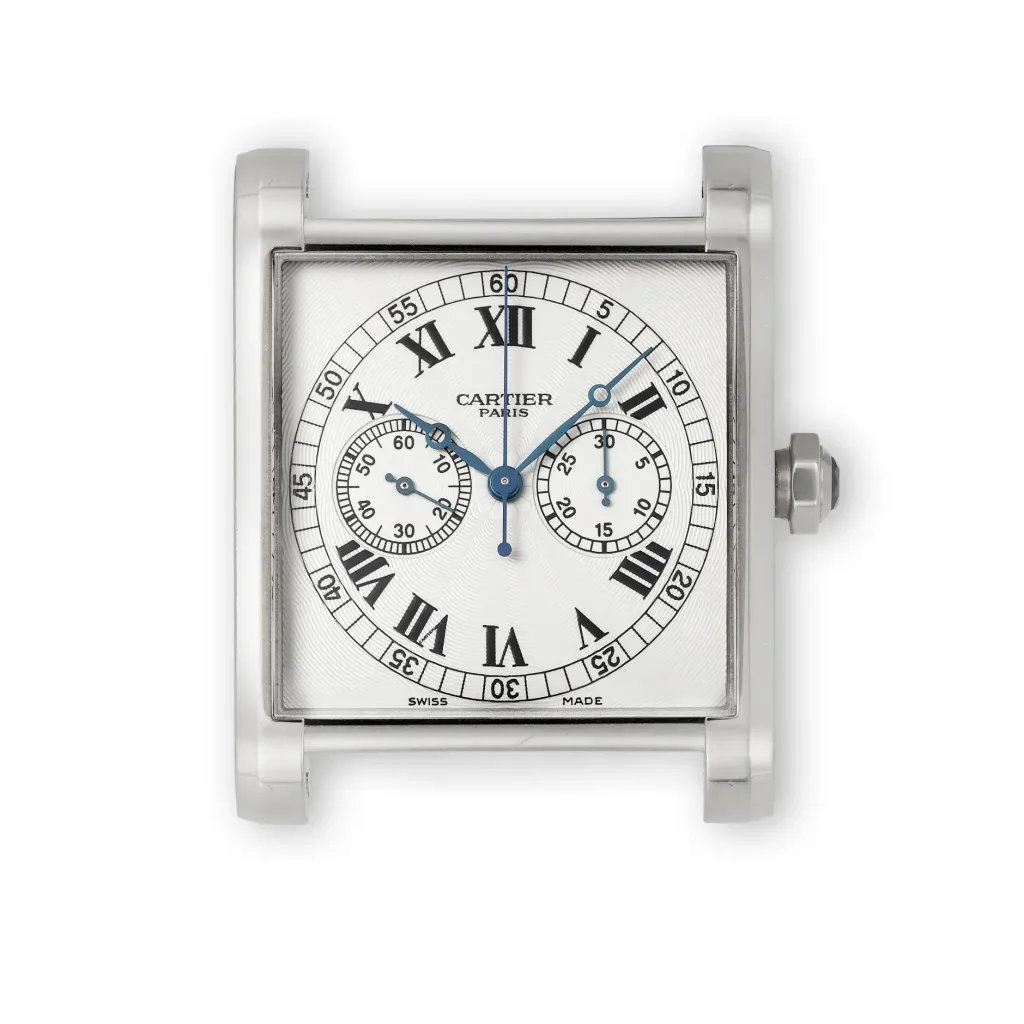
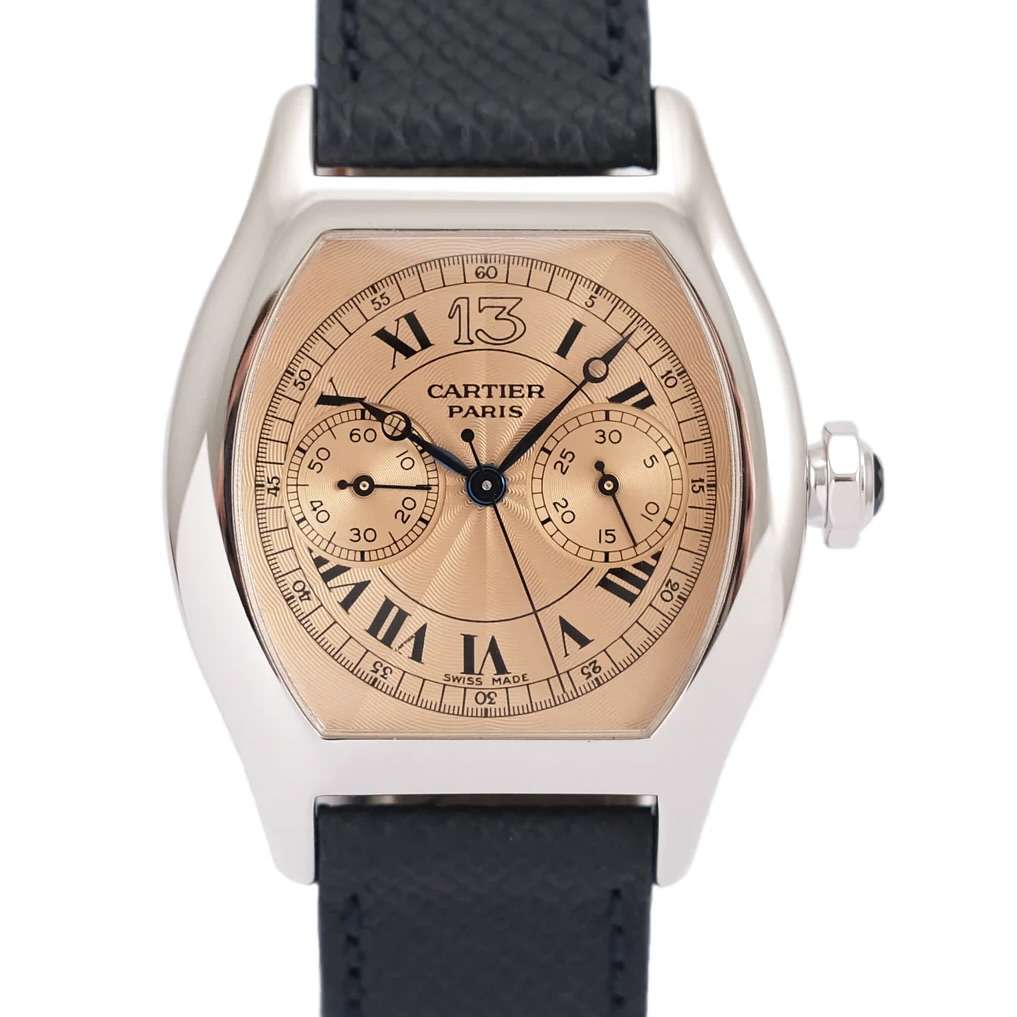
In 1999, to celebrate the 100th anniversary of Cartier’s Paris boutique at 13 Rue de la Paix — the building purchased by Alfred Cartier in 1899 that served as the creative centre of the maison throughout the twentieth century — Cartier produced a series of special editions in which the Roman numeral XII at 12 o’clock was replaced by an Arabic “13.” There were four watches: two Must de Cartier Tanks in small and large sizes (100 pieces each), 13 Driver, and 13 of the Tortue Monopoussoir.
The Tortue Monopoussoir “13” was manufactured in white gold with a salmon guilloché dial — a colour not used on any other CPCP Monopoussoir — and housed the same Cal. 045MC as the standard production models. Many of the 13 pieces were given to employees of the boutique.
Only five have appeared for sale publicly. In 2011, Tajan Auctions sold a Tortue Monopoussoir “13 Rue de la Paix” for $18,000. In 2023, Artcurial sold another of the same reference for $93,000. Private transaction results have reportedly exceeded these figures. The “13 Rue de la Paix” Tortue Monopoussoir is considered by many to be the single rarest and most desirable modern Cartier wristwatch.
Production figures for the CPCP collection were never disclosed by Cartier. For the numbered limited editions — the Tank Monopoussoir ref. 2846 (100 pieces per metal), the Tonneau XL ref. 2802 (100 pieces), the Santos-Dumont 1913 ref. 2697F (100 pieces), the Santos-Dumont 90th Anniversary (90 pieces), and the Driver ref. 2270 (150 pieces) — quantities are confirmed by the individual numbering engraved on each caseback.
For the unnumbered references, the most widely cited estimate among dealers and auction houses is 250–300 pieces per reference. For the Tortue Monopoussoir, the production constraint was not Cartier but the Cal. 045MC itself: THA produced approximately 200 movements per year, placing total 045MC output across the decade at under 2,000 units.
These were shared among five Cartier references — the Tortue refs. 2356, 2396, 2714, and 2781, and the Tank ref. 2846 — as well as the De Bethune DB1 and DB8. Subtracting the 200 confirmed Tank Monopoussoirs, the remaining movements were divided among four Tortue references and De Bethune, suggesting a figure in the range of 300–400 pieces per Tortue Monopoussoir reference.
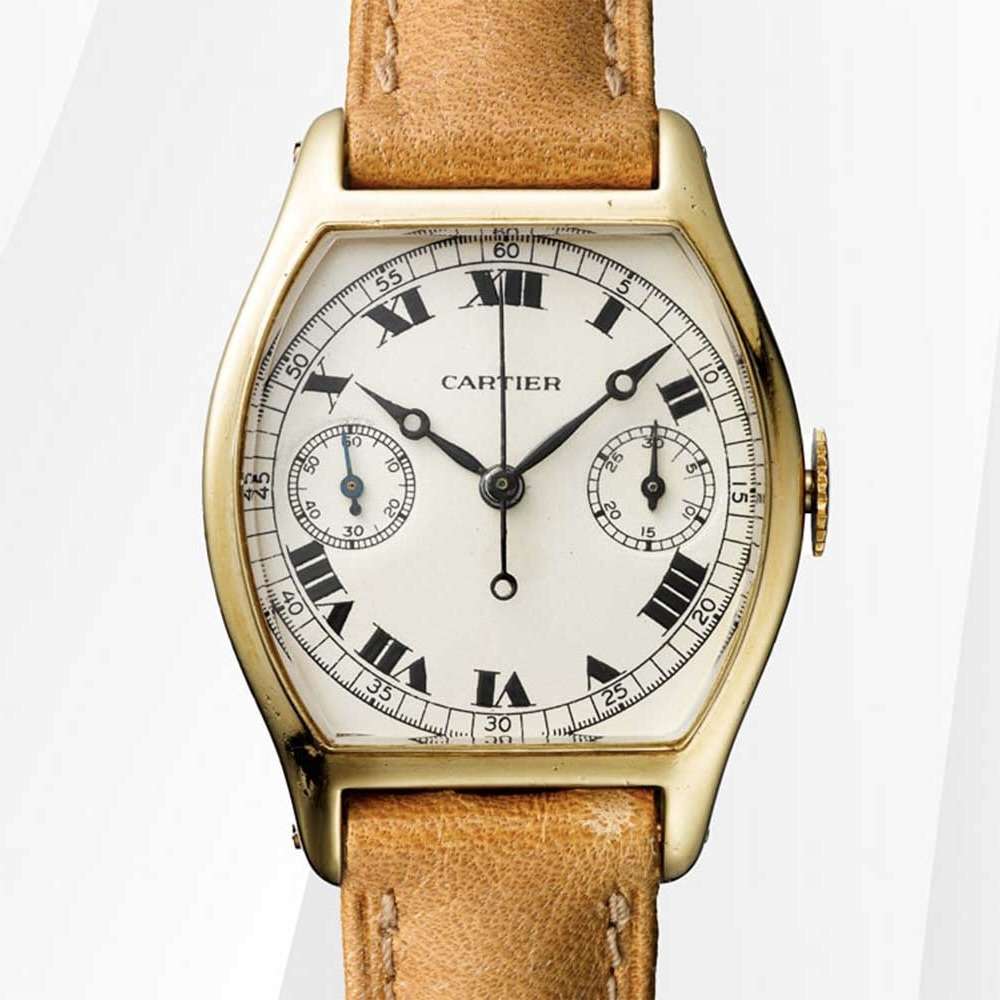
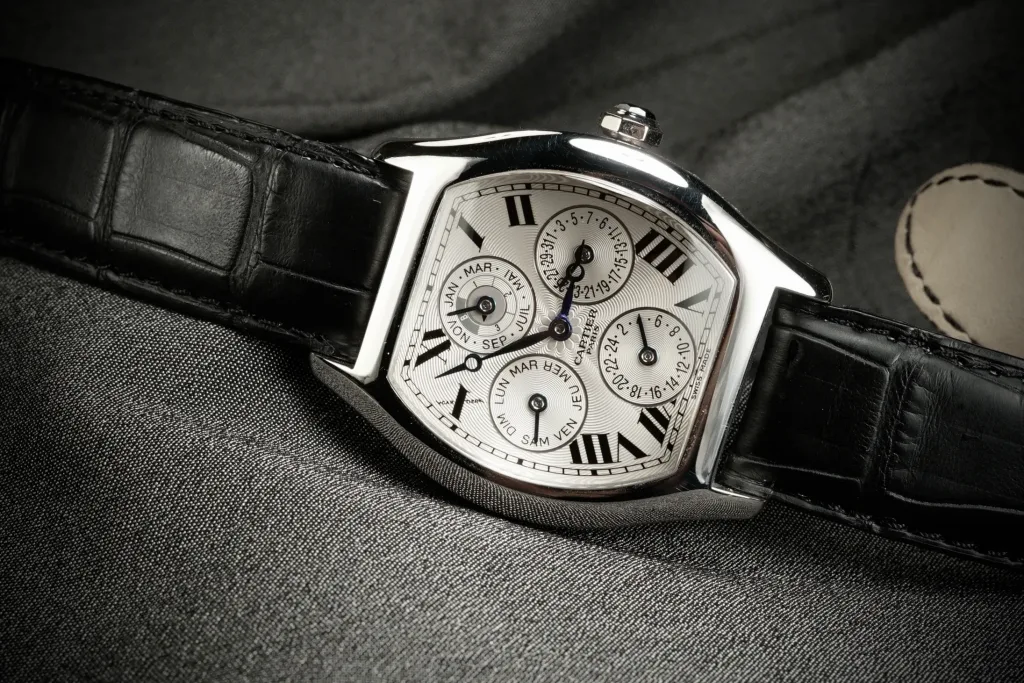
An automatic perpetual calendar with four sub-dials arranged symmetrically around the guilloché rose motif. The movement was the Cal. 9421MC, based on a Girard-Perregaux ébauche with a Dubois Dépraz perpetual calendar module, 33 jewels, 48-hour power reserve. Cases were produced in yellow gold, white gold, and platinum — the platinum version in the smallest quantities. The case measured approximately 34 × 33 mm (43 mm lug to lug) with a thickness of 11 mm.
A grand complication in platinum combining a tourbillon with a monopoussoir chronograph. The movement was the Cal. 9431MC, developed by Renaud & Papi (now Audemars Piguet Renaud & Papi). Among the most complex and expensive watches in the CPCP collection.

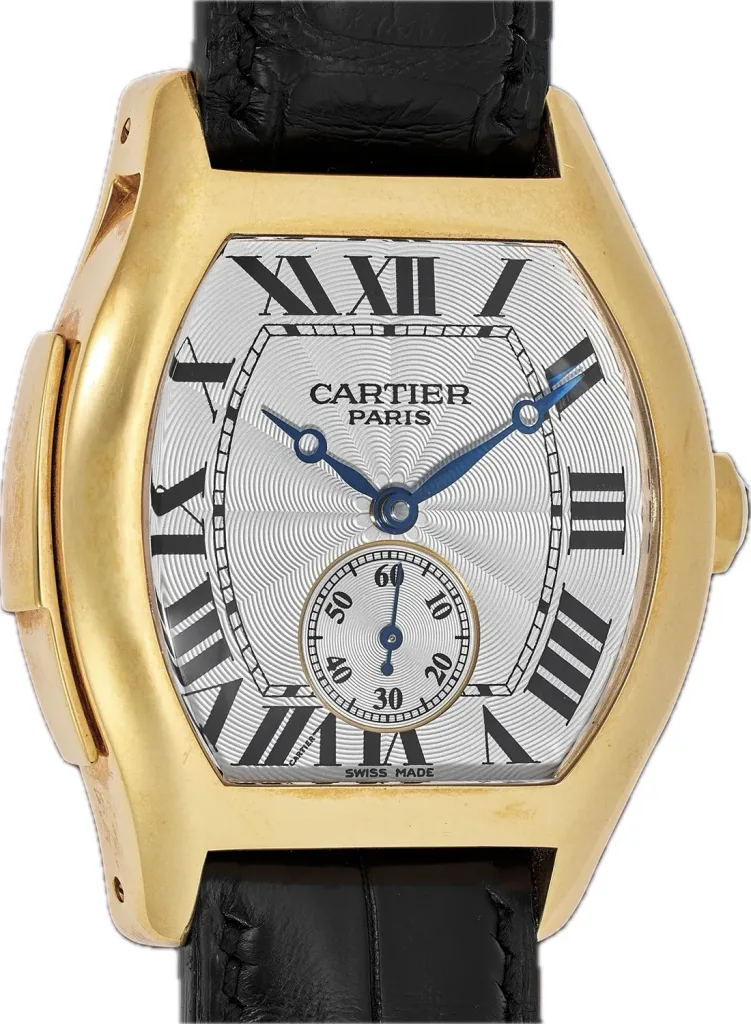
The Cal. 9401MC (yellow and rose gold versions, based on a Frédéric Piguet ébauche) and the Cal. 909MC (platinum, developed by Renaud & Papi). The minute repeater was the ultimate Cartier complication within the CPCP.
The Driver is the least-known model in the CPCP collection. It takes its name from its original intended use as a driving watch — the case construction was designed so that the time could be read with the hands on the steering wheel.
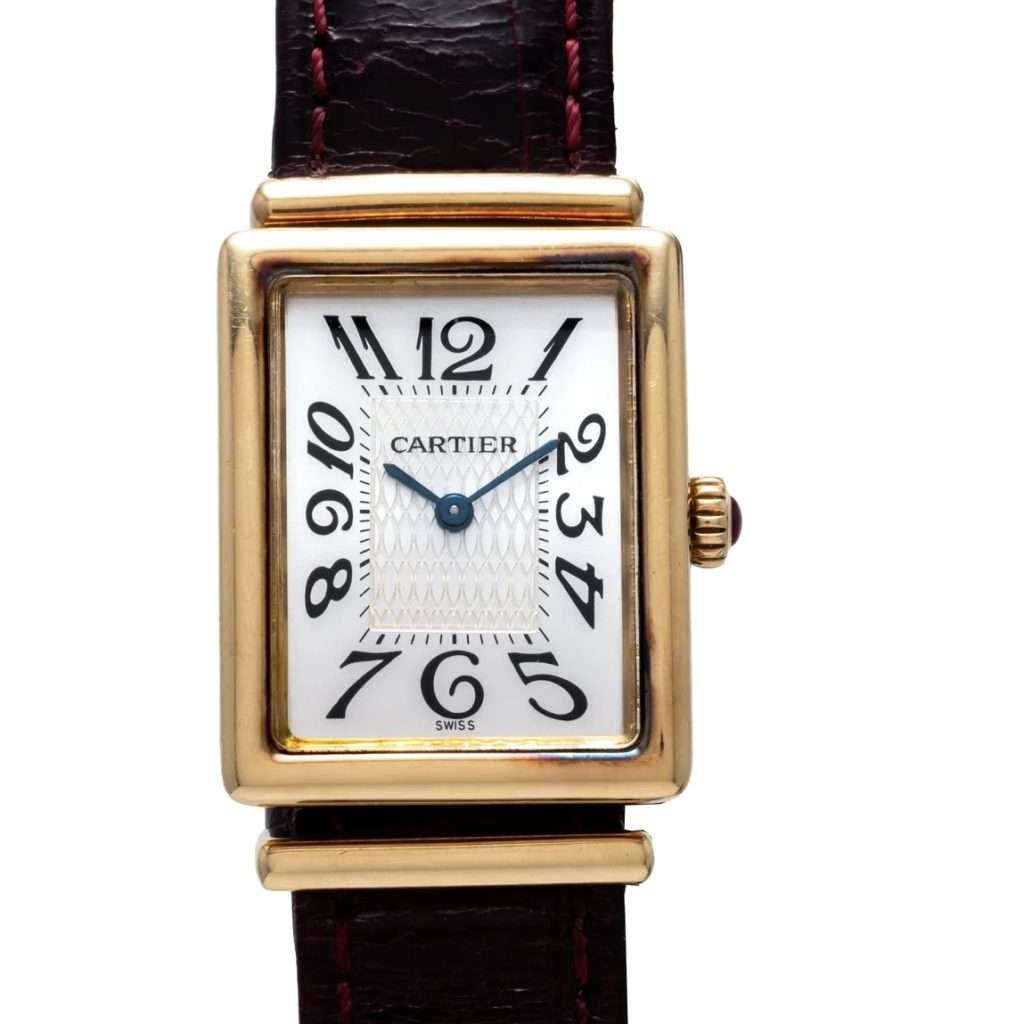
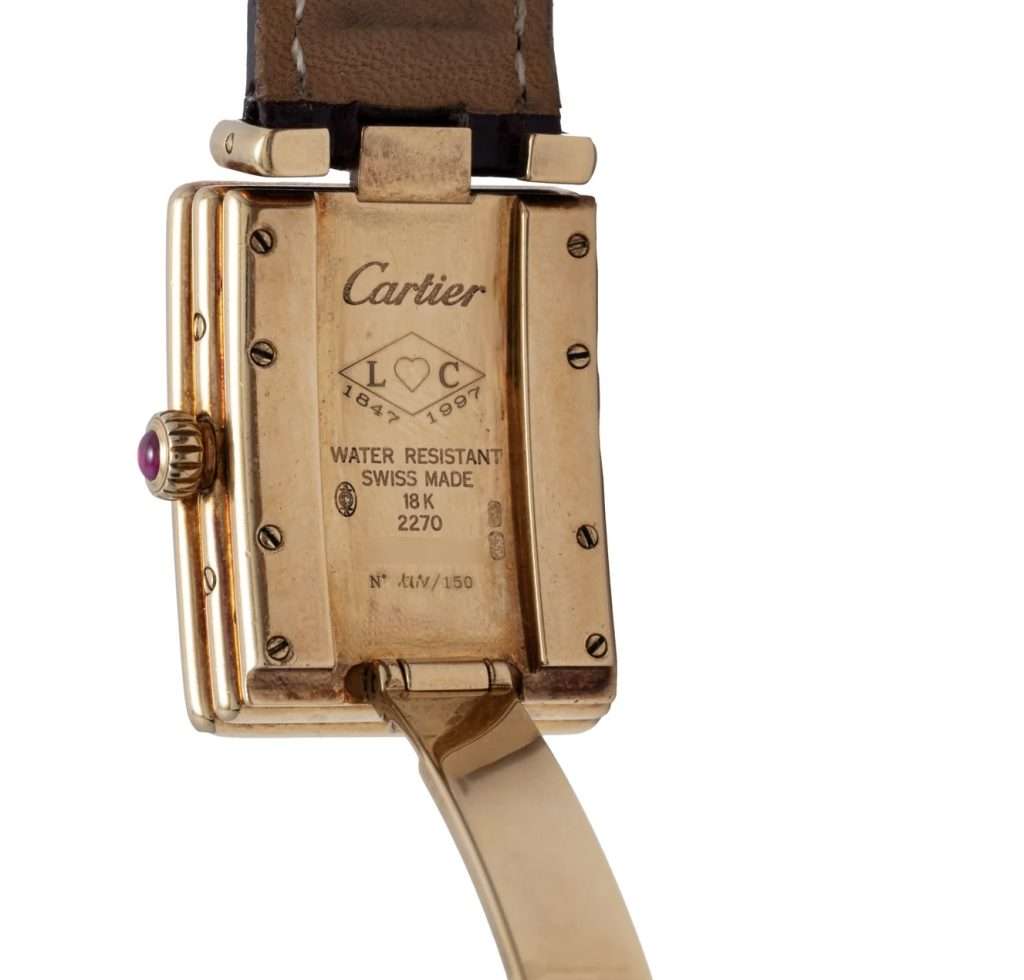
The CPCP Driver measured 24 × 38 mm (some sources list 22 × 33.5 mm, depending on whether the measurement includes the articulated lug structure) in 18kt yellow gold. The defining feature of the Driver is its strap integration: the buckle and closure mechanism are incorporated into the caseback itself, so that no clasp is visible on the wrist — the strap passes fully around the wrist unobstructed.
The articulated lug structure allows the watch to conform to a variety of wrist sizes. Production was limited to 150 pieces. The movement was a quartz Cal. 157.06 — making the Driver one of the few quartz-powered models in the CPCP, and an anomaly within a collection that was defined by mechanical movements. The dial was matte silver with a centre guilloché pattern, black Roman numerals, and blued steel hands.
A red spinel cabochon set the crown, rather than the blue sapphire used on other CPCP models. The Driver was subsequently reissued under the Cartier Privé programme with the “13 Rue de la Paix” special edition in platinum, this time fitted with the mechanical Cal. 1917MC.
| Model | Key Ref(s) | Case Size | Metals | Calibre | Production Est. | Notes |
|---|---|---|---|---|---|---|
| Santos-Dumont LM | 1575, 1575B | 27 × 36 mm | YG, Pt | 021MC (FP 21) | 250–300 / metal | — |
| Santos-Dumont 1913 | 2697F | 24 × 34.5 mm | YG only | 9780MC (JLC) | 100 pcs | — |
| Santos-Dumont 90th Ann. | 1575B var. | 27 × 36 mm | Pt only | 021MC (FP 21) | 90 pcs | Salmon dial |
| Tonneau SM/LM | W1514, 2595E | ~39 × 21.5 mm | YG, WG, RG, Pt | 060MC (FP) | 200 / metal (Pt) | — |
| Tonneau XL 100th | 2802 | 43.4 × 29.4 mm | RG | 9790MC | 150 pcs | Numbered ed. |
| Tonneau XL Dual Time | — | XL | WG | 9770MC | Limited | Two movements |
| Tortue LM (time-only) | Various | 43 × 35 mm | YG, RG, Pt | 437MC / 9601MC | 250–300 / ref | — |
| Tortue Perpetual Cal. | 2646 | 34 × 33 mm | YG, WG, Pt | 9421MC (GP/DD) | Limited | — |
| Tortue XL Tourbillon Mono | 2758 | XL | Pt | 9431MC (R&P) | Very limited | — |
| Tortue Minute Repeater | — | — | YG, RG, Pt | 9401MC / 909MC | Very limited | — |
| Driver | 2270 | 24 × 38 mm | YG | Quartz 157.06 | 150 pcs | Quartz anomaly |
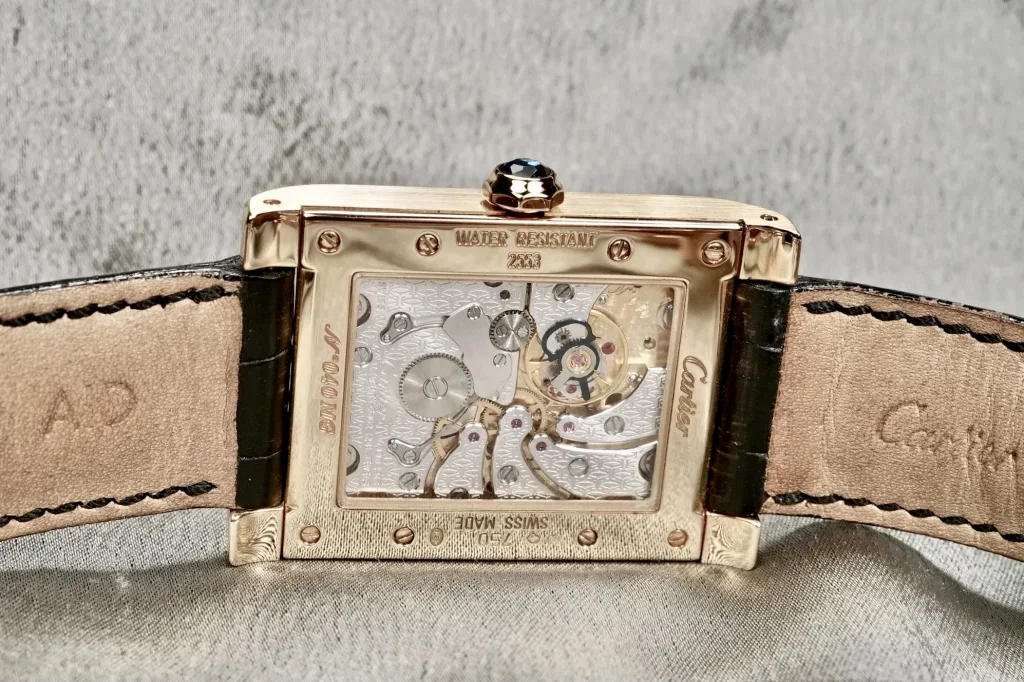
The CPCP collection drew from a constellation of the finest Swiss ébauche makers and movement developers. The calibre designations all carry the “MC” suffix (Manufacture Cartier), but the movements are not manufactured in-house. The suppliers included:
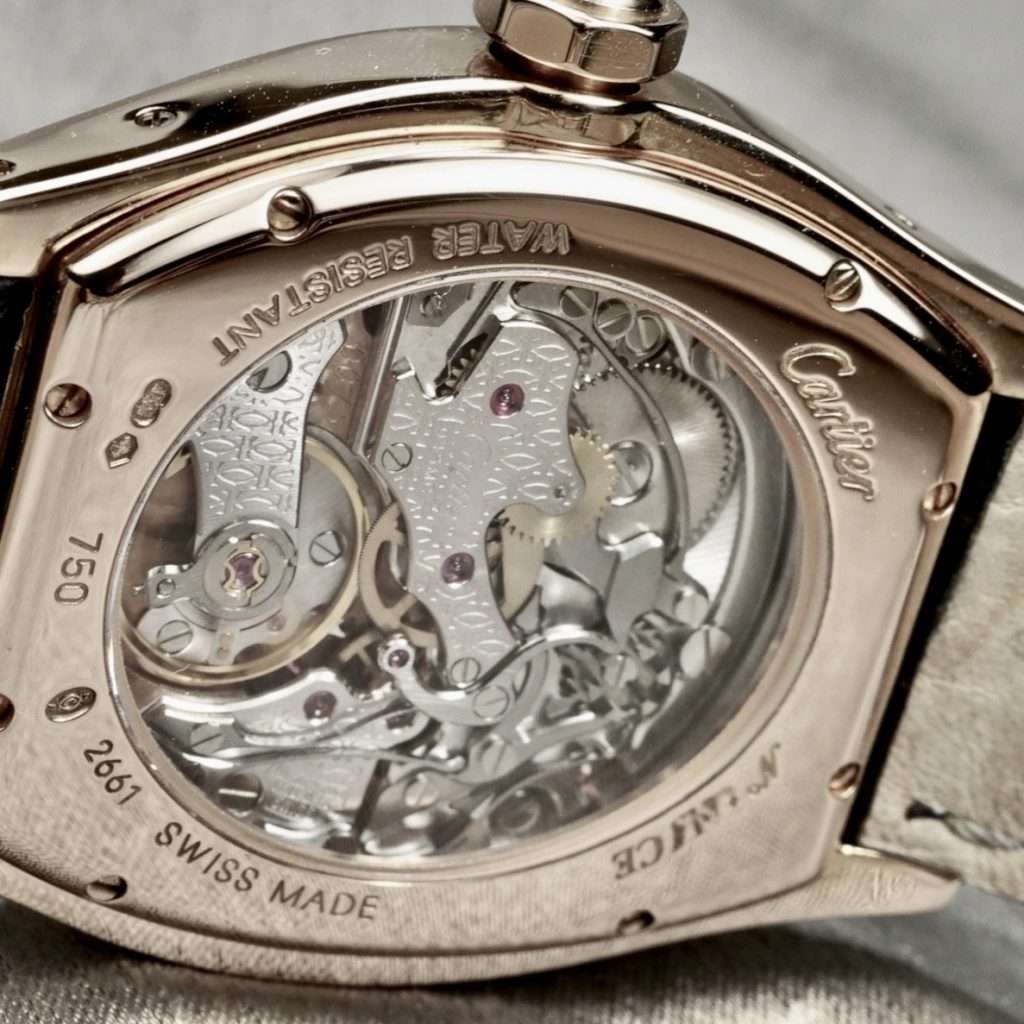
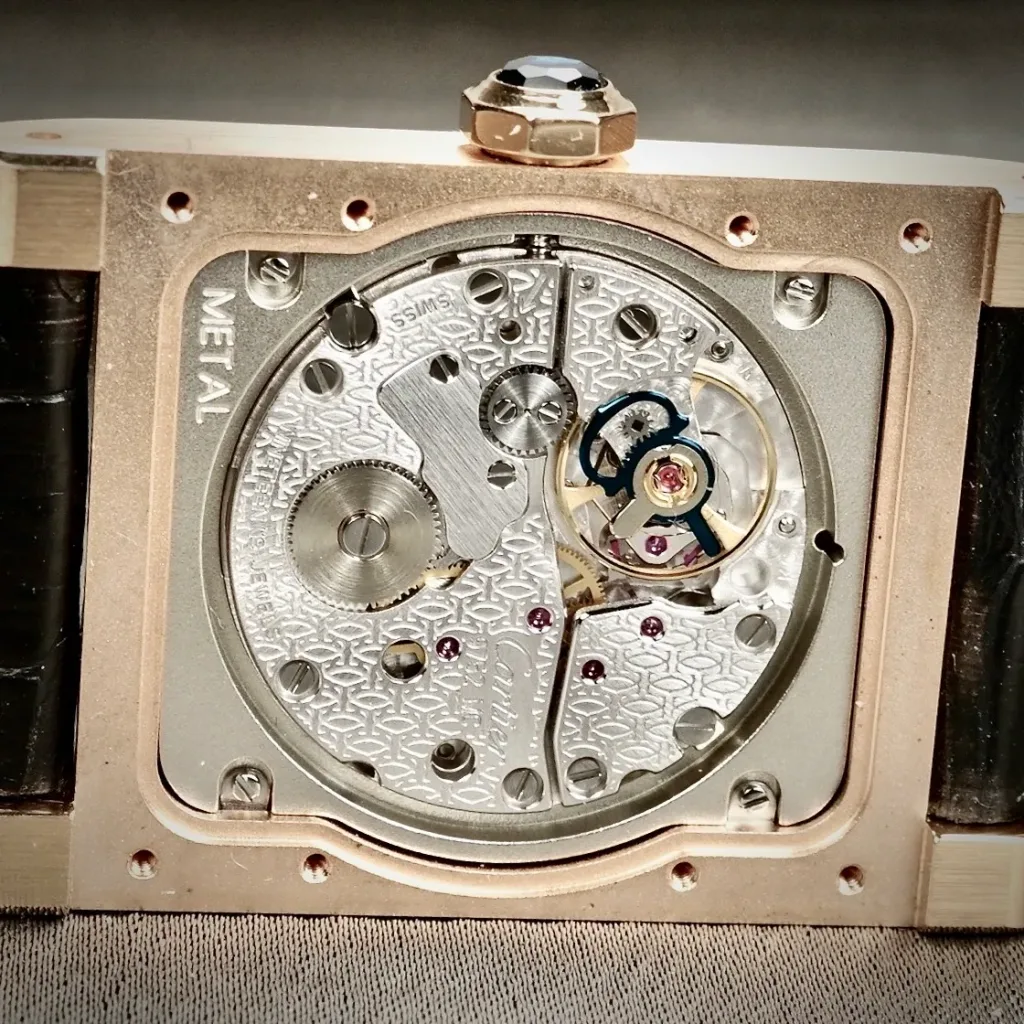
This network of suppliers is itself a document of the Swiss watch industry at a specific moment: the late 1990s, when the independent ébauche makers and movement developers are still accessible to brands that did not have in-house manufacturing capacity.
Several of these suppliers — Frédéric Piguet, Renaud & Papi — would subsequently be absorbed into larger groups (Blancpain/Swatch Group and Audemars Piguet, respectively), and access to their movements would become restricted. The CPCP collection is, in this sense, a product of its time: it could not be replicated today using the same supply chain.
[Part 3 will cover the CPCP Tank variants: Tank Louis Cartier, Tank Américaine, Tank Cintrée, Tank Chinoise, Tank Basculante, Tank Asymétrique, Tank à Vis, and Tank à Guichets.]
[contact-form-7 id=”4235″ title=”Contact form 1″]