No products in the cart.


Newsletter
[contact-form-7 id=”4235″ title=”Contact form 1″]

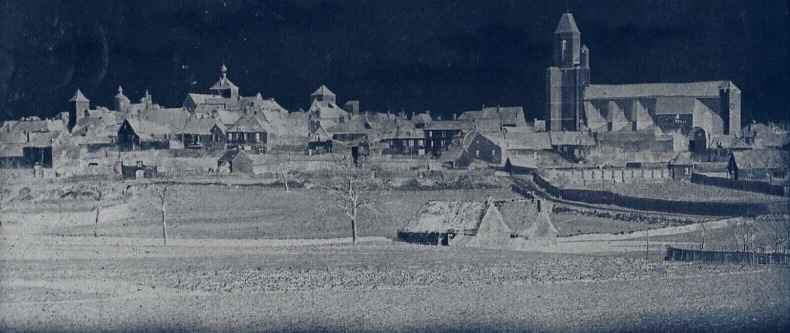
Few names in Swiss horology carry the weight of Martel Watch Co., yet few remain as unknown to the general collector. Founded in Les Ponts-de-Martel in 1911, this small manufacture in the Neuchâtel Jura operated for six decades as the hidden engine behind some of the most significant chronograph movements ever produced.
Most Universal Genève Chronographs that collectors pursue today are powered by a movement conceived and built in the Ponts-de-Martel workshops.
So was every Zenith chronograph from the early 1930s onward, including the El Primero.


The Martel factory supplied chronograph ébauches to Vacheron & Constantin, Jaeger- LeCoultre, and Girard-Perregaux, making it the single most consequential source of high-grade chronograph movements in mid-twentieth century Swiss watchmaking — a position it held while remaining formally independent, family-owned, and entirely uncelebrated.
To understand a vintage Universal Genève, or a Zenith chronograph of the 1950s or 1960s is to understand Martel: the manufacture that built the movements, held the patents, and trained the men who defined what a wristwatch chronograph could be.


Georges Pellaton-Steudler founded his watchmaking firm in Le Locle by 1910–1911, focusing on repetition and chronograph movements. The company is first listed in the Indicateur Davoine as
Georges Pellaton-Steudler, maker of “Répétitions et Chronographes” at 5 Rue du Chemin- Blanc, Le Locle.
On June 23, 1914, the Martel Watch Co. S.A. was formally registered in Les Ponts-de-Martel. The initial board comprised Georges Pellaton-Steudler (president), Albert Guye (watchmaker and also partner in Mathey-Tissot), and Bernard Perret-Roulet (accountant).
Pellaton-Steudler was the son of renowned tourbillon maker Albert Pellaton-Favre and brother of Jämes-César Pellaton, director of the Le Locle watchmaking school — a lineage that anchored Martel in the highest tier of Neuchâtelois horology.
The initial production facilities were distributed across Les Ponts-de-Martel.
The main building was a single floor above a garage where ébauches were produced; these were then shipped to a finishing workshop above Mathey-Tissot on Rue de l’Industrie.


Bernard Perret-Roulet left the board in June 1919 and was replaced by René-Philippe Pellaton, Georges’s son, who had trained as an accountant and would remain with the firm until Zenith’s acquisition. 1923 — Near Bankruptcy and Rescue.
The economic crisis, 1920–22 hit the Swiss watch industry hard. In 1923, Martel was on the verge of bankruptcy. To diversify production, Georges Pellaton created a simple, thin, 17-ligne time-only movement.
Martel received a large order from Japan following the Kantō Earthquake of 1923, which destroyed the Seikosha factory and forced Japanese firms to source Swiss movements. This order rescued Martel from its financial difficulties. In 1929, René’s brothers Georges (junior) and Raoul Pellaton joined the board as the company’s capital was expanded from CHF 100,000 to CHF 150,000.


By around 1929, Universal Watch probably owned approximately one third of Martel’s shares. This stake was not a controlling interest; rather, it represented financial backing in exchange for chronograph supply exclusivity. Universal provided financing for Martel and in exchange, obtained exclusivity.
This partnership lasted approximately twenty years, to around 1950. During this period, Universal held approximately 30% of Martel’s shares as security for its investment.
In 1933, co-founder Albert Guye left the firm which was reorganized with Georges Pellaton (senior) as president, Georges Pellaton-Perrelet (junior) as vice-president, and René-Philippe Pellaton as secretary.
Raoul Perret’s Cross-Directorship. In 1934, Raoul Perret (son of Universal co-founder Ulysse Georges Perret, who had become director of Universal in 1932) joined the board of directors of Zenith in Le Locle, while securing the services of Martel Watch for Universal’s chronograph calibres. This created the strategic triangle — Universal / Martel / Zenith — with the same person sitting on all three boards simultaneously.

1940 — Georges Pellaton retired in 1940 as Universal Genève took a larger stake in the firm. Management of the company was taken over by his three sons: Georges (junior, responsible for instruments and raw movements), René-Philippe (responsible for administration), and Raoul (responsible for finishing, assembly and sales).
1941 — Universal Genève provided funding to completely renovate the building; two floors and an attic were added. The façade of the building then carried the name “Universal,” and the company proclaimed that chronograph movements produced there were built in-house.


The new factory was inaugurated on January 31, 1941, built in a record five and a half months. It has telephone lines in all workshops, modern freight elevators, Zenith electric pendulums and advanced safety and hygiene measures.
1942 — In March 1942, Martel adapted its statutes to changes in Swiss law.
At the same time, Raoul Perret was appointed president of the board, replacing Georges Pellaton, who became vice-president.
The other members of the board were René-Philippe, Georges (junior) and Raoul Pellaton. Crucially, the new statutes required two signatures to commit the company, meaning Perret could not act without Pellaton approval. The Pellaton family retained full operational control. Raoul Perret’s presidency was effectively an honorary position reflecting his role as representative of Martel’s largest client. c.1950–1956 — Return to Full Independence. By 1950, the links with Universal were severed and Martel became independent. In 1956, Raoul Perret left Martel Watch, replaced as president by Raoul Pellaton.
From 1959, the Martel Watch Co. was acquired by Zenith, and thus became the Zenith Ponts- de-Martel workshops. Raoul Pellaton, who in 1956 had replaced Raoul Perret as president of Martel, came onboard Zenith when it bought Martel Watch and all of its patents, with the 100% acquisition completed by 1966.
Zenith never removed the name Martel from the building in Les Ponts-de-Martel, despite being the full owner and producing all chronographs there, including the El Primero. The enterprise closed its doors in 1976, at a time when the Movado-Zenith-Mondia group was having difficulties. The buildings suffered a fire in 1977 and subsequently housed a charcuterie.

Martel operated as a specialist ébauche manufacturer. Its movements were supplied to a network of clients, typically through Universal Genève as intermediary, or directly:

Universal Genève
The primary and exclusive client from approximately 1918 to 1950. The Martel Watch Company supplied movements for most of Universal Genève’s chronographs.

Zenith
Zenith also used Martel Watch calibres from 1930 until 1971. The mechanisms were rechristened as Zenith 146, 146D and 146H.

Vacheron & Constantin
A Martel 13-ligne two-register chronograph ébauche was supplied to Vacheron & Constantin from 1937 to 1940, where it was named cal. 295. These movements appear to have been routed via Universal Genève.
Jaeger / LeCoultre and Girard-Perregaux
Jaeger LeCoultre and Girard-Perregaux are listed as clients of Universal, with photographic images from the factory archives in support. The precise degree of direct Martel supply versus Universal re-supply remains debated among researchers, but likely it acted as a “private label” service.
Eberhard
Referenced in specialist literature (Sala) as a recipient of movements via Universal Genève’s distribution of Martel ébauches.
Repetition Movements (1911 onward). Martel’s original specialisation. Pocket watch and early wristwatch minute-repeater and quarter-repeater mechanisms.
Mono-pusher Wrist Chronograph (c.1917–18). As early as 1917, Martel began specializing in chronograph movements, working with Universal for a movement the company described as the world’s first wrist chronograph. These were mono-pusher movements adapted from pocket watches.
17-ligne time-only movement (1923). Developed to survive the economic crisis; produced in volume for the Japanese market following the Kantō Earthquake.
Cal. 281 — Two-pusher Chronograph (1932). In 1932, Universal launched what they claimed was the world’s first two-pusher wrist watch chronograph. With its dual-subdial design and pushers at 2:00 and 4:00, these are the template for all future chronographs. They were powered by the Universal 281 movement, produced in Les Ponts-de-Martel by Martel.
Three-register Chronograph / Compax (c.1933–34). A third hour counter sub-dial was added. Zenith and Universal named these chronograph Compax around 1936.


The four Martel internal calibre numbers listed in the original source correspond to two distinct Universal Genève movement families, each exploiting Martel’s proprietary variable-diameter plate technology, which allowed a single base movement to be produced in multiple sizes by interchanging the main plate.
First produced 1932. All variants: H 4.58 mm, 17 jewels, 18,000 A/h, 36-hour power reserve. 8- column pillar wheel.
| Martel Cal. | Ligne | Diameter | Universal Genève Cal. | Zenith Cal. | Hairspring |
|---|---|---|---|---|---|
| 1326 | 13”’ | 29.50 mm | 283 | 136 | Breguet |
| — | 12”’ | 27.00 mm | 281 | 122 | Breguet |
| — | 12”’ | 27.00 mm | 381 | — | Flat |
| — | 13”’ | 29.50 mm | 383 | — | Flat |
| 1426 | 14.3”’ | — | 481 | — | — |


Introduced c.1933–1934 (Compax versions by 1937). All variants: H 6.05–7.65 mm, 17 jewels, 18,000 A/h. 8-column pillar wheel. By interchanging cam plates, the movement could be produced as 14, 15, 15.25, or 15.75 ligne sizes (Calibres 285, 287, 288, and 292, respectively).
| Martel Cal. | Ligne | Diameter | Universal Genève Cal. | Zenith Cal. | Hairspring |
|---|---|---|---|---|---|
| 749 / 1416 | 14”’ | 31.70 mm | 285 | 146 | Breguet |
| 1516 | 15”’ | 33.20 mm | 287 | 156 | Breguet |
| — | 15.75”’ | 35.20 mm | 292 | 166 | Breguet |
| — | 14”’ | 31.70 mm | 385 | — | Flat |
| — | 15”’ | 33.20 mm | 387 | — | Flat |
| Martel Cal. | Ligne | Diameter | Universal Genève Cal. | Zenith Cal. | Notes |
|---|---|---|---|---|---|
| 1016 | 10.5”’ | 23.30 mm | 289 | — | No variants; Breguet hairspring |
Cal. 289 is a compact chronograph movement produced by the Martel Watch Co. factory for Universal Genève in the 1940s. It measured 10.5 ligne (23.30 mm) in diameter and just 5.55 mm thick, making it one of the most compact watch movements of the era. Unlike the 12 and 14 ligne families, there were no other variants produced. No Zenith equivalent designation.
Cal. 1916 is a 19 ligne chronograph movement produced by Martel. It is a lépine pocket watch movement, with the small seconds placed on the same axis as the winding crown — in a pocket watch configuration this places the small seconds at 6:00. This calibre predates the wristwatch chronograph era and appears to have been produced for pocket watch use only.

Aero-Compax (1940). An chronograph with a memory counter at 12 o’clock and an additional crown on the left side of the case. Raoul Pellaton is named as inventor in the 1940 patent.
Dato-Compax (c.1942). A four-subdial design adding a date window at 12:00.


Tri-Compax (1944). The addition of a triple calendar and moon phase indicator completed this chronograph.
Military Supply. The 1941 factory produced chronographs and timekeepers for military and industrial purposes, serving multiple armed forces during World War II. The Zenith 146 DP calibre, developed at the Ponts-de-Martel workshops after the Zenith acquisition, powered the military CP-2 chronograph.


Martel Victorious (c.1954–55). By 1950, Martel had become independent and released an automatic model with date in a waterproof case — the Victorious. This was the first watch marketed under the Martel brand name.
Cal. 25xx series — Automatic (c.1956–58). In 1956, Martel developed a modern automatic movement with rotor. This Zenith-Martel Cal. 25xx could also be used for hand-wound watches and was adopted by Zenith from 1958.


El Primero — Cal. 3019 PHC (developed 1963–69, produced at Ponts-de-Martel). In 1963, R&D began in the workshops at Les Ponts-de-Martel under Raoul Pellaton. The calibre was named 3019 PHC: 30 for movement diameter; 1 for order number among that diameter’s calibres; 9 for chronograph designation; PHC for Perpetuel (self-winding), Heure comptée (hour counter), and Calendar.
The calibre naming convention itself was a legacy of the Martel Watch workshops. On January 10, 1969, Zenith unveiled the world’s first automatic integrated chronograph calibre, the El Primero 3019 PHC, which was assembled in the Ponts-de-Martel ateliers.
| Person | Role | Period |
|---|---|---|
| Georges Pellaton-Steudler | Founder, President | 1911–1940 |
| Albert Guye | Co-founder, Board | 1914–1933 |
| Bernard Perret-Roulet | Co-founder, Accountant | 1914–1919 |
| René-Philippe Pellaton | Administration, Board Secretary | 1919–1959 |
| Georges Pellaton Jr. | VP, Raw Movements | 1929–1959 |
| Raoul Pellaton | Finishing & Sales, then President; led El Primero R&D | 1929–1977 |
| Raoul Perret (Universal) | Honorary President | 1942–1956 |
| Charles Vermot | Production; saved El Primero tooling | c.1950s– |
| Period | Ownership / Control |
|---|---|
| 1911–1929 | Pellaton family (100%) |
| 1929–c.1940 | Pellaton family (~70%) / Universal Genève (~30%) |
| 1940–c.1950 | Pellaton family retains legal control; Universal holds board seat and exercises commercial exclusivity; façade bears “Universal” name |
| c.1950–1958 | Pellaton family (100%) — full independence recovered |
| 1958–1966 | Progressive acquisition by Zenith; 100% complete by 1966 |
| 1966–1976 | Zenith wholly owned subsidiary; operates as “Zenith Ponts-de-Martel Workshops” |
| 1976 | Factory closed; 36 employees reclassified |
| 1977 | Building fire; subsequently converted to commercial use |
Sources: Grail Watch Wiki (Martel Watch); French Wikipedia (Martel Watch); WatchUSeek forum thread “A Short History of Martel Watch Co. and Zenith Chronographs” (primary source documentation and translations); JSH Magazine / Swiss Watch Passport (1941 JSH Basel Fair edition, archived); La Clinique Horlogère (Martel–Universal timeline); Time2Tell (Universal Genève history, Part 1); Monochrome Watches (El Primero history); Swiss Watches Magazine (El Primero guide); Universal Genève Wikipedia; Martel Watch Wikipedia (French edition); Marco Strazzi article cited in WatchUSeek (Martel archives access, referenced secondhand); Pietro Giuliano Sala, “Universal Watch Genève” (cited in forum research).

[contact-form-7 id=”4235″ title=”Contact form 1″]