No products in the cart.


Newsletter
[contact-form-7 id=”4235″ title=”Contact form 1″]

Between 2020 and early 2022, the secondary watch market was defined by an unprecedented concentration of demand. A limited group of stainless steel sports watches — primarily from Rolex, Patek Philippe, and Audemars Piguet — came to dominate both collector attention and transaction volume.
At peak, these three brands represented more than half of global secondary market value, estimated at approximately $22–24 billion across all categories (Morgan Stanley / LuxeConsult, 2022).


This was not a gradual development. It was a structural distortion — one amplified by post- COVID liquidity, reduced retail allocation, and a new cohort of buyers treating watches as liquid alternative assets.
Prices for flagship references detached from retail benchmarks rapidly and dramatically. The Patek Philippe Nautilus reference 5711/1A reached approximately $222,000 on the secondary market in February 2022 (WatchCharts).
The Audemars Piguet Royal Oak 15202ST peaked at approximately $122,000 in March 2022 (WatchCharts / Chrono24). The Rolex Cosmograph Daytona reference 116500LN reached close to $50,000 at its high — more than three times its then-retail price of approximately $16,000.
These are not the figures frequently cited in secondary commentary. They are the verified figures, and the distinction matters, because what followed was a correction of proportionate scale.


From mid-2022 onward, and continuing through 2024 into early 2025, the market underwent a prolonged adjustment. According to WatchCharts and Morgan Stanley data, secondary market prices recorded twelve consecutive quarterly declines through Q1 2025 — only then showing signs of stabilisation, with a minimal 0.4% decline representing the smallest drop in three years.
By late 2025, verified secondary market prices reflected the following:
These are not marginal adjustments. They represent the unwinding of a speculative premium that, in some cases, had inflated secondary prices to five or six times retail.
And critically, they do not constitute a collapse of the watch market: they constitute the removal of an anomalous asset-class overlay from objects whose underlying collector and utility demand remains intact.
The central fallacy in most post-correction analysis is the conflation of two distinct demand types: speculative demand and functional demand.


Steel sports watches declined as speculative instruments. They have not declined as wearable objects of daily use. The Rolex Submariner, the GMT-Master II, the Datejust, and the Tudor Black Bay remain, by any measure, the most accessible, durable, and legible watches for professional and everyday wear. No segment matches their versatility across contexts. Their correction did not eliminate demand — it repriced it, separating collectors and users from momentum traders.
The Rolex brand alone retains approximately 34.2% of global secondary market transaction volume (Chrono24, 2024). Secondary market premiums on Rolex, while reduced, remain substantial: the brand’s average secondary premium above retail stood at 56% in January 2025, down from 68% twelve months earlier — still positive, still meaningful.
Rolex continues to produce approximately one million watches annually and maintains a globally controlled distribution. Waiting lists persist on some sports models. The brand has not corrected; its speculative overshoot has.
What has changed is the composition of demand at the top of the market. The most valued watches in 2024–2025 are not the steel sports references that dominated the previous cycle. They are vintage pieces — primarily pre-1980 — characterised by verifiable production rarity, archival coherence, and condition specificity.


Vintage Patek Philippe references set the clearest benchmark. A stainless steel Perpetual Calendar Chronograph reference 1518 from 1943 realised CHF 14,190,000 at Phillips Geneva in 2025. That record was subsequently surpassed at Phillips’ Decade One auction, where the same reference sold for $17.6 million — establishing the highest price ever recorded for a vintage Patek Philippe wristwatch at auction.
These results reflect sustained institutional collector interest in objects where rarity is absolute, not manufactured through distribution policy.
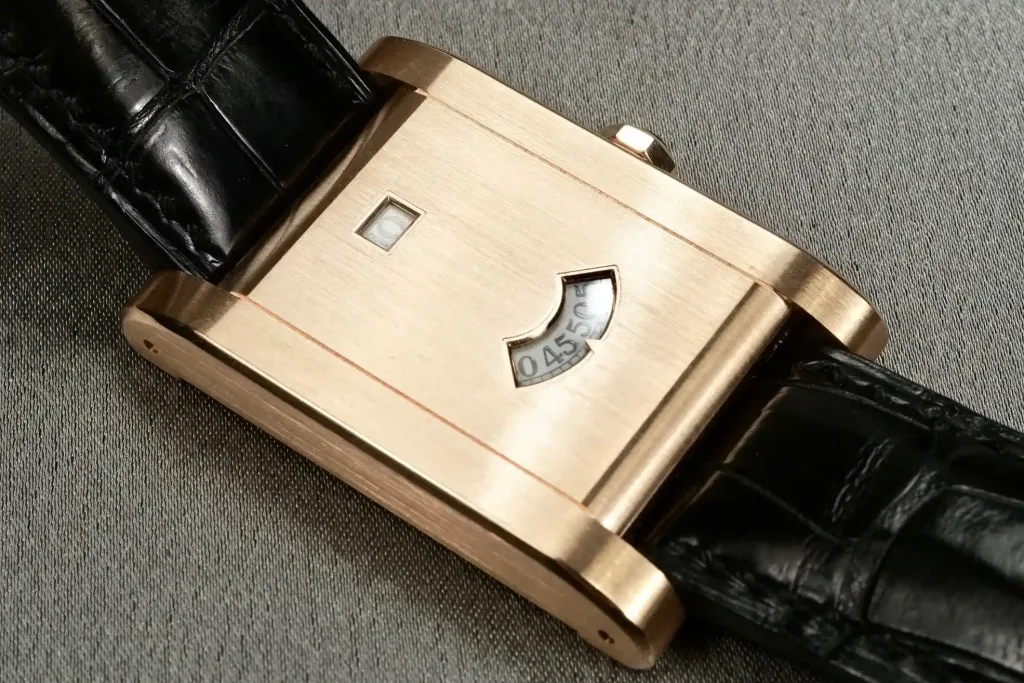
Among Cartier, two tiers command the most attention from serious collectors. The first is vintage pre-1980s Cartier — principally the Tank Cintrée, Tank Normale, tank “A Guichet” early Santos Dumont, and the Crash. A 1969 Tank Cintrée sold for £240,000 at Sotheby’s in May 2024. Cartier London pieces from the 1960s and early 1970s, with original dials and cases in matching hallmarked metals, have achieved prices in excess of $300,000 at recent auctions.
What distinguishes these watches is not brand alone, but the convergence of aesthetic refinement and production scarcity — many original Cartier London references were produced in quantities below 100 pieces.


The second tier is the Collection Privée Cartier Paris (CPCP), produced between 1998 and 2008. This was a deliberate return by Cartier to historical case forms — the Cintrée, Tonneau, Tank à Vis, and Tortue — executed in precious metals with more qualitative in-house movements. Production was deliberately constrained being limited and numbered. These watches are now gaining structured auction presence and secondary market attention from collectors who understand their technical and archival significance.
A Tortue Chronographe Monopoussoir CPCP (Ref. 2396) appeared at Sotheby’s Important Watches in 2024.
The broader Cartier recovery reinforces this picture. According to Chrono24’s 2024 secondary market data, Cartier recorded a 23.8% increase in transaction volume share year-on-year, with the Tank growing 30.9% and the Santos 27.7% in secondary volume. Cartier’s overall share of secondary market transactions grew from 3% in 2020 to 5% in 2024 — a 66% increase.


Among Gen Z buyers specifically on Chrono24, Cartier’s share grew fourfold over seven years (from 1.7% to 6.8%), representing one of the most pronounced generational preference shifts in the secondary market.
The shift toward vintage and CPCP is part of a wider structural reorientation. Collectors and auction houses are increasingly rewarding historical coherence — the alignment between a watch’s case, movement, dial, and production context — over brand recognition or reference status alone.
Brands historically categorised as secondary to the mainstream — Universal Genève, Piaget, which pioneered ultra-thin calibres in the 1950s — are now receiving reassessment, not because they are newly discovered, but because the evaluative criteria have changed.


At the same time, the WatchCharts and Morgan Stanley Q1 2025 data also indicate first signs of secondary market stabilisation — particularly in Rolex and AP, where price declines are narrowing.
Polarisation within the primary market is also notable: in the Morgan Stanley / LuxeConsult 2025 report, the top four brands accounted for 55% of total primary market turnover, up from 52.4% the year prior, while second-tier brands reported significant revenue declines. The market is contracting for the mid-tier and expanding — or at minimum stabilising — for those with genuine brand equity or historical depth.
In the concentrated market of 2020–2022, selection was effectively made by scarcity and momentum. In the current environment, selection requires knowledge. The steel sports watch remains relevant — as a category of daily wear, as a Rolex brand asset, and as a liquid instrument within the secondary market.
But it no longer defines the ceiling of the market, nor the direction of collector sophistication. That position is now occupied by vintage references, CPCP pieces, and historically coherent watches by Patek Philippe, Audemars Piguet and Vacheron & Constantin pieces in original condition — objects where value is also determined by quality and scarcity.


The relevant shift is not that steel sports watches have lost their importance. It is that they have been joined, and at the highest levels surpassed, by a category of watch whose value derives from rarity, time, and condition — criteria that neither production policy nor retail allocation can reproduce. That transition has not ended the steel sports era. It has contextualised it.
Data sources: WatchCharts market price data (2022–2025); Morgan Stanley / LuxeConsult Swiss Watch Industry Report (2024, 2025); Chrono24 Secondary Market Report 2024 and H1 2025; Phillips Auction Results (Geneva, 2025); Sotheby’s Important Watches 2024; Bonhams Watch Auctions 2024; A Collected Man — CPCP Reference Guide.

[contact-form-7 id=”4235″ title=”Contact form 1″]