No products in the cart.

Newsletter
[contact-form-7 id=”4235″ title=”Contact form 1″]

A coin is designed to be spent. It passes through hundreds of hands, accumulates scratches, and carries no indication of who made it or where it has been. A watch is the opposite — a precision instrument built to last generations, signed by its maker, and intended to be read at a glance.


The act of concealing one inside the other, without destroying the coin’s identity, is one of the more quietly remarkable achievements in watchmaking history. The result is an object that most people would handle without suspecting anything, and that only those who know exactly what to look for will ever fully appreciate.
The coin watch in wristwatch form is a fundamentally different object from the pocket coin watches that preceded it. A pocket watch offers depth; a wrist coin watch offers almost none. The $20 Liberty Head Double Eagle — struck by the United States Mint between 1849 and 1907, designed by James Barton Longacre — measures 34.5mm in diameter and is composed of 90% gold.
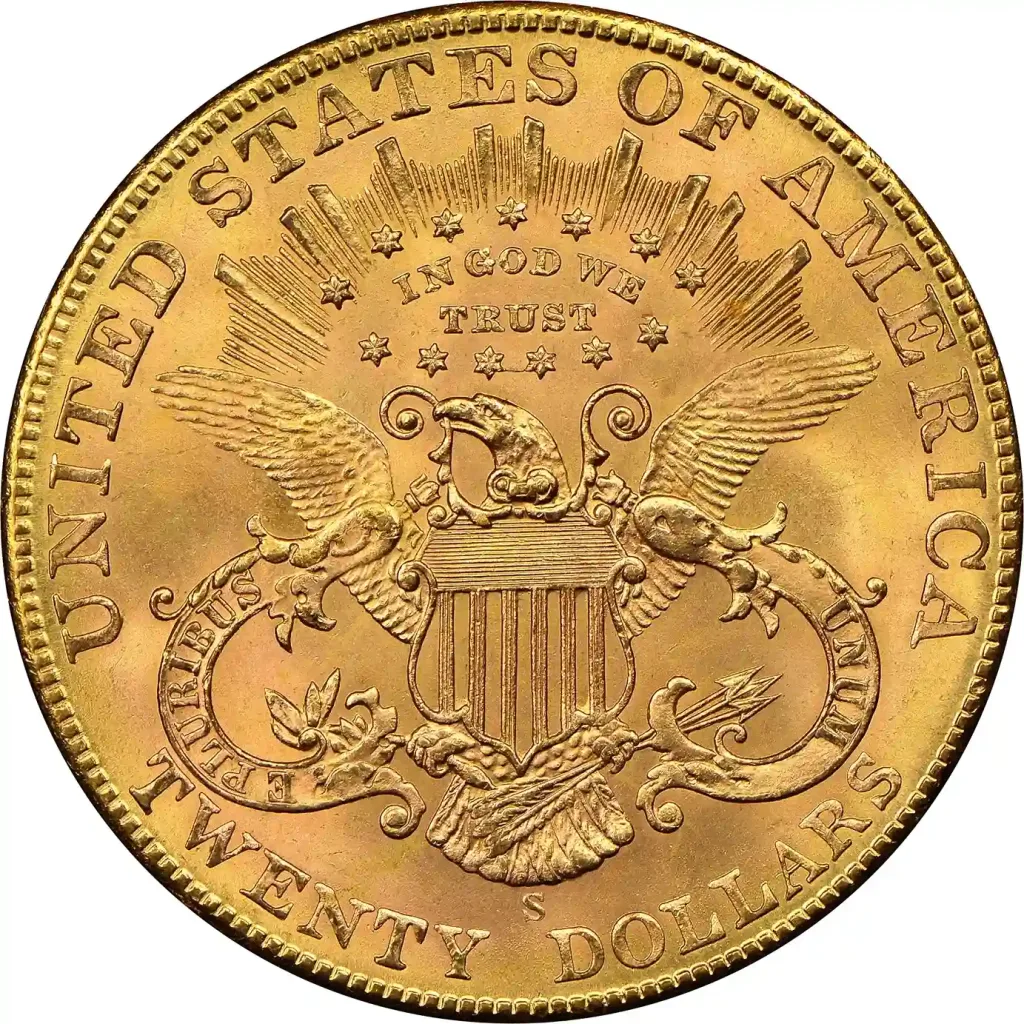
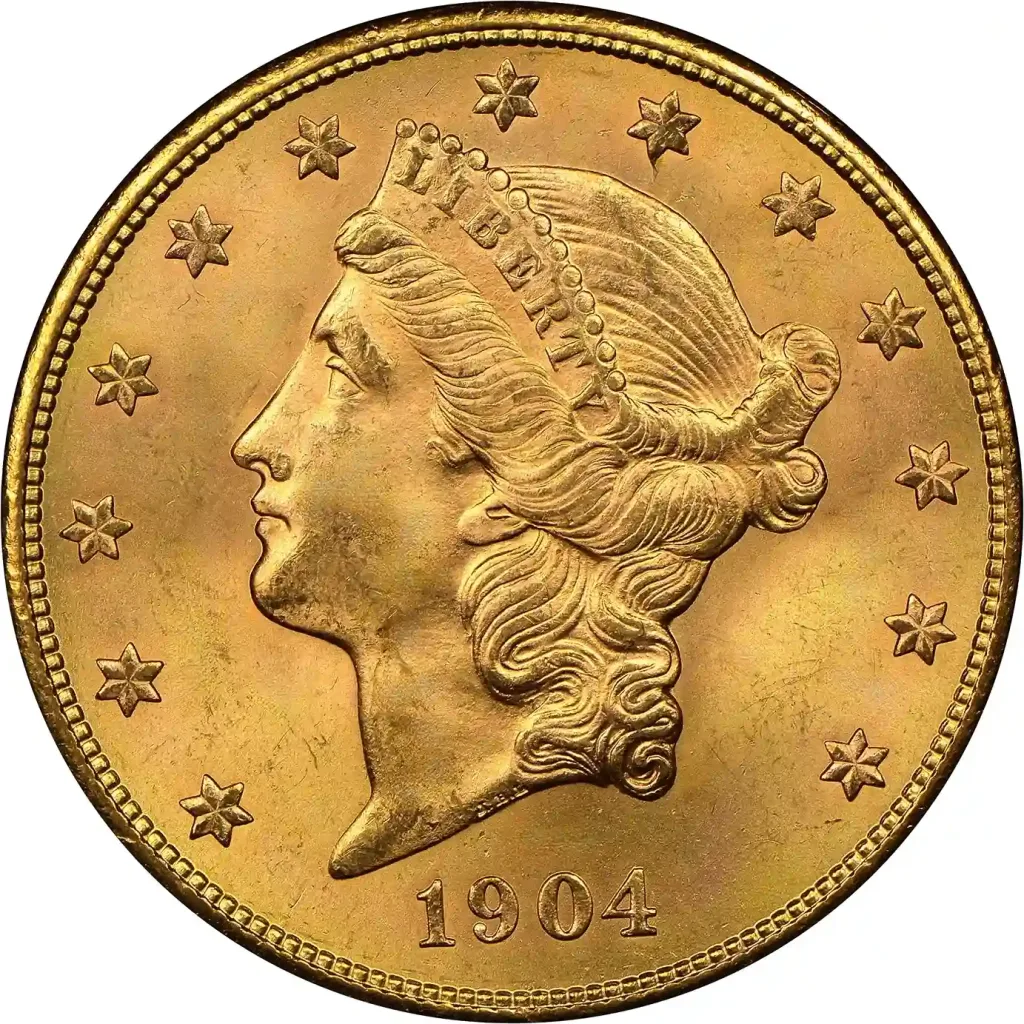
Its diameter made it workable as a wrist case. Its interior depth, once the coin was milled and a movement seated inside, left virtually no tolerance for error. Only the thinnest movements in existence could be used, which naturally filtered the field to a small number of Geneva manufactures with the technical means to produce them.
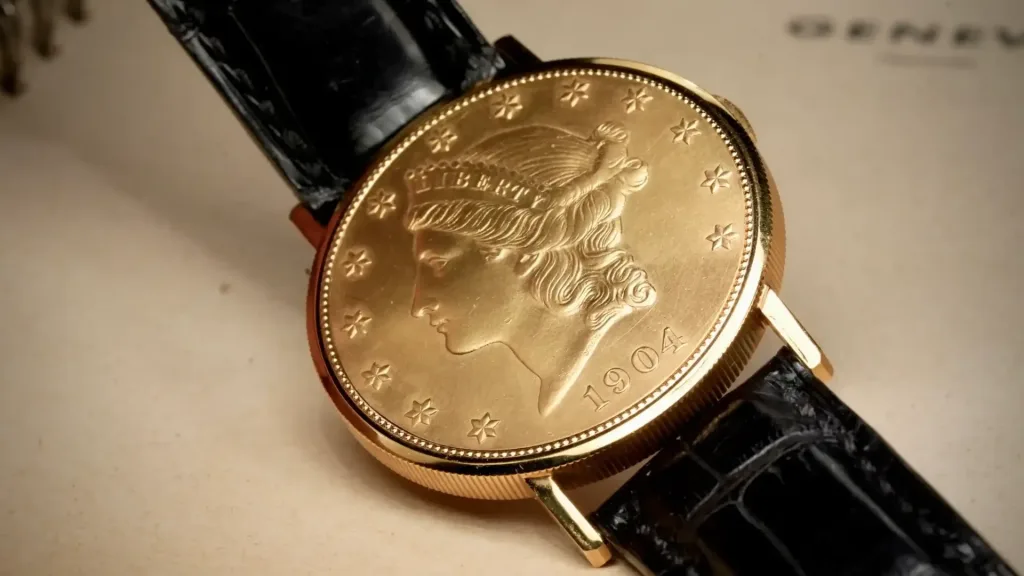
The name Double Eagle was chosen simply to distinguish the $20 denomination from the $10 Eagle — there is in fact only one eagle on the coin, on the reverse. The obverse carries Liberty in a coronet, surrounded by thirteen stars and the date below — a design that proved visually ideal for a watch dial, the central field open enough to carry hands without obscuring the engraving.
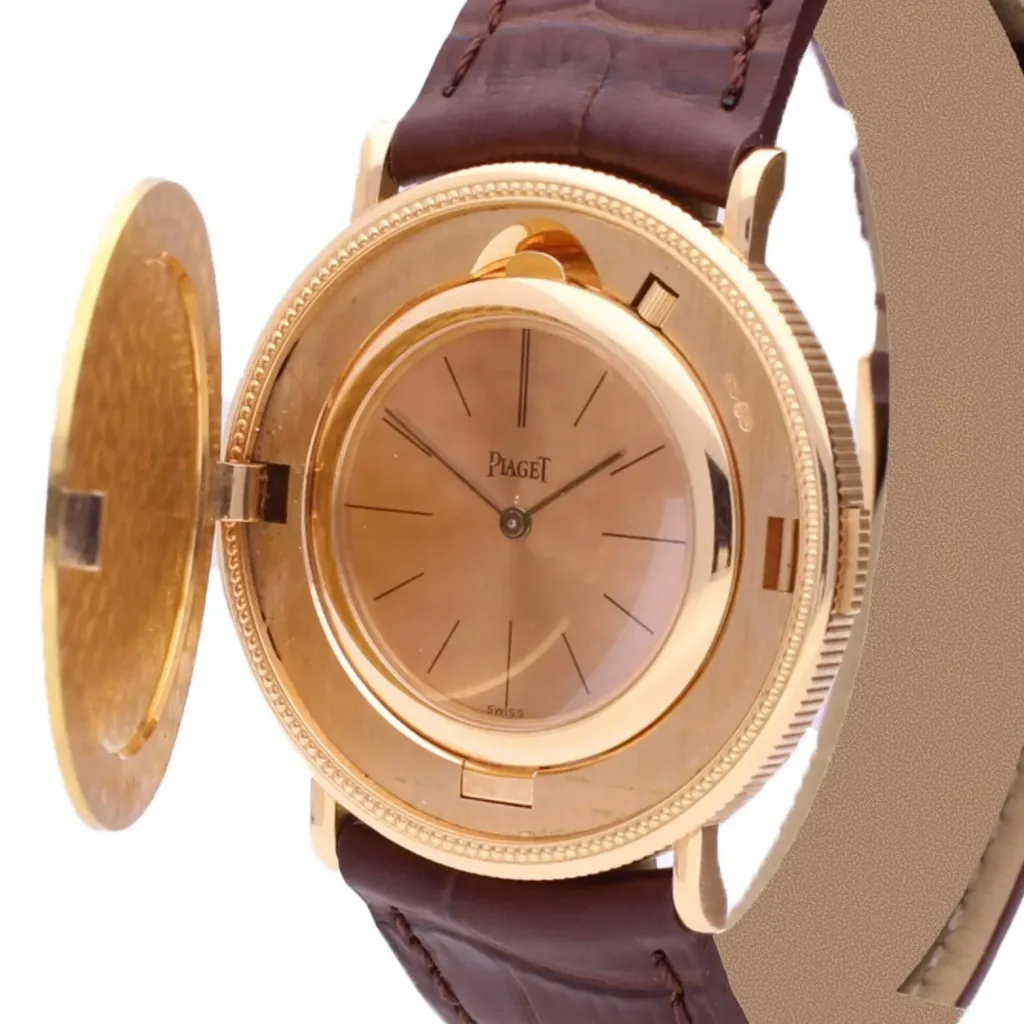
The wrist coin watch was never a mass-market product. Extremely rare and unusual, coin watches were appearing in the market during the 1970s, with various manufacturers including Cartier, Corum, Piaget, Rolex and others. To that list can be added Vacheron Constantin, Jaeger-LeCoultre, and Audemars Piguet.
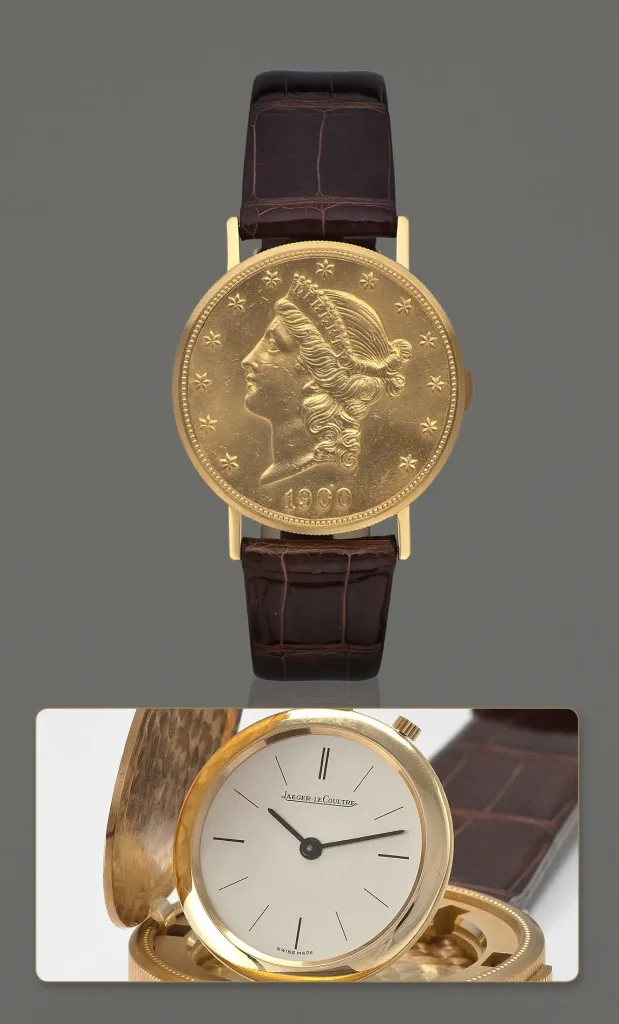
Corum registered its coin watch design in 1964 and was the most prolific producer, working primarily with the $20 Double Eagle but also the $10 and $5 gold pieces.

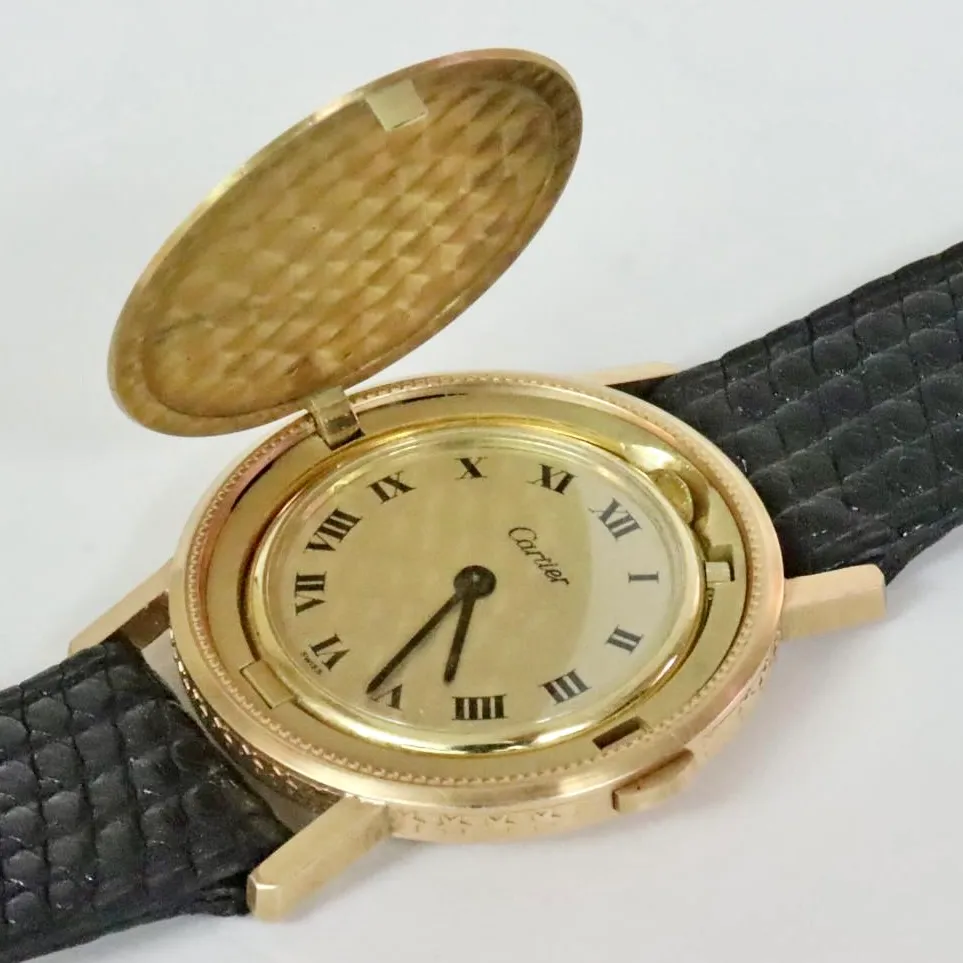
Piaget was active from the mid-1950s, supplying ultra-thin movements to Cartier for their own coin watches as well as producing pieces under the Piaget name. Rolex produced a small series under the Cellini reference, ref. 3612, with a manual wind calibre 651.

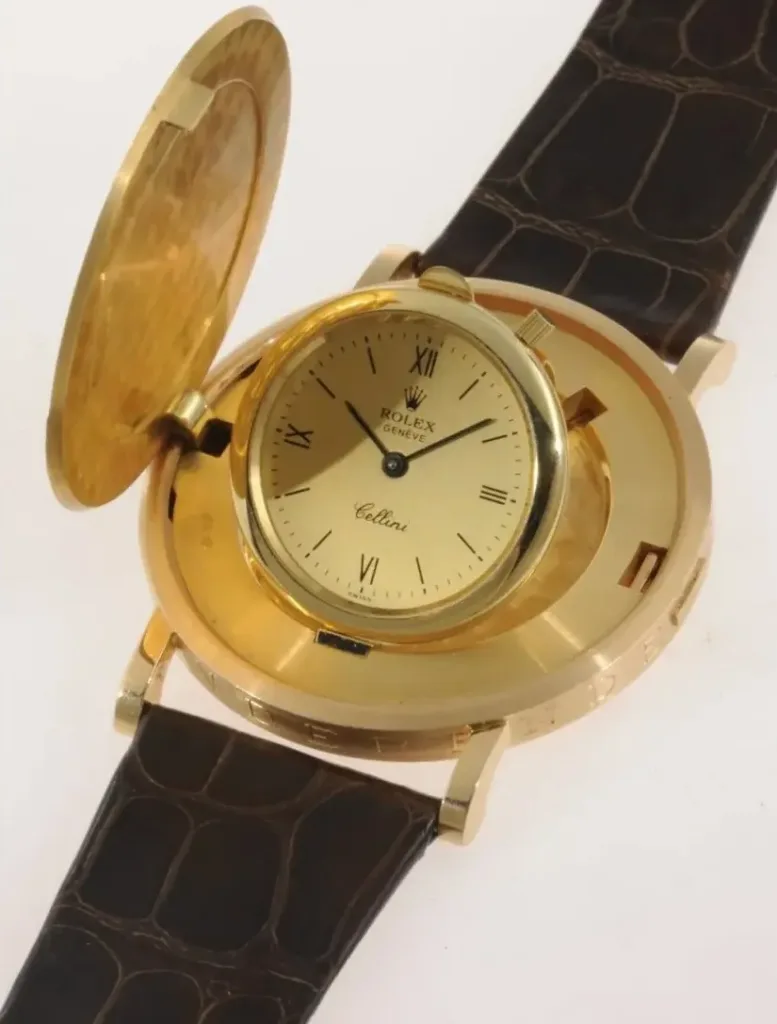
Jaeger-LeCoultre produced confirmed wrist examples from around 1971. Audemars Piguet’s ref. 5610 housed a movement with a 32-hour power reserve — notable given the spatial constraints of the format.In all cases, production was limited, surviving examples in original condition are scarce, and the wrist coin watch represents the most technically demanding expression of the format.
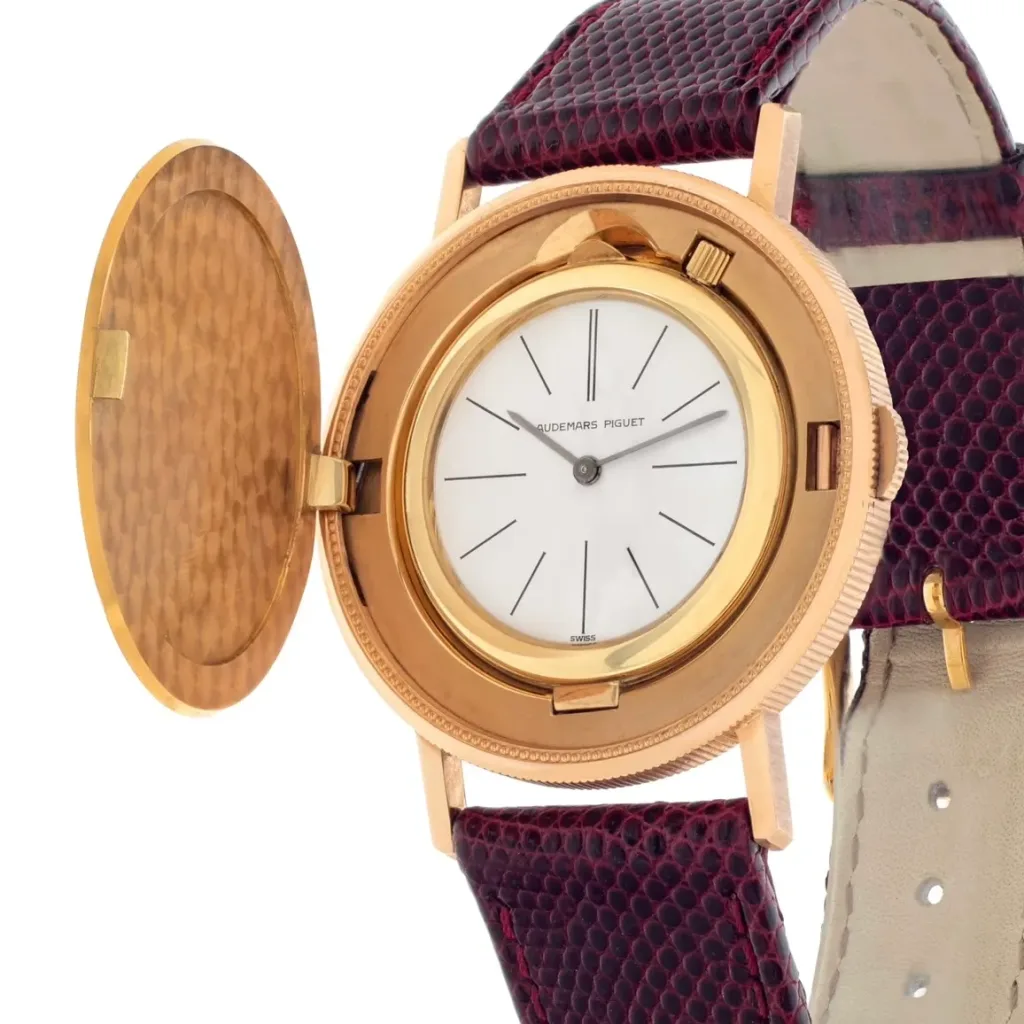
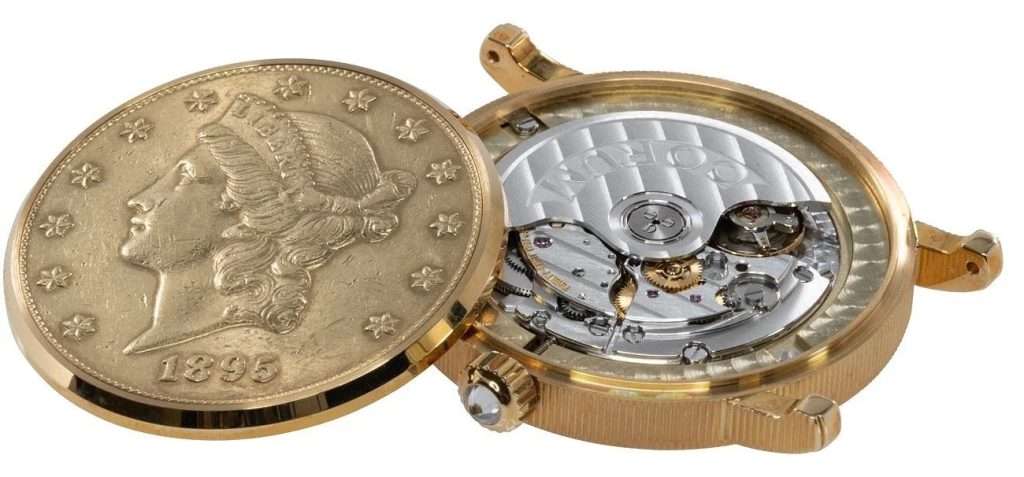
Among all the wrist coin watch constructions, two methods defined the category.
The Corum approach — which became the most widely recognised — splits the coin into its obverse and reverse faces, machines the interior of each half to create a cavity, and seats the movement inside. The Liberty Head becomes the dial: the hands are mounted directly onto the gold surface of the coin, the hour markers printed onto it, a sapphire crystal sitting flush above.
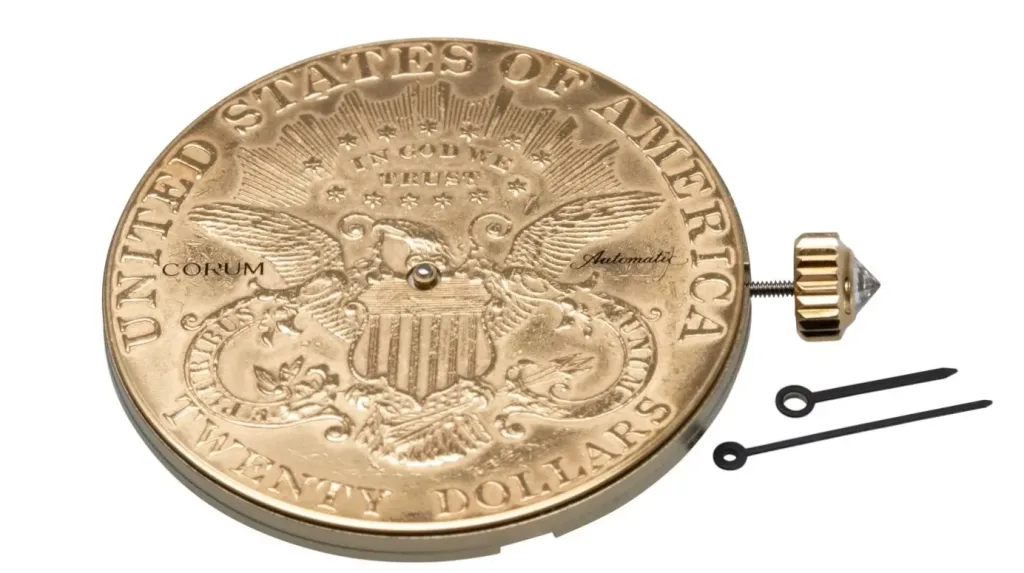
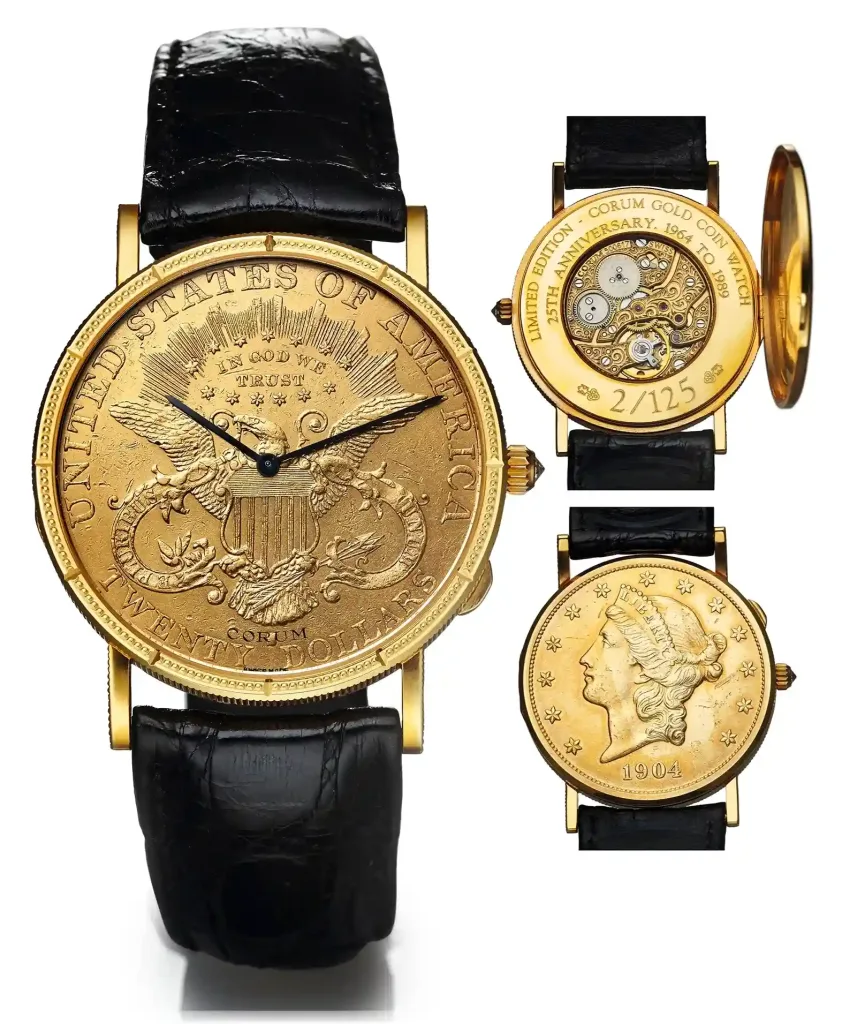
The caseback is the reverse of the coin, closing on a rubber seal. It was the introduction of the sapphire crystal in the early 1960s that led Corum to the creation of this watch — the whole concept was radically different than anything else on the market at the time. When closed, the result is indistinguishable from an unmodified coin aside from the presence of a crown and the faint line of a hinge in the milled edge.
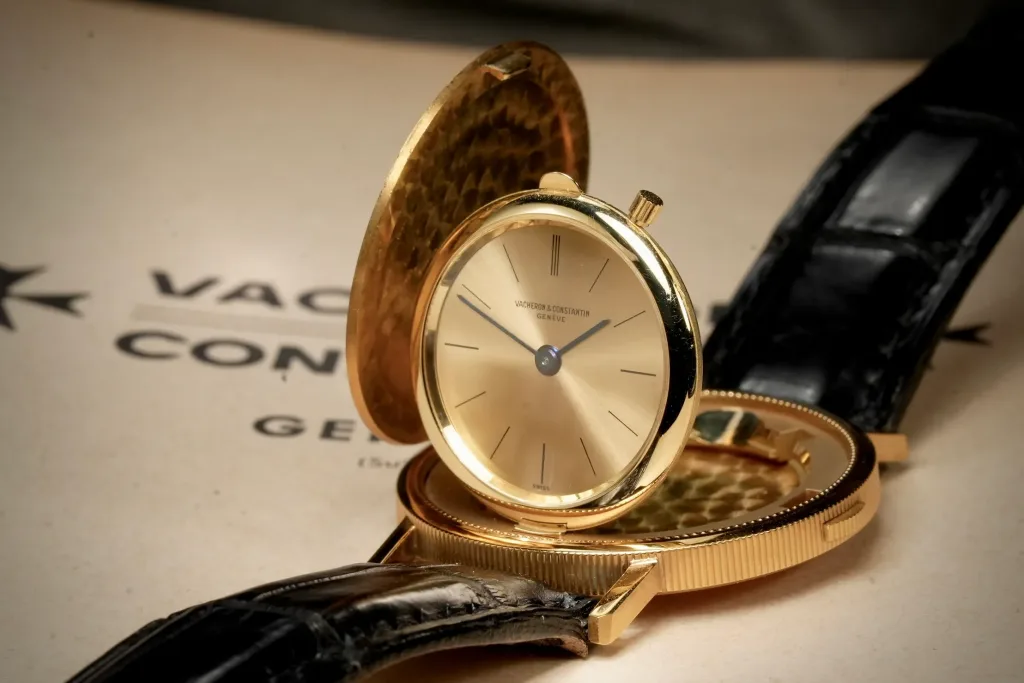
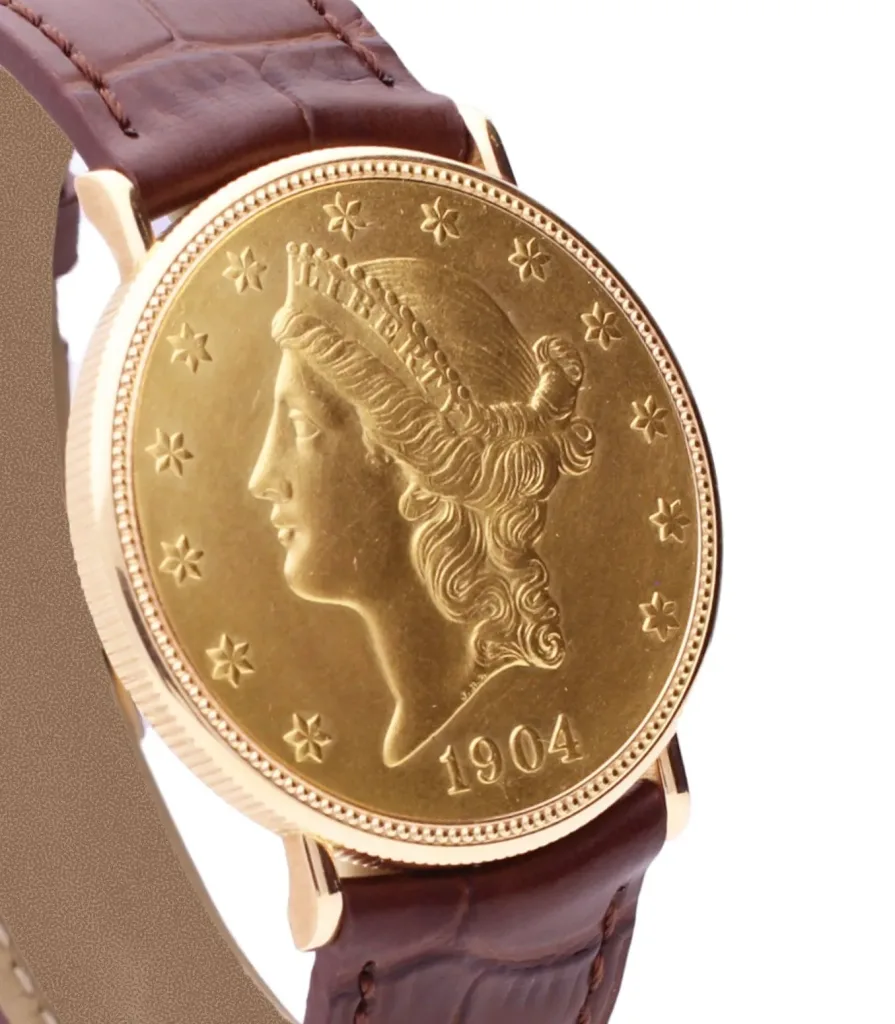
Vacheron Constantin took an entirely different approach. In the ref. 6510, the coin is not split. It functions as an outer shell, structurally intact, hinged at the band. Inside sits a completely separate, self-contained 18K gold watch — its own inner case, its own dial with printed Roman numerals on a gold-tone surface, its own hands and crystal.


To read the time, the wearer presses a pushpiece concealed in the milled edge of the coin; the spring-loaded cover opens to reveal the watch within. The inner assembly then tilts upright on its hinge, converting the piece into a functioning desk clock.
Closed and worn on the wrist, the 1904 Liberty Head presents itself with no visible indication of what lies beneath. The crown for winding and setting sits at 1 o’clock on the inner case, accessible only when the coin is open.
These are two fundamentally different engineering solutions. Corum integrates the coin and the watch into a single object. Vacheron keeps them distinct — the coin as architecture, the watch as a separate precision instrument housed within it.
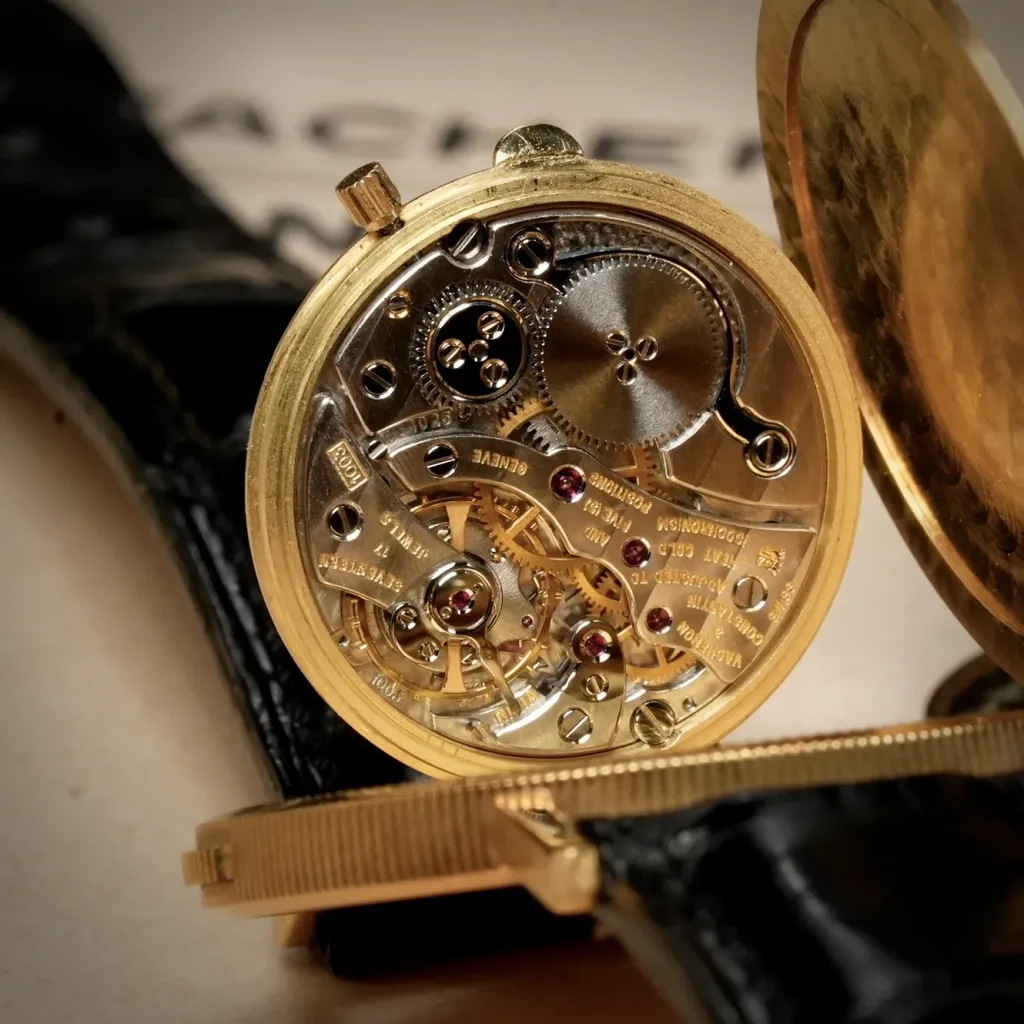
The Vacheron ref. 6510 houses the Calibre 1003 — at 1.64mm, one of the the thinnest manually wound movement ever produced. Developed in collaboration with Jaeger-LeCoultre and Audemars Piguet, it was introduced by Vacheron Constantin in 1955 to mark the manufacture’s bicentenary.
With 17 jewels, adjusted to five positions, it shows the Poinçon de Genève — the Geneva Seal — the most demanding movement certification in Swiss horology, requiring individual hand- finishing, adjusted rate performance across positions, and strict standards of construction that must be done in Geneva.

The vintage watch market of the past two years has undergone a structural shift that directly benefits exotic piaces like the wrist coin watch. Gen Z buyers are pushing the market beyond steel sports staples, with their preference for slimmer, design-driven timepieces leading to a fourfold increase in demand for brands like Cartier — and the broader move toward dressy, gold, and unconventional pieces is reshaping what the market considers desirable.
Data from Chrono24 shows a clear preference for refinement over ruggedness, with demand for gold pieces up 6.5% year on year.

Into this context, the wrist coin watch arrives as something close to the logical extreme of the trend: 18K gold by definition, produced in genuinely limited numbers by the most serious manufactures in Geneva, and carrying a secondary identity as a numismatic object that places it entirely outside the reach of reproduction or reissue.
There are no modern versions of the Vacheron ref. 6510. The Cal. 1003 is no longer in production. The Double Eagle coins that house these movements are over a century old. Scarcity, in this case, is not a marketing construct — it is simply a fact of the object’s history.

[contact-form-7 id=”4235″ title=”Contact form 1″]