No products in the cart.


Newsletter
[contact-form-7 id=”4235″ title=”Contact form 1″]

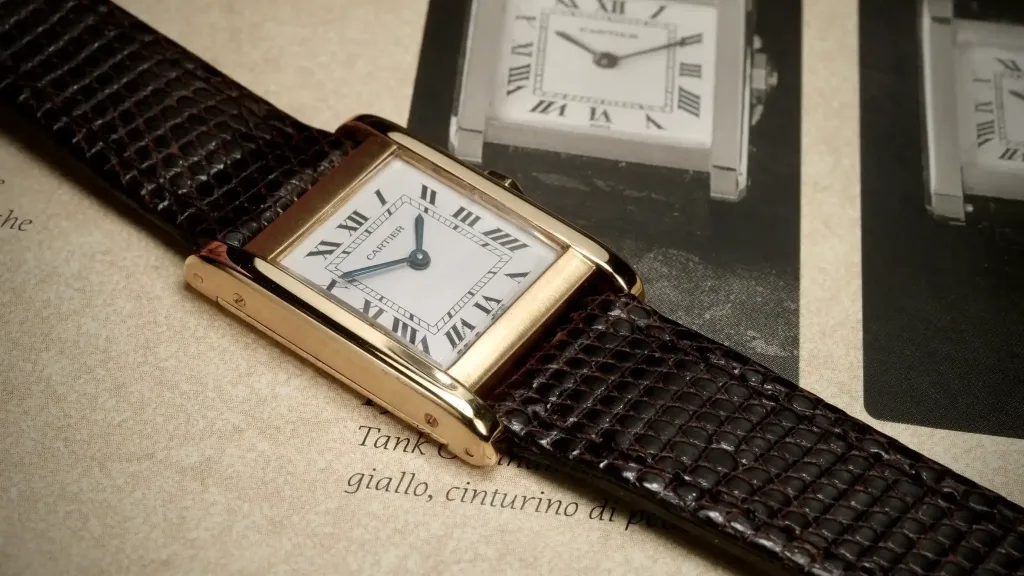
The question of what makes a wristwatch retain or accumulate value over time resists simple answers. Across auction rooms in Geneva, New York, and Hong Kong, the same dynamic plays out: certain references climb with apparent indifference to economic cycles, while others — technically comparable, sometimes more complicated — stall or retreat.
The difference is rarely accidental. After decades of documented auction results and shifting collector tastes, it is possible to identify five structural drivers that, in combination, create durable collector demand and long-term price appreciation.
They are quality, rarity, iconicity, beauty, and traceability.
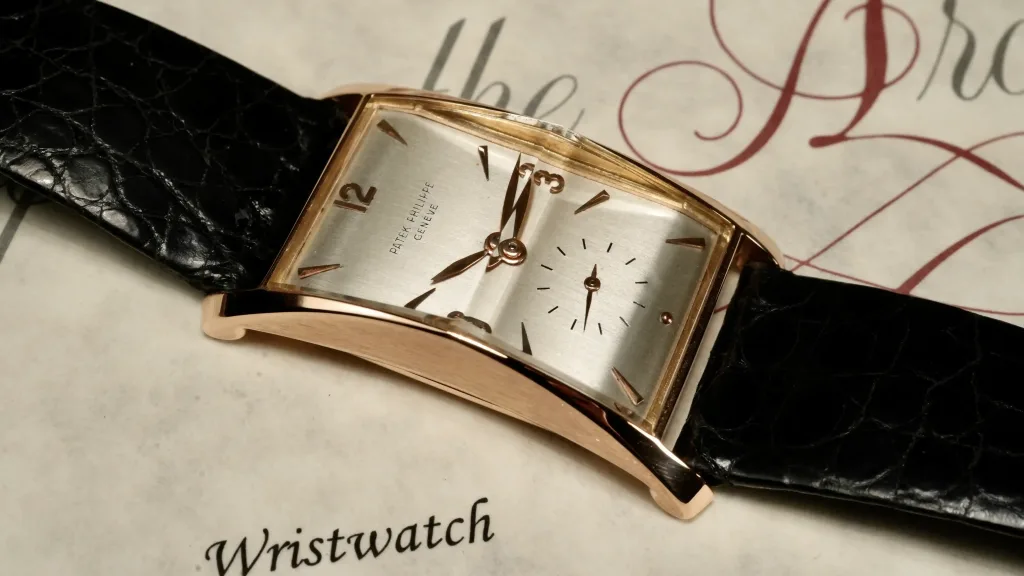

In mechanical watchmaking, quality operates on two levels: the movement and the object as a whole.
At the highest tier, a manufacture movement — designed, produced, and assembled entirely within a single atelier — commands a different regard than an ebauche sourced from a third-party supplier.
The distinction is not merely technical. It represents a verifiable commitment to vertical integration and, by extension, to permanence. Patek Philippe, A. Lange & Söhne, or F.P. Journe’s calibres represent cases where movement authorship becomes a primary component of value.


Below the movement, quality is expressed in decoration. The finishing vocabulary of haute horlogerie — Côtes de Genève on bridges, perlage on the mainplate, hand-bevelled anglage on every edge, black polishing on steel components — is time-intensive and not replicable by machine at the level that defines investment-grade pieces.
A single mirror-polished lever can require several hours of manual work. The presence of such finishes, signals a different category of manufacture than surface polish alone.
Hard enamel dials, in the traditional sense used on high‑grade wristwatches, are produced by fusing a specially formulated, high‑melting vitreous enamel directly onto a metal dial blank, usually copper or precious metal, in a kiln at sustained high temperature until the surface becomes uniformly bright and glass‑smooth.
The enamel is first melted, quenched and ground to a fine, uncontaminated powder, then carefully applied to the prepared dial and fired, often in several passes, to build a dense, homogenous layer.

As the hour track and signatures are themselves fired enamel rather than surface ink, the graphics are effectively un‑eraseable: they do not fade, wash away, or lift under UV, moisture, or careful cleaning, and damage tends to appear as hairline cracks or chips in the glassy surface rather than loss of print.
This combination of durability and visual depth gives hard enamel dials their characteristic slightly domed, liquid gloss and crisp, jet‑black or pure‑white markings, and explains why many 19th‑ and early‑20th‑century examples still present as almost new when the case and movement show clear age.
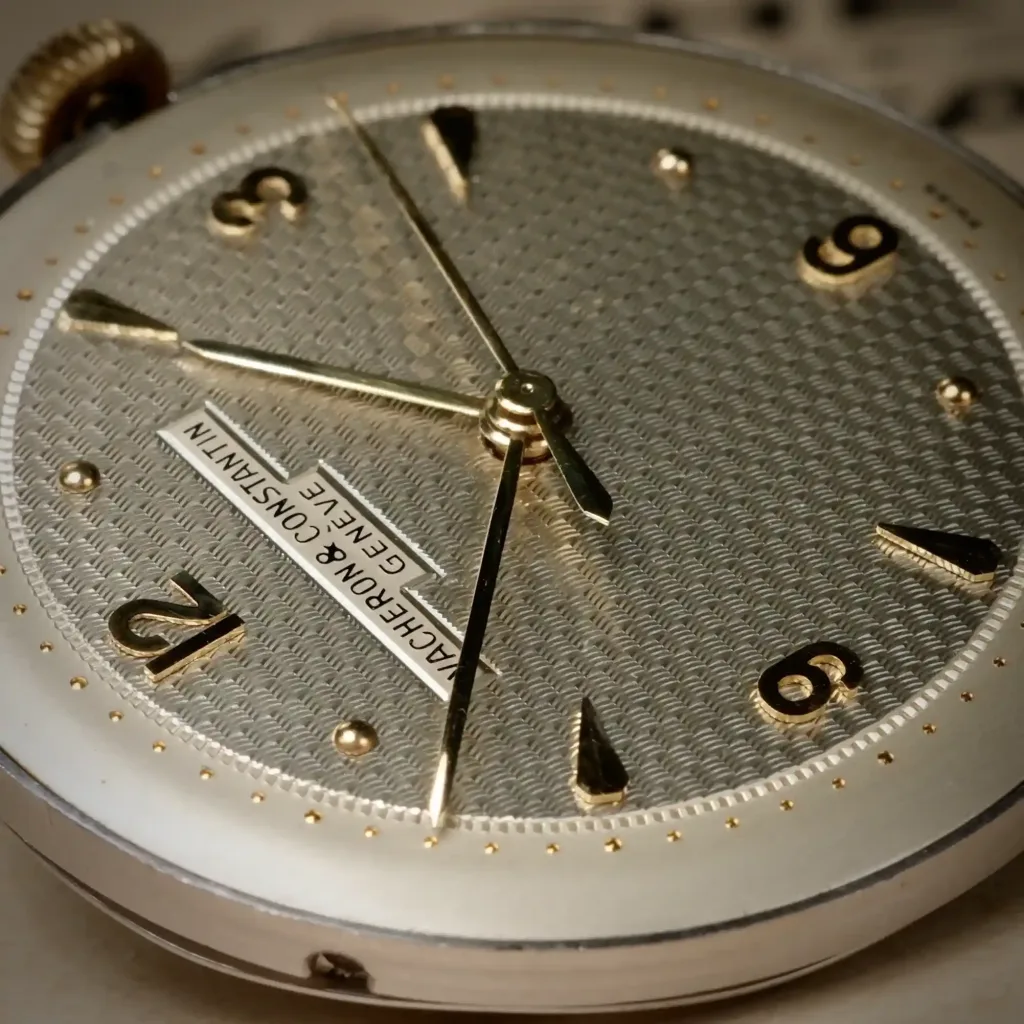
Solid gold applied indices, blued-steel hands tempered by heat rather than coated, solid gold hands, engine-turned guilloché dial, all represents a fabrication decision that cannot be replicated cheaply and that creates value without compromise.

Rarity is a function of production numbers, survival rates, and current market availability, all measured against the intensity of demand. A reference produced in 300 pieces is not automatically rare; if only three collectors worldwide seek it, the supply-demand equilibrium remains flat.
Genuine rarity exists where documented production is limited, survival is uncertain, and demand is structured and recurring.
The Patek Philippe Reference 1518 illustrates this mechanism precisely. The first serially produced perpetual calendar chronograph wristwatch, introduced in 1941, was made in approximately 281 pieces across four case metals over roughly fifteen years.
The stainless-steel variant accounts for only four confirmed examples. At Phillips in Association with Bacs & Russo in November 2025, a stainless-steel Reference 1518 from 1943 realised CHF 14,190,000 — the most valuable vintage Patek Philippe wristwatch ever sold at auction and the highest-priced timepiece at auction globally in 2025.
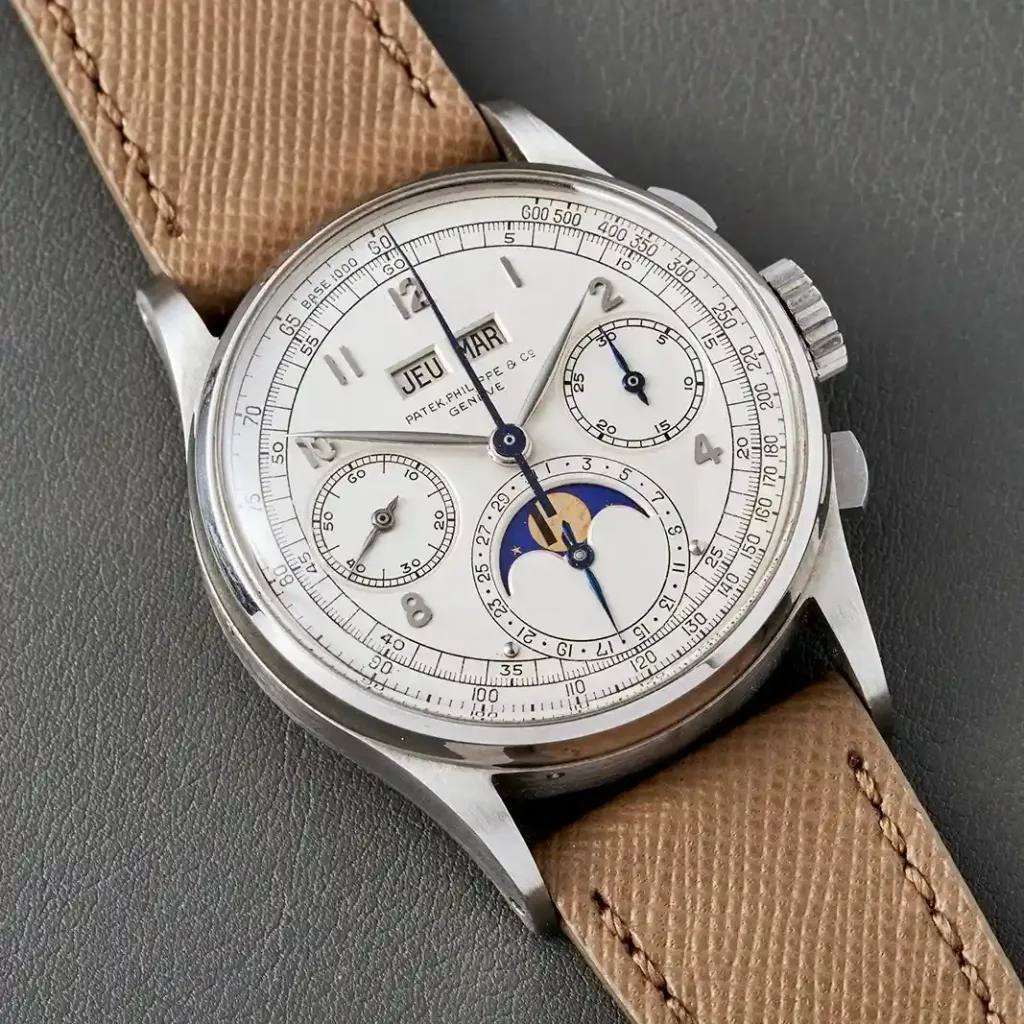

The progression from earlier auction results to this figure charts a compounding appreciation curve driven by finite supply meeting sustained institutional-level demand.
Survival rates are rarely published but can be estimated from the frequency of appearances at auction and from specialised reference literature. A reference that surfaces at auction only once per decade is effectively in tighter supply than production numbers alone suggest. Condition compounds this further: among the surviving watches of any given reference, those with original dials, untouched cases, and period-correct bracelets constitute a narrower subset again.
The concept of originality — every component matching the configuration in which the watch left the factory — functions as a multiplier on rarity.
Certain references have altered the trajectory of watchmaking. These are watches that introduced a category, redefined a convention, or crystallised a design language so precisely that subsequent decades of production converged upon them as reference points.
Their collectability is inseparable from their historical role.
The watch that defines a category commands a premium that cannot be engineered after the fact. Iconicity is conferred by history, not by marketing.
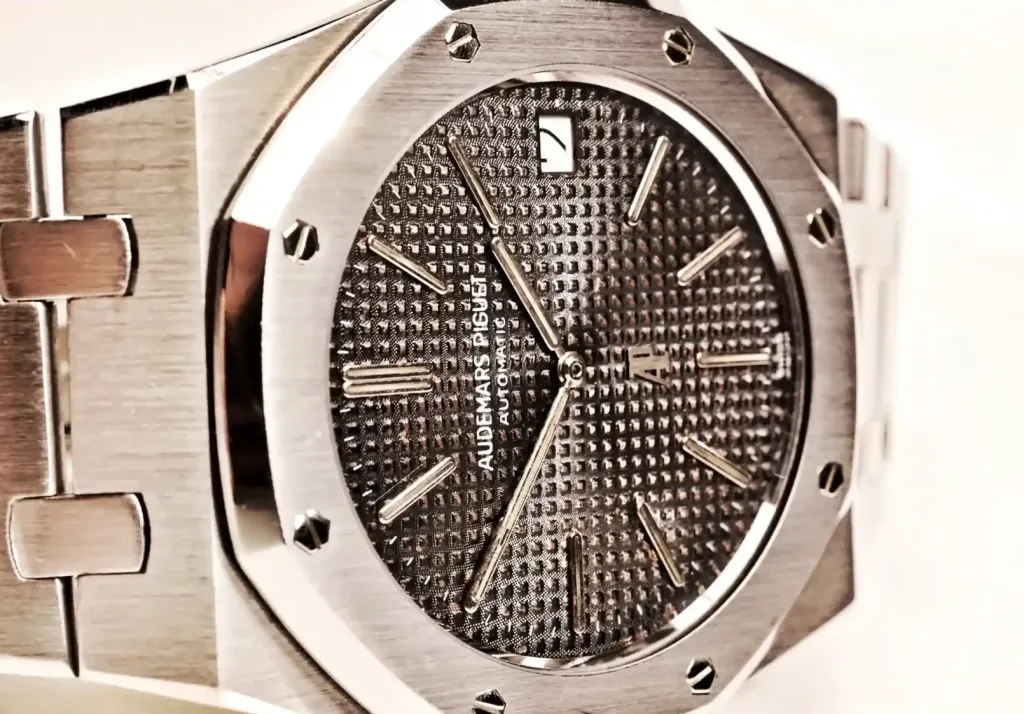
The Audemars Piguet Royal Oak, Reference 5402ST, introduced at the 1972 Basel watch fair, is the clearest example. Designed overnight by Gérald Genta at the request of Audemars Piguet managing director Georges Golay, the Royal Oak introduced stainless steel as a legitimate luxury material, introduced the integrated bracelet as a structural element, and established the octagonal bezel with visible screws as a new aesthetic concept.
Genta himself considered it the masterpiece of his career until his death in 2011. The watch entered the market at 3,750 Swiss francs — considered provocative for a steel sports watch — and now anchors the most active segment of the vintage Audemars Piguet market.


The Omega Speedmaster Professional, Reference 2915 through the 105.012 series worn during the Apollo missions, functions similarly. Its role in NASA’s lunar programme from 1969 onwards converted a quality chronograph into a milestone of 20th-century watchmaking.
The Patek Philippe Calatrava, introduced in 1932 as Reference 96, established the formal vocabulary of the round, thin, three-hand dress watch that has governed formal horology for nearly a century.
The Cartier Tank, conceived by Louis Cartier in 1917 and reportedly inspired by the Renault FT tank seen on the Western Front, remains the architectural reference for rectangular case design.
These are not merely well-regarded watches; they are definitive statements that their categories continued to respond to long after production began.


Beauty is the most contested element in this framework because it is subjective and because tastes move.
Yet there exists a category of watch design that demonstrates resilience to trend cycles — pieces whose proportions, material choices, and design have remained persuasive across multiple generations of collectors. The designer is often as important as the object itself.


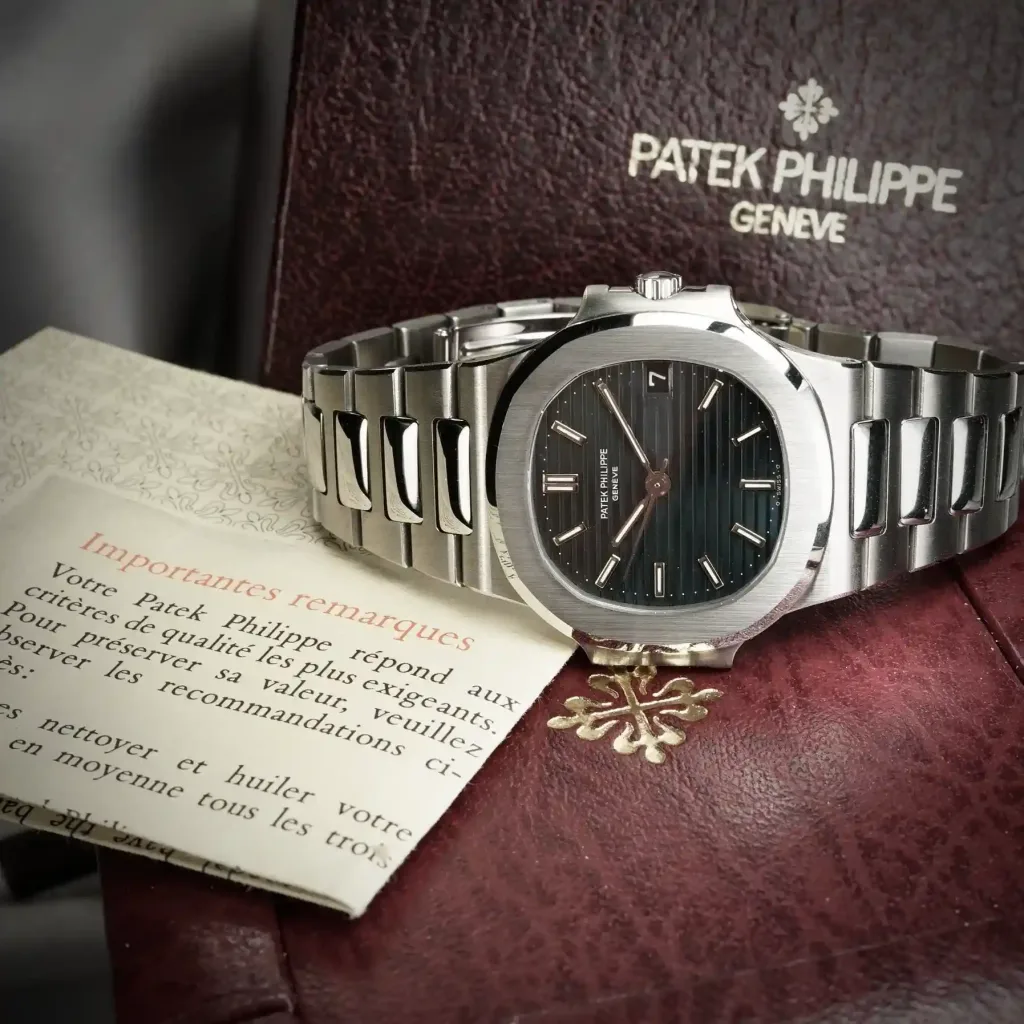
Gérald Genta warrants extended attention here. Born in Geneva in 1931, trained initially as a jeweller, Genta operated as a freelance designer selling concepts to major houses for as little as ten Swiss francs per sketch before his reputation consolidated around the Omega Constellation in 1959. The Royal Oak followed in 1972, the Nautilus for Patek Philippe in 1976, and the IWC Ingenieur in the same year. All three remain in continuous production — an almost unparalleled record for any watch designer’s output across separate brands.
Genta also designed the Bulgari Bulgari, inspired by a Roman coin, and the Cartier Pasha, redesigned in 1985. His own eponymous brand, founded in 1969 and sold to Bulgari in the early 2000s, manufactured complication wristwatches in geometric cases that now surface regularly at auction and which are bargain-priced, given quality and design.
Beauty in watch collecting does not resolve into a single aesthetic position. It operates along a spectrum where two distinct logics produce equally legitimate results.
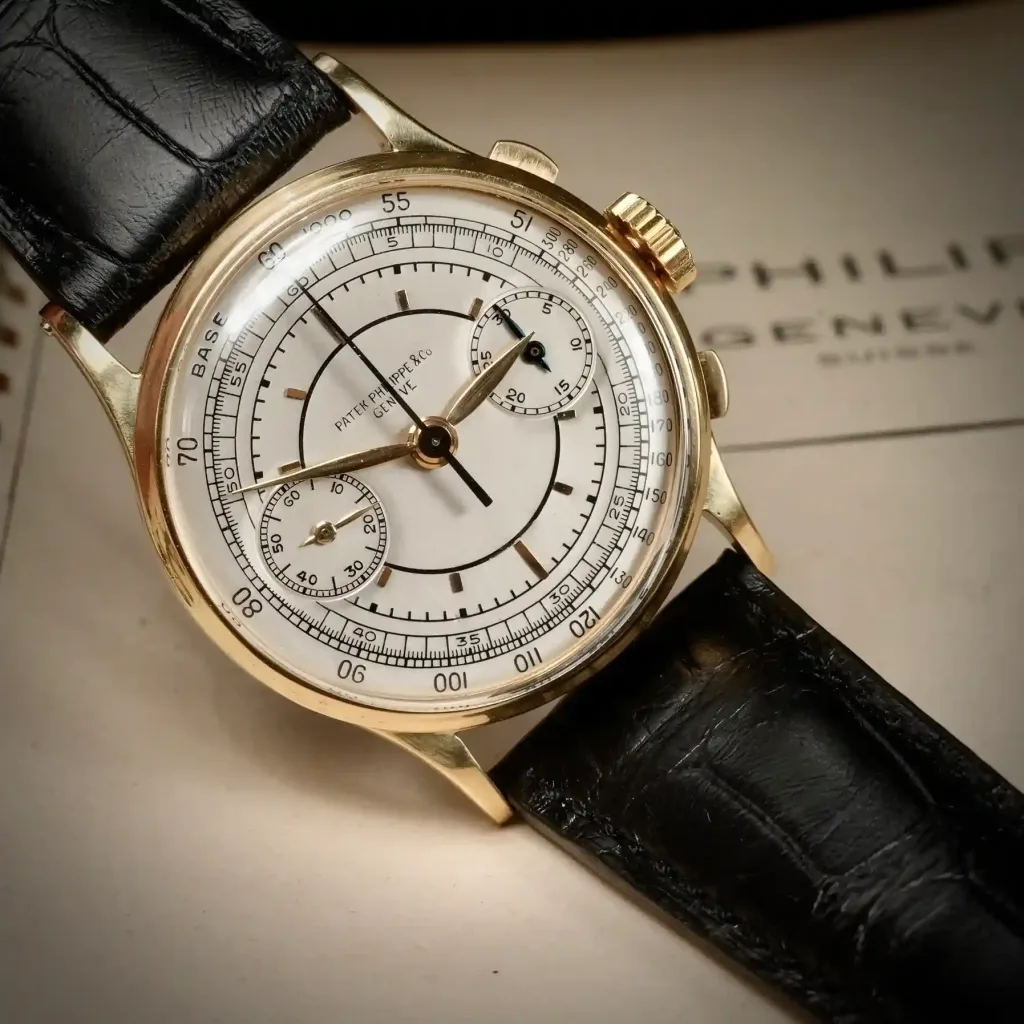
At one extreme sit references such as the Patek Philippe Ref. 96, introduced in 1932, and the Ref. 130 chronograph — cases and dials arrived at through the gradual elimination of any element that time could render obsolete. The Ref. 96’s round case, restrained architecture, and clean lines defined the style of the dress watch for nearly a century; the Ref. 130, in its various dial configurations, applied the same reductive logic to the chronograph. T
hese pieces do not ask to be noticed. Their proportions are the product of a consensus about form that precedes individual taste, which is precisely why they remain correct in any decade.
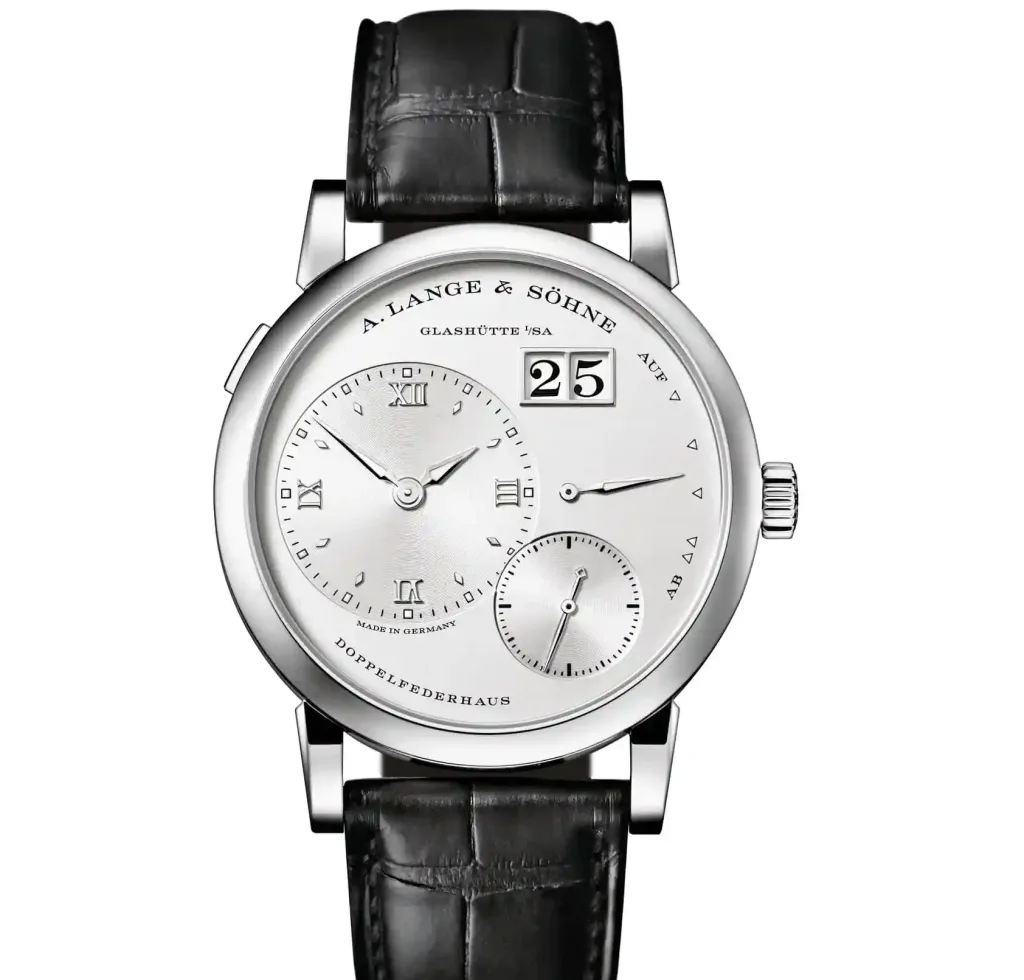
At the other extreme, the A. Lange & Söhne Lange 1, presented in Dresden in October 1994 at the brand’s relaunch, constitutes a formal argument of a different kind. Its asymmetric dial architecture — with the outsize date at twelve, the power reserve at one, the subsidiary seconds counter offset to the lower left, and the mainspring indicator positioned lower right — violates every convention of Swiss classical layout.
Yet the design achieved canonical status at the time of its introduction, not because it compromised with established norms but because its asymmetry was not arbitrary: every element was placed in response to a functional hierarchy, and the visual result carries the internal logic of the decision-making process. The Lange 1 became an instant classic for the same reason the Ref. 96 endured: both demonstrate that beauty in horology is a by-product of rigour, whether that rigour expresses itself through restraint or through structural invention.

Quality, in the context of collector-grade horology, is not a singular assessment but a composite judgement across three interdependent variables: condition, originality, and the coevality of parts. Each carries independent weight, yet none is fully legible in isolation from the other two.
Condition refers to the physical state of every surface and component. An unpolished case retains the sharp transitions between its surfaces — the brushed flanks, the polished bevels, the crisp lugs — that define the object as it was manufactured. Polishing removes material; more critically, it removes geometry.
A case that has passed through successive rounds of refinishing may present as bright, but its proportions have been altered in ways that are disturbing and, to the trained eye, immediately apparent.
Dial condition follows the same logic: a luminous surface that has patinated consistently with the period rather than been replaced, and original printing all constitute condition criteria that bear directly on the watch’s integrity as a historical object.
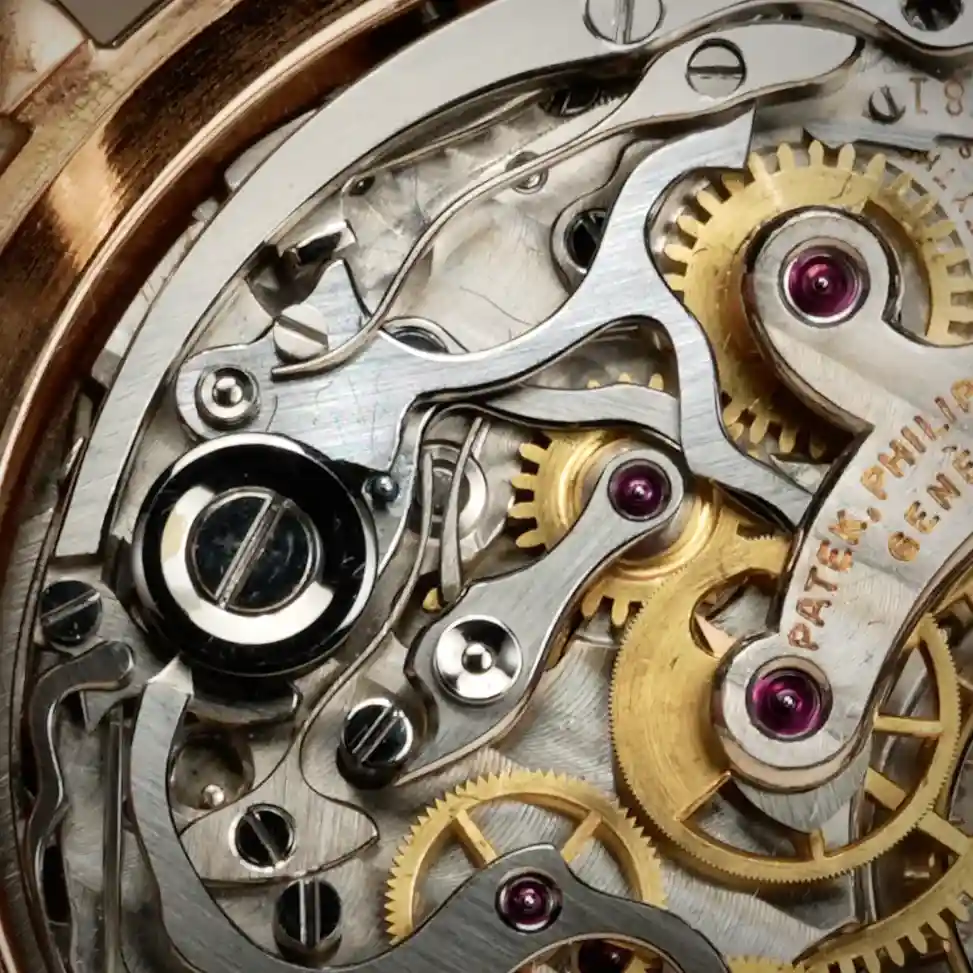
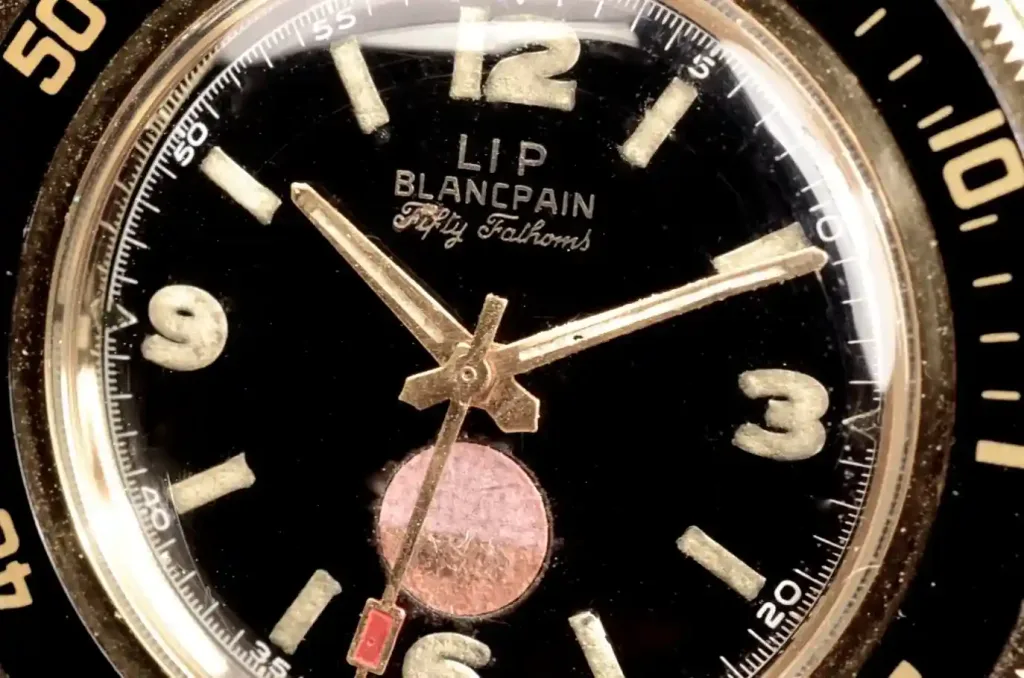
Movement condition — freedom from corrosion, original finish on bridges and plates, undamaged jewels and regulator — completes the assessment at the mechanical level.
Originality refers to the correspondence between every component and the reference specification at point of manufacture. A dial, a set of hands, a crown, a crystal, and a caseback that all belong to the reference they appear to represent constitute an original watch.
Substitution of any element — even with a period-correct component from an identical reference — creates a hybrid that, however functionally sound, has lost documentary integrity. The distinction between an original and an assembled watch is not merely academic; it is the difference between an object that carries its own history and one that carries a constructed version of it.
Coevality of parts is the most precise of the three criteria and the most frequently overlooked by those approaching the vintage market without specialist preparation. It requires that the components present in a watch are not merely correct for the reference but contemporaneous with each other — produced and assembled within the same production window.
A movement from the correct period fitted into a case produced five years earlier or later, hands from a subsequent variant installed on an earlier dial, or a caseback matched to a case from a different production run: these configurations involve components that are individually period-correct but collectively incoherent. Reference literature, production records where available, and the comparative analysis of known intact examples are the instruments through which coevality is established. A watch in which every component belongs together, not only in reference terms but in chronological ones, represents the highest standard of collector-grade acquisition.


Traceability — the capacity to connect a specific timepiece to verified factory records — has become the defining differentiator to make a watch investment-grade.
It is the element most easily overlooked by newer collectors and most carefully attended to by experienced ones.
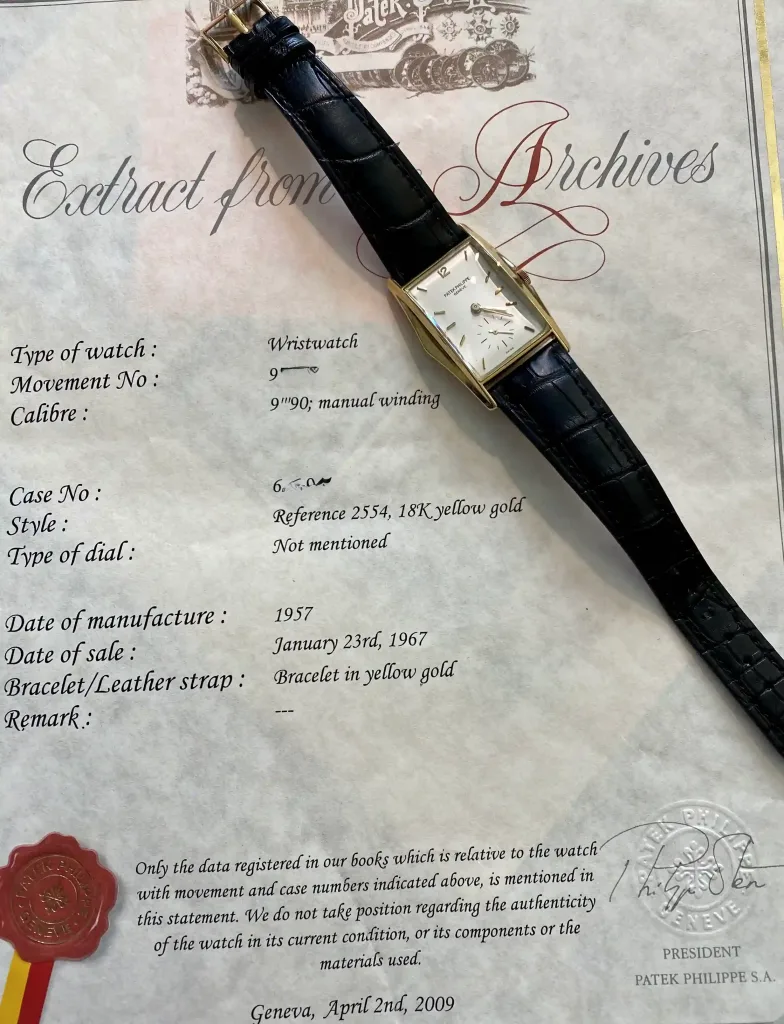

Patek Philippe maintains archives recorded continuously since 1839. The Extract from the Archives, available for timepieces whose first sale date exceeds ten years from the date of the request, provides a partial transcript that confirms the movement number, case number, reference, and date of sale in their original correspondence.
The service costs 500 Swiss francs and requires photographic submission of the watch. The Certificate of Origin, issued with every new Patek Philippe at the point of sale, constitutes the primary document of authenticity.
Audemars Piguet offers a similar Extract from Archives at 250 CHF following a full service; a Certificate of Authentication, at 1,000 CHF, requires the watch to be returned to Switzerland for physical evaluation. Breguet’s museum curators can issue certificates with Breguet register data — including original owner information — following physical examination.
The correlation between document completeness and hammer price is well established at the major auction houses. A Patek Philippe Reference 1518 offered with Extract from the Archives, original Certificate of Origin, and matching box commands a premium over an otherwise identical example lacking documentation — sometimes by a margin that exceeds 30%.
At Christie’s in 2012, Jackie Kennedy’s Cartier Tank realised USD 379,500 — a figure traceable directly to verified ownership provenance, not to the watch’s mechanical specifications. Paul Newman’s personal Rolex Cosmograph Daytona Reference 6239, sold at Phillips New York in October 2017 for USD 17,752,500, drew that result almost entirely from ownership traceability rather than reference rarity alone.
The absence of traceability represents a material risk. A watch that cannot be verified against factory records carries, regardless of its apparent condition, an uncertainty that serious institutional collectors are unwilling to price out. Factory verification is not a formality but a structural element of value.


It is worth noting that traceability extends beyond manufacturer archives.
A documented service history at an authorised service centre, an original insurance valuation, a sequence of auction catalogue inclusions with corresponding lot notes, and a clear chain of private ownership all contribute to what collectors and auction specialists describe as provenance.
The more transparent and verifiable the custodial history of a timepiece, the lower the information asymmetry for a prospective buyer — and the higher the confidence, and therefore the price, it supports.
These five pillars do not operate independently. The most consequential watches in the secondary market — and those that have demonstrated the most consistent appreciation over the two decades between 2005 and 2025 — score highly across all five dimensions simultaneously. Quality ensures physical permanence. Rarity structures the supply. Iconicity creates a floor of institutional demand. Enduring beauty maintains cross-generational desirability. And traceability converts all of the above into a verifiable, transferable asset. When a single timepiece satisfies each criterion, it is not simply a watch.
It is a documented record of horological history in a form that can be worn, examined, and passed between collectors with the certainty that its identity is not in question.

[contact-form-7 id=”4235″ title=”Contact form 1″]