No products in the cart.
Newsletter
[contact-form-7 id=”4235″ title=”Contact form 1″]

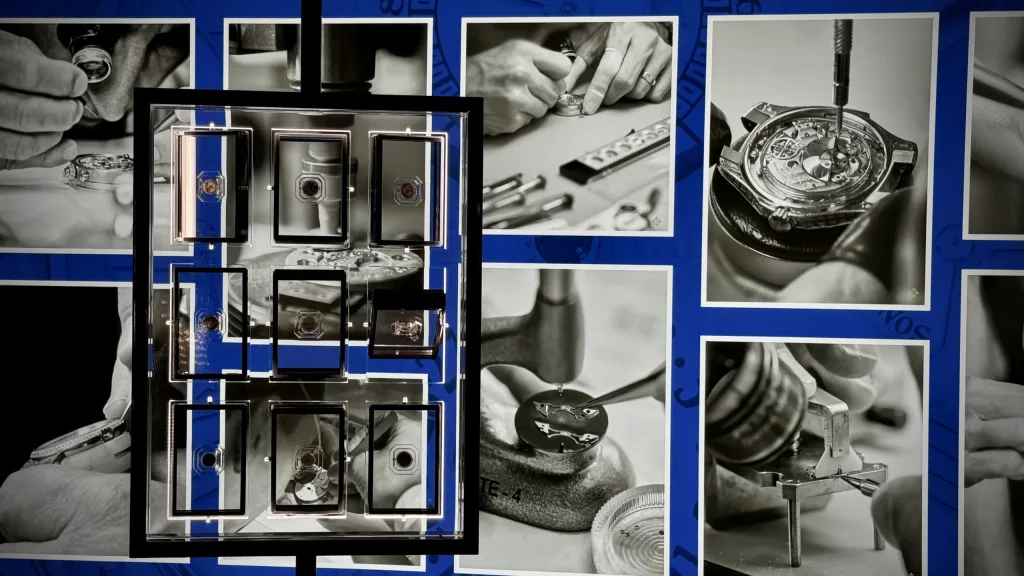
Every few years Patek Philippe empties a significant part of its Geneva vaults and ships it to one city. The Watch Art Grand Exhibitions, held before in London, New York, Singapore and Tokyo, among others, are free, public, and large: the manufacture is explained room by room, the rare handcrafts, the current collection, a set of limited editions made for the host market, and, for anyone who walks past the new watches, a selection of historical pieces from the Patek Philippe Museum.
The 2026 edition is in Milan, in the CityLife district, from 2 to 18 October, and is reported to be the largest the company has staged.
Patek Philippe Watch Art, Milan
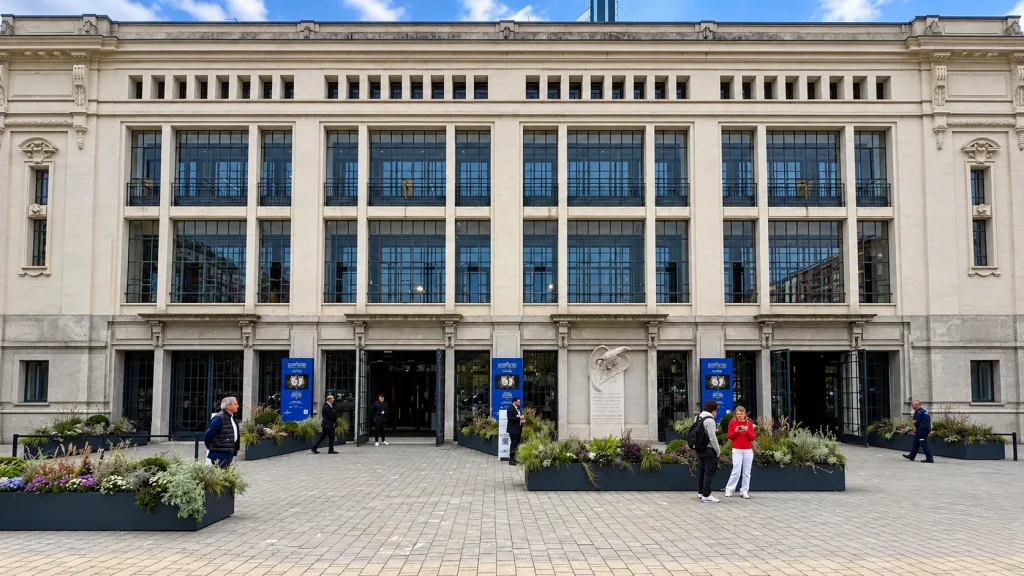
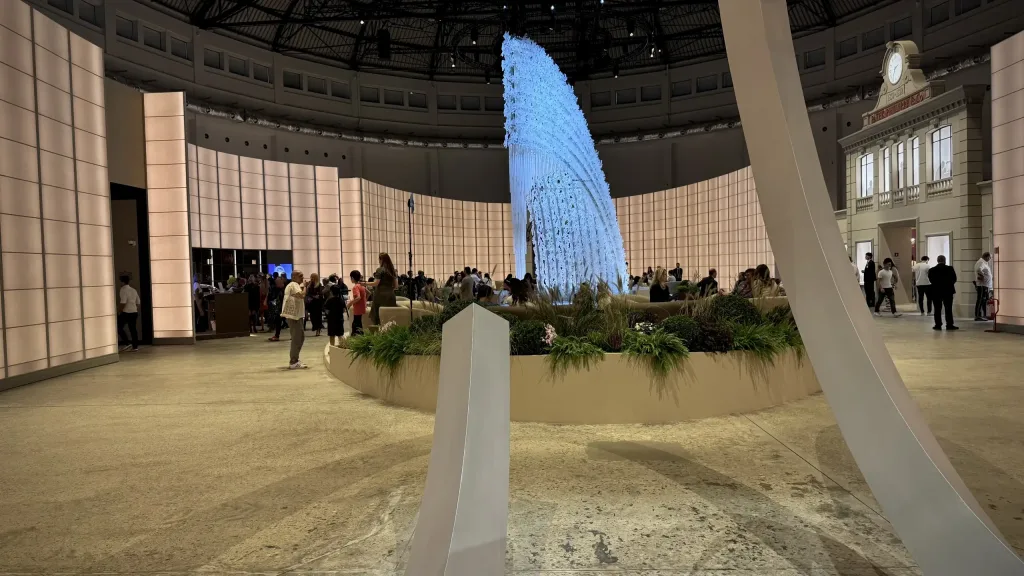
Milan is not an accidental choice. The city has become the centre of a measurable movement of wealth into Italy. Under the regime introduced in 2017, a new resident can settle a flat annual tax on all foreign-sourced income, €100,000 at first, raised to €200,000 in August 2024, with a further increase to €300,000 now under discussion, for up to fifteen years.
The effect is visible in the numbers: Henley & Partners projects roughly 3,600 new millionaires settling in Italy, mostly in Milan, in 2025, placing the country third in the world for inbound wealth with around 115,000 resident millionaires and a quarter more than it had a decade ago.
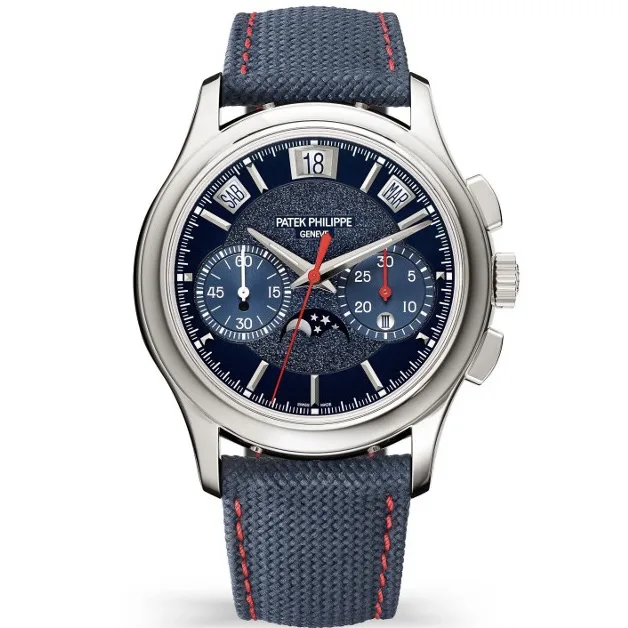
A watch company deciding where to spend several months and a great deal of money does not ignore a figure like that. The seven limited editions Patek created for Italy, led by the ref. 5978P, a perpetual calendar chronograph, and including a World Time minute repeater whose dial showcases a cloisonné map of Milan’s center are the commercial answer to it.
Patek Philippe Ref. 5978P – Courtesy of Patek Philippe
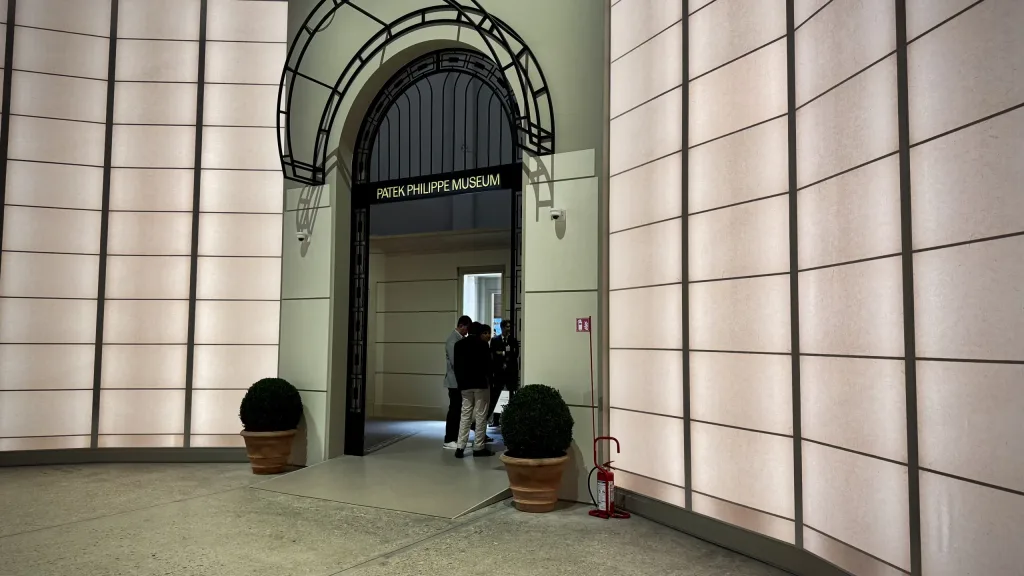
Those seven are what the watch press has covered this month, but what drew us was the other end of the exhibition: the historical watches on loan from the Museum. What follows is not a ranking of importance, rarity or value, Patek’s own curators are better placed to make that list.
It is a personal selection, made by our team, from the watches we stood in front of longest. Twelve of them, counted down, chosen on taste.
An early single-button chronograph with vertical registers. What holds the attention is its restraint: the chronograph is worked entirely through the crown, the dial has Breguet numerals and a vertical counter layout, unusual then and now. Movement and case from 1924.
(P1667 is Patek Philippe Museum’s catalogue number, it is not the reference)
P1667
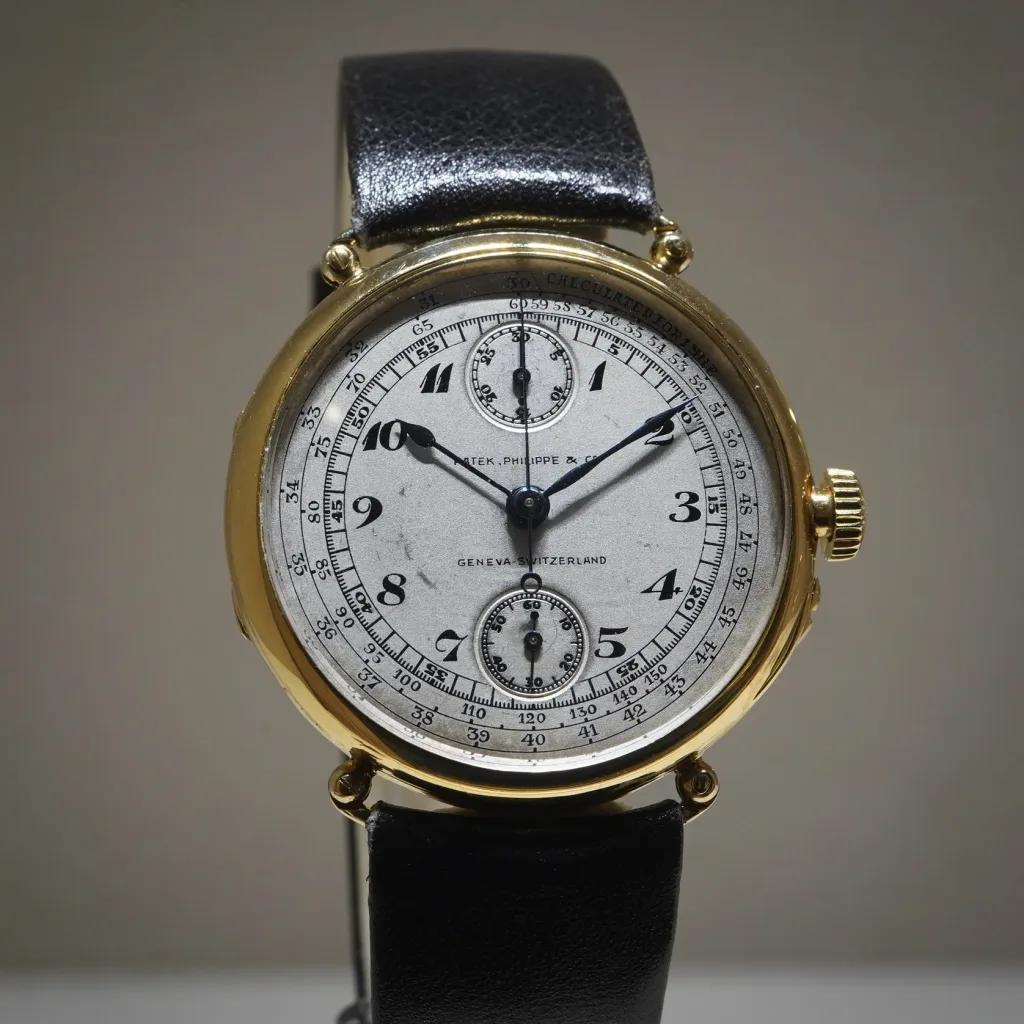
The reference made its own history; this chronograph belonged to Ellington. The design is plain and well balanced, wide between-lug span, round chronograph pushers and a screw-back F.Borgel case that give it a modern face, and the split function is run from a pusher through the crown rather than a second one at eleven o’clock. A more elegant solution and a more complex one to master.
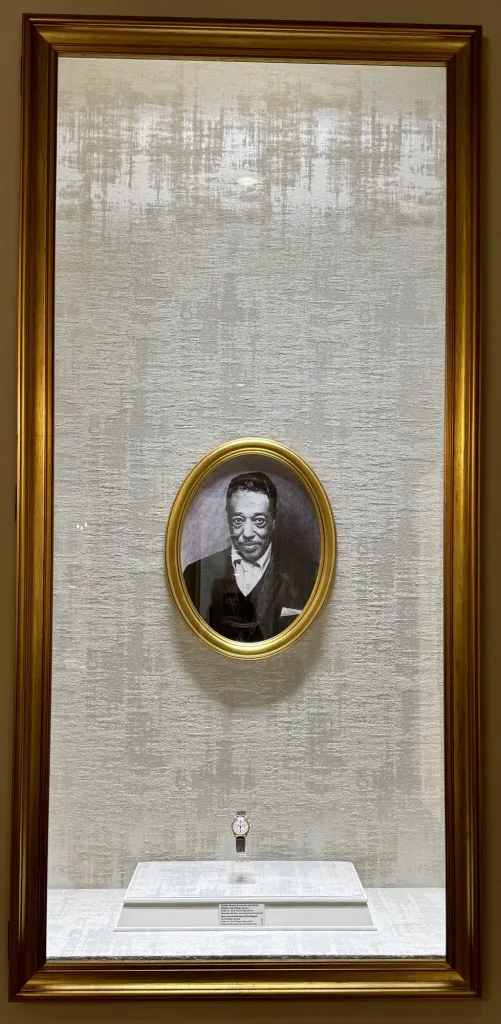
Duke Ellington
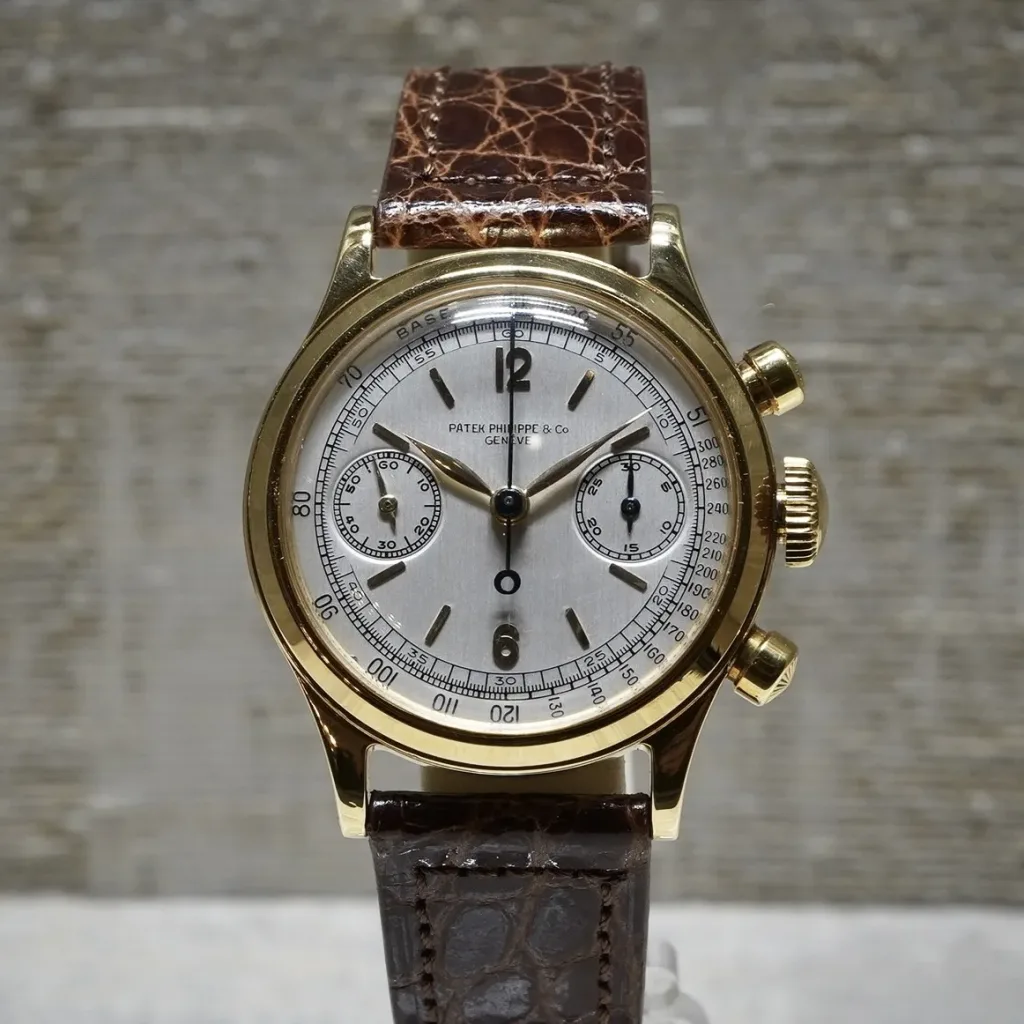
Duke Ellington’s Ref. 1563
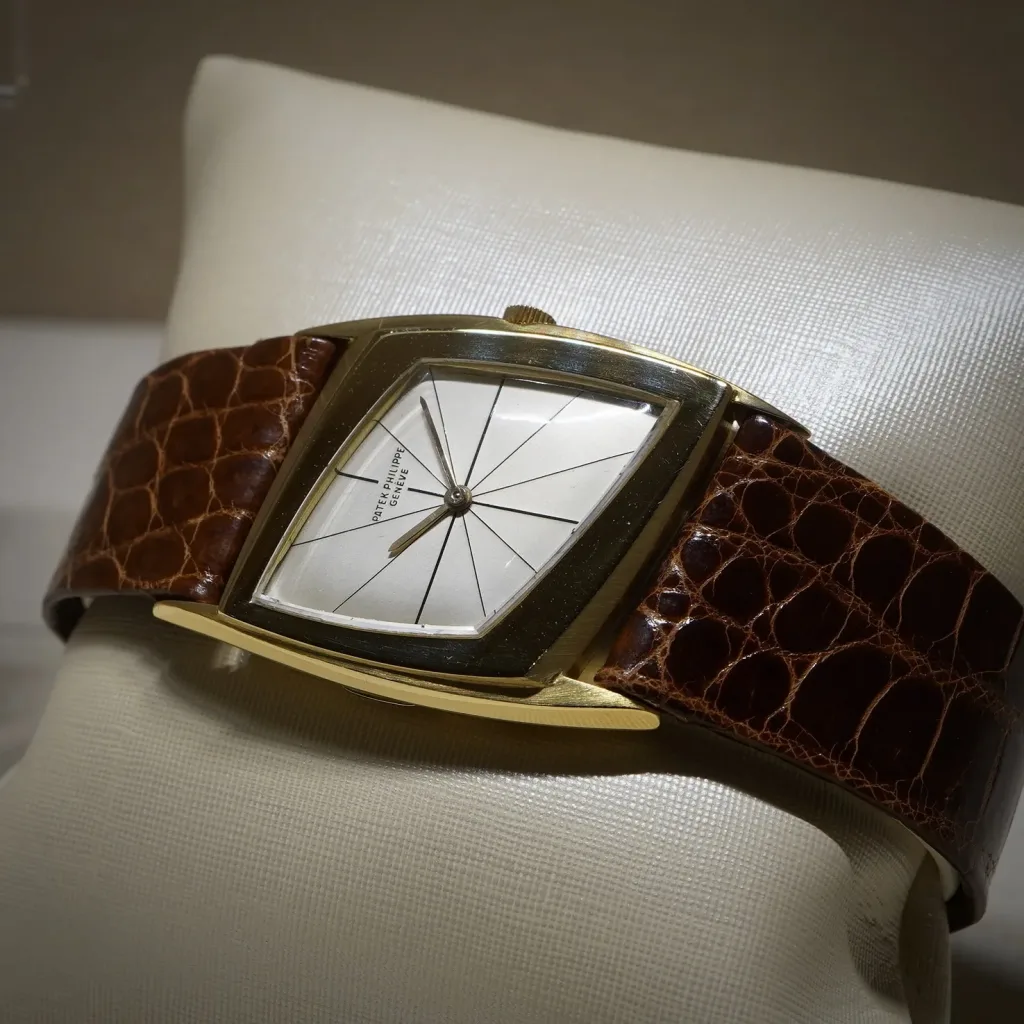
This is the well-known solid gold trapezoidal case from Patek’s asymmetric period. Asymmetry is the premise, yet the whole resolves into balance. It reads as an argument worth revisiting now, when most new watches lack this boldness and character.
Ref. 3413 Gilbert Albert
This twin-crown world time is housed in a 35.8 mm gold case, a cloisonné enamel centre with the Europe map. Perfectly balanced proportions, a recognisable profile, and the cloisonné enamel as the one indulgence on an otherwise disciplined dial. We would place its rose-gold cousin, Ref. 2523-1 HU, same case and movement, a lighter guilloché centre in place of the enamel, at the same rank; the plainer dial loses nothing, it’s just a matter of personal taste.
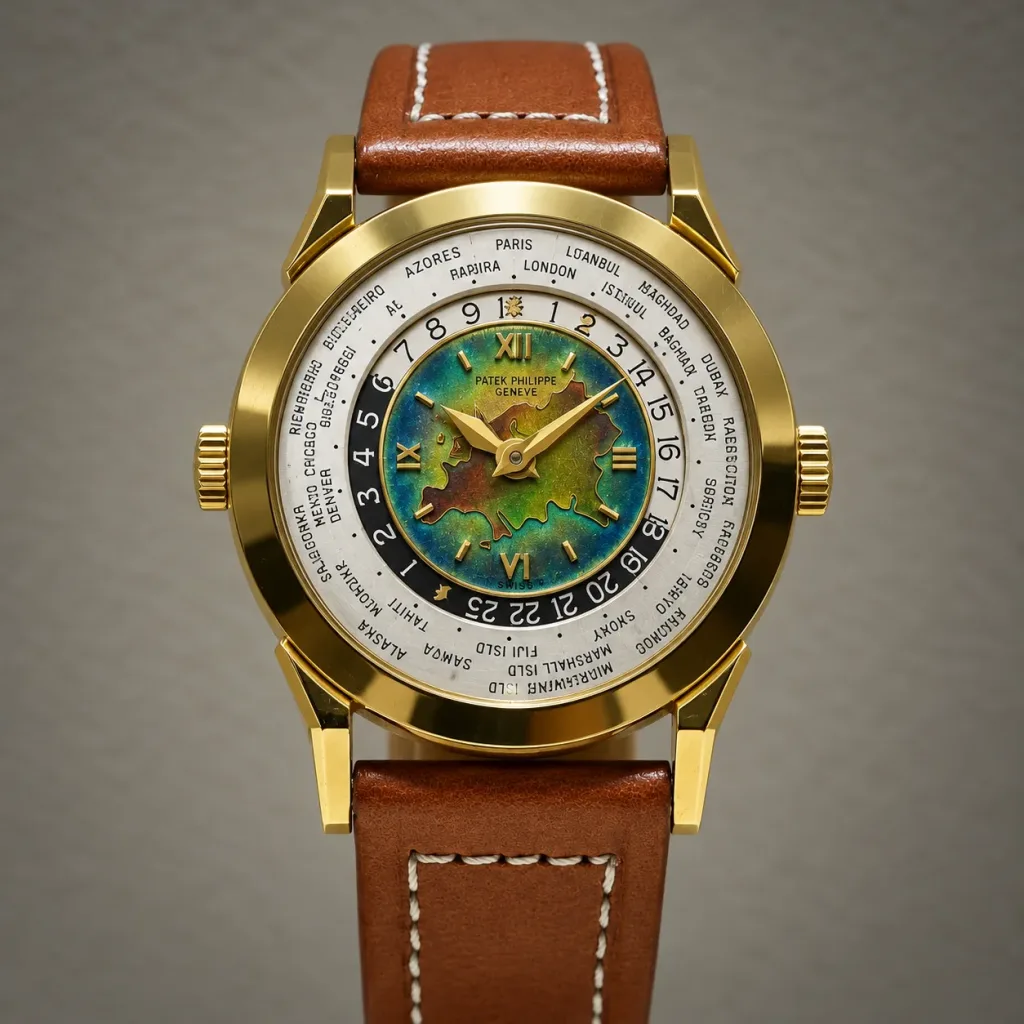
Ref. 2523HU
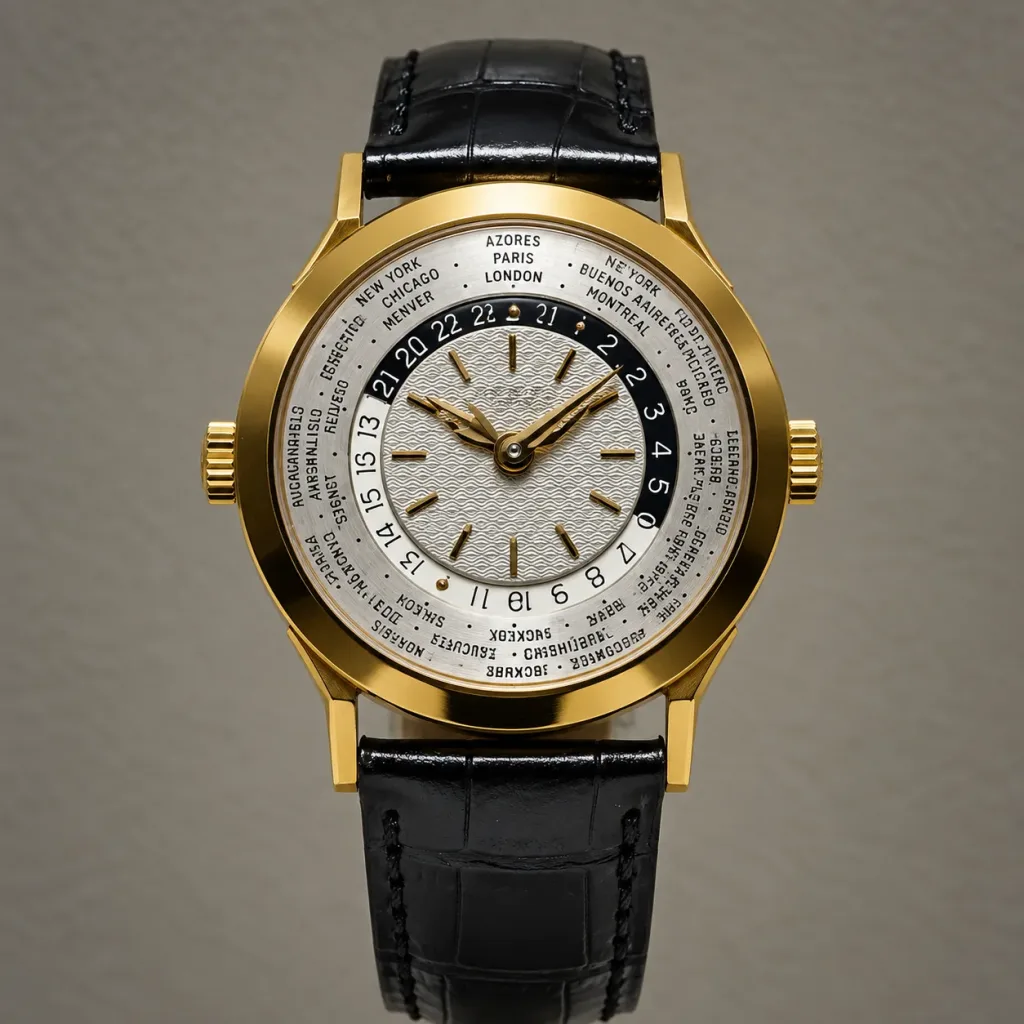
Ref. 2523-1 HU
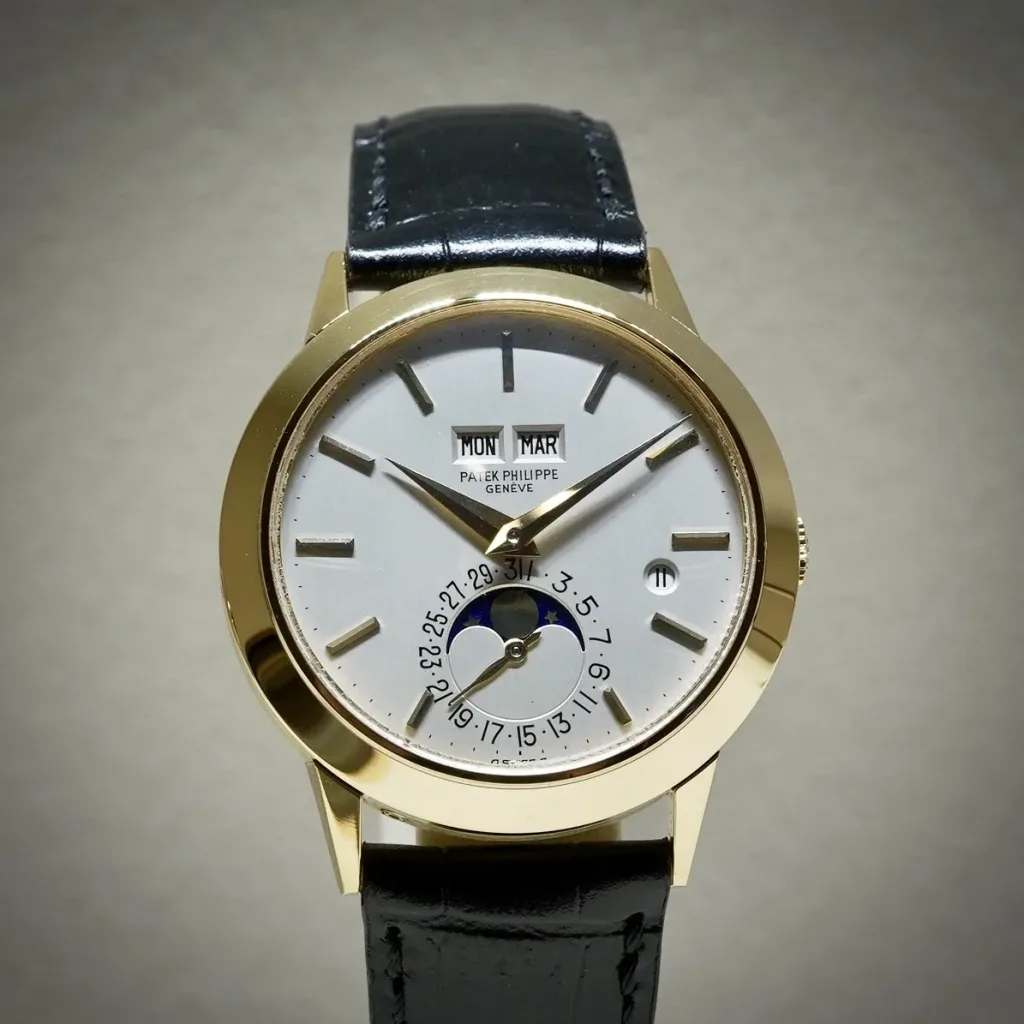
The modern entry, a clean dial, a centred and symmetrical calendar with moonphase, nothing crowded and an automatic movement. A lesson in minimalist layout applied to a major complication.
Ref. 3450
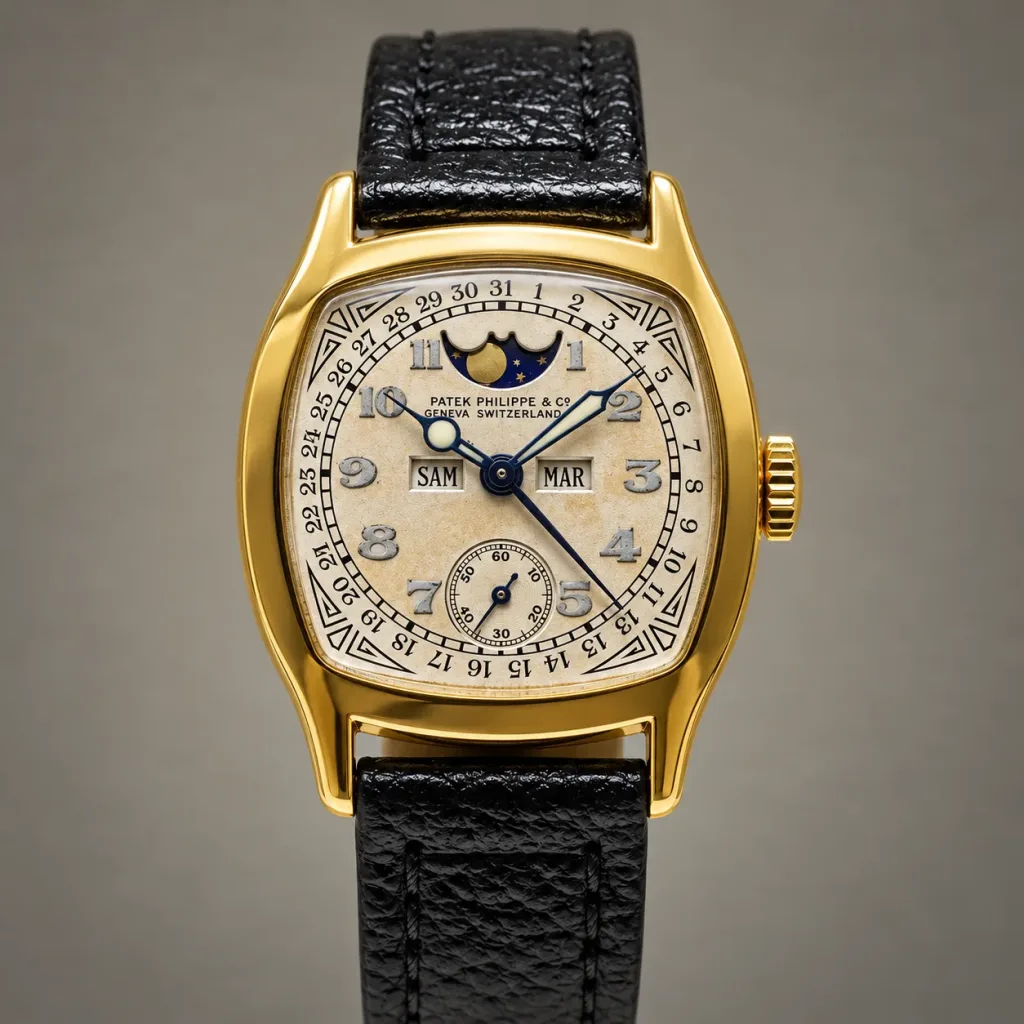
A tonneau case with tortue lugs carrying a complete calendar. The dial is busy and still balanced — further from the pared-down Patek idiom than most on this list — with the moonphase set, unusually, at twelve.
P0869
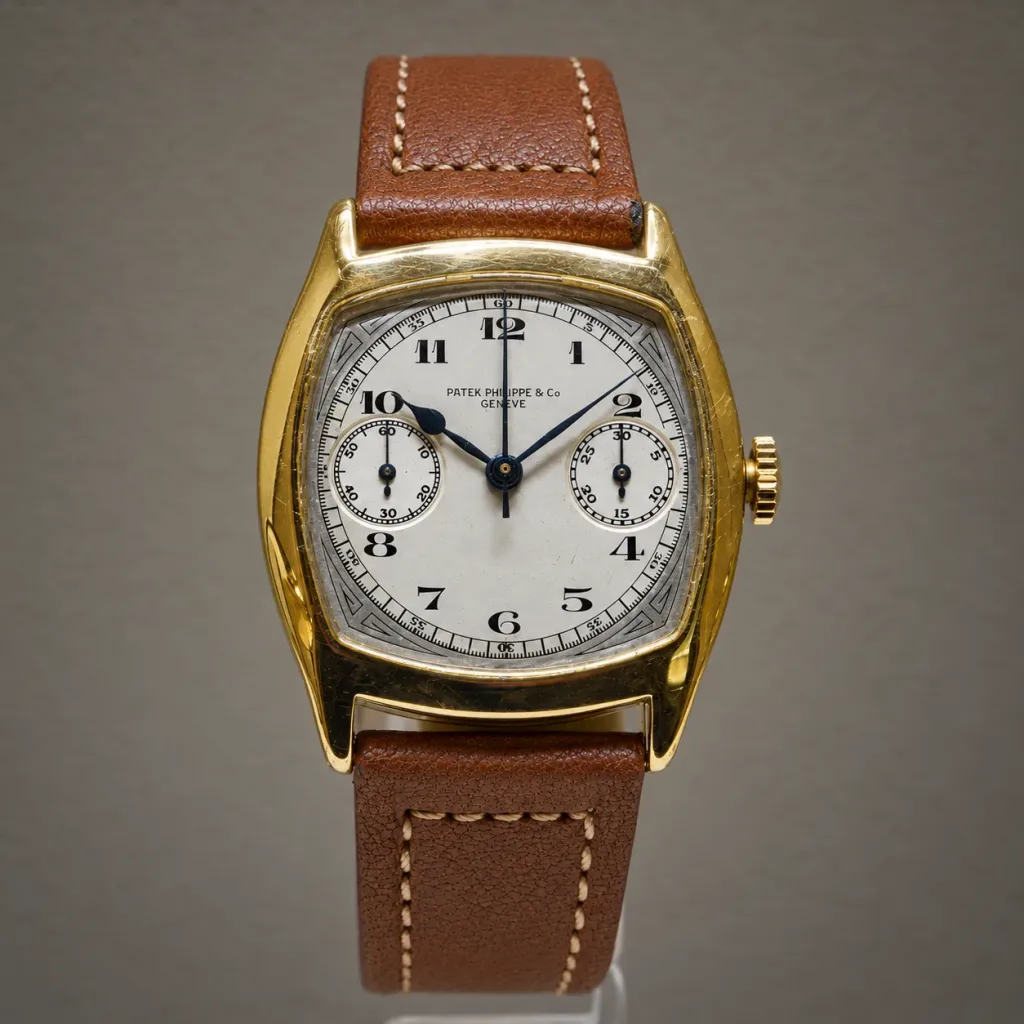
A tonneau yellow-gold case, silvered dial and applied Breguet numerals. The case sits halfway between tank and round; the dial is quiet. The grand complication hides: the slide that trips the gongs is set discreetly into the caseside. A repeater on two gongs is concealed inside this essential case. It belonged to Albert Clement Middleton, of the Victor Talking Machine Company, later RCA.
P1035
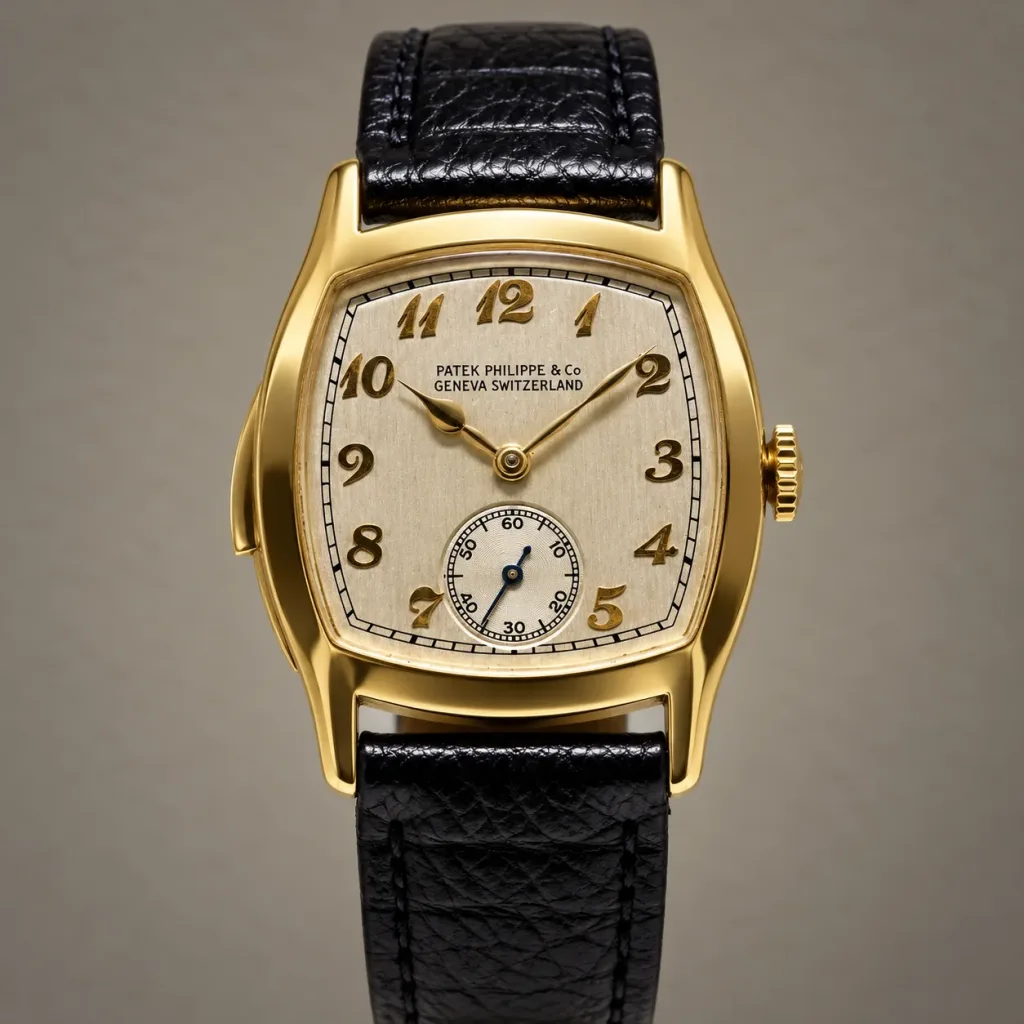
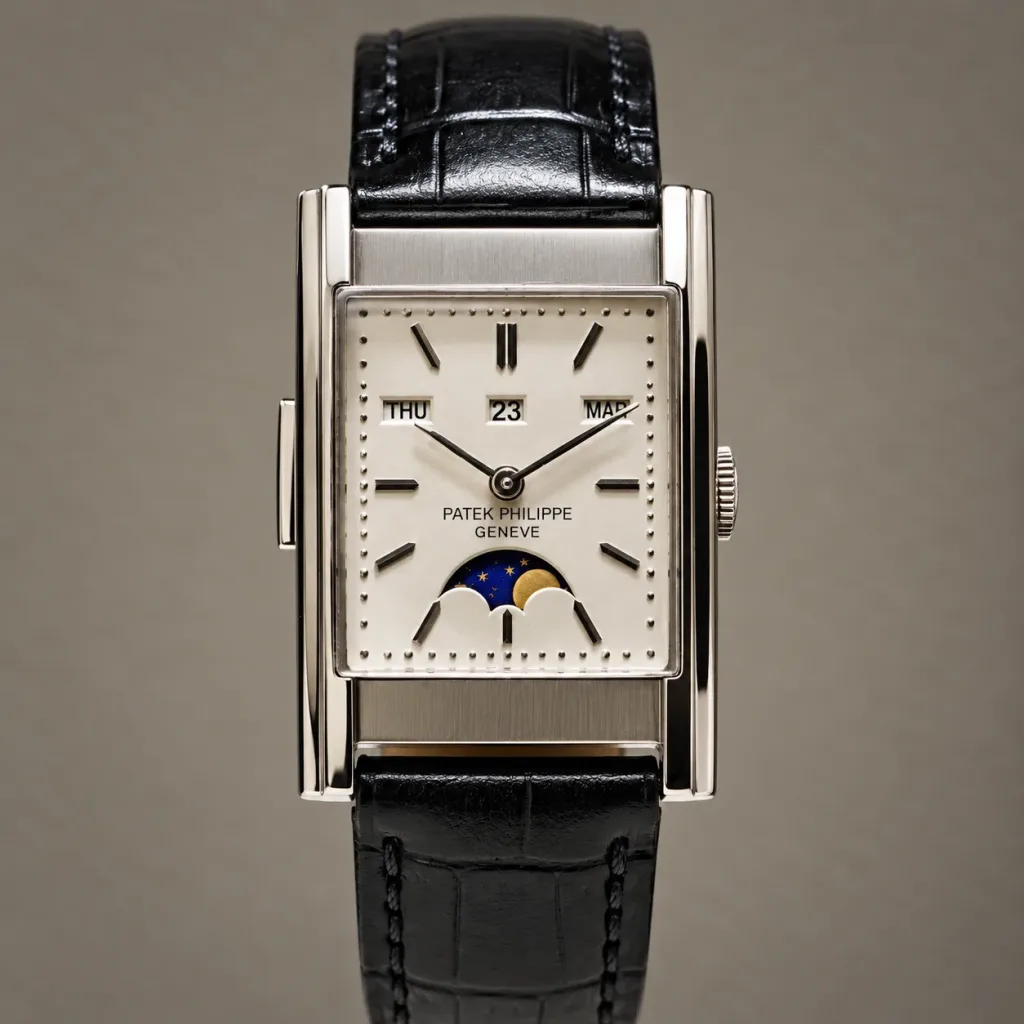
A tank-form platinum case, one of roughly thirty built on ébauches Patek bought from Niton, Geneva, in the 1930s and finished in-house. The calendar apertures are small, subtle, arguably harder to read, certainly more refined for it, and the achievement is also fitting a perpetual calendar into a case this size.
P1406
An elegant tortue case with the chronograph run from the crown rather than a separate pusher. The same instinct that recurs through this list: complication without clutter.
Ref. 7
A 33.1 mm gold case, white enamel dial, Breguet numerals. The modern habit would be to announce a rattrapante with as many pushers as the case allows; here the opposite, a small inconspicuous pusher at two, the second one through the crown, the complication kept almost out of sight. Sold in 1923 to the president of Juventus, in Turin, the first of its kind, and an early Italian owner for a watch now shown in Milan.
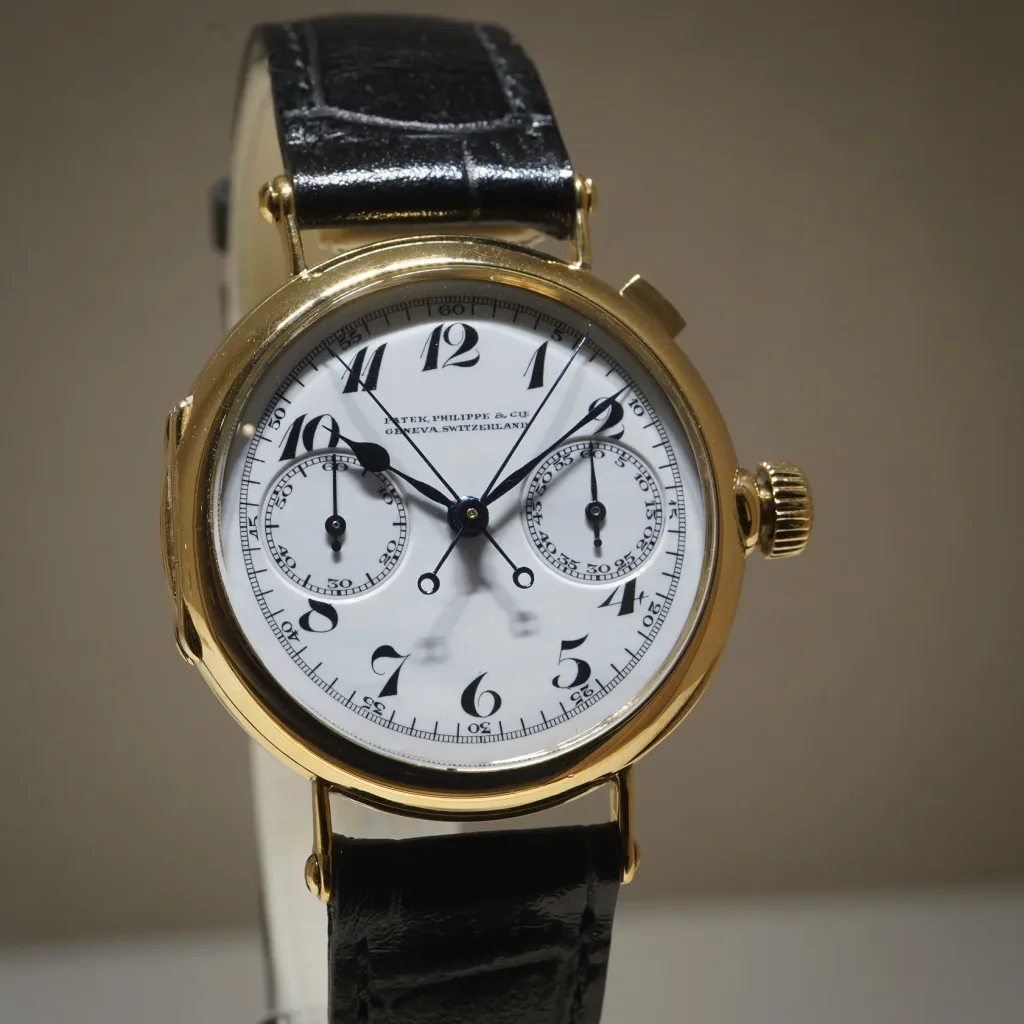
Ref. 1505
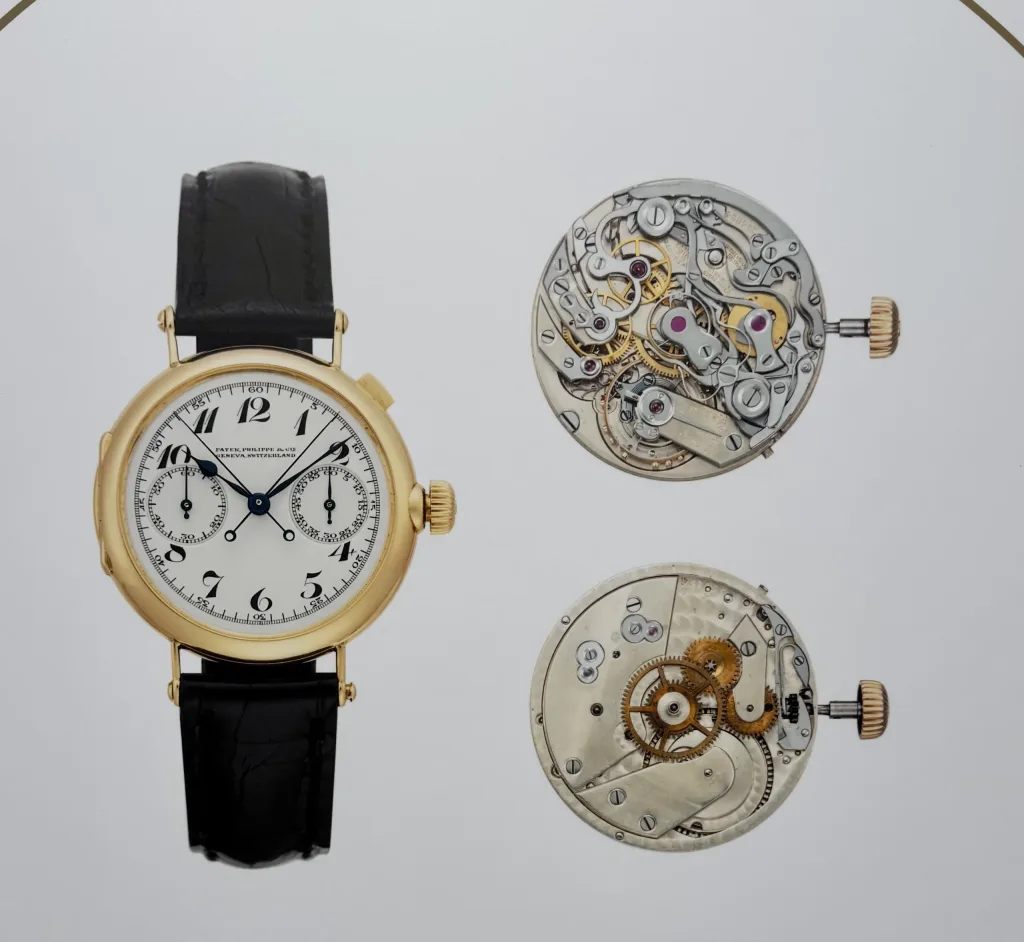
Ref. 1505
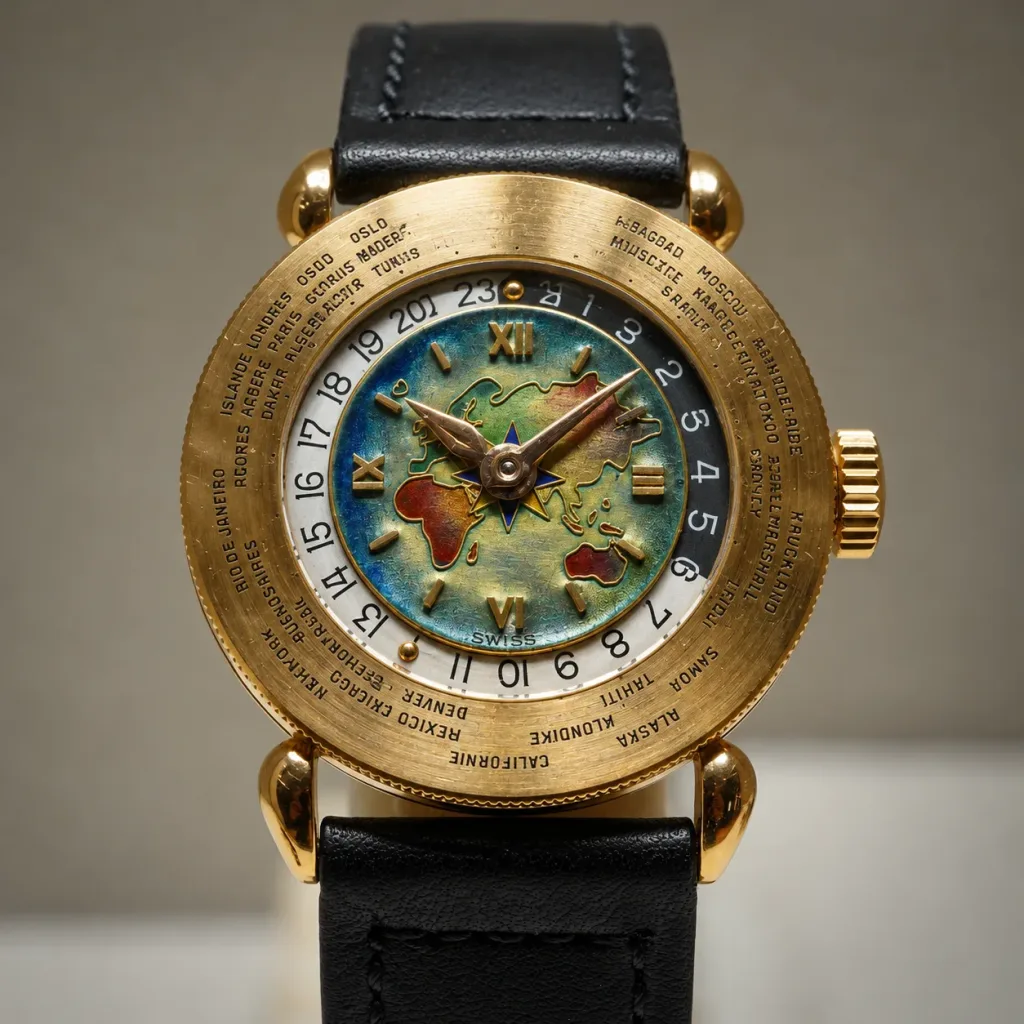
A compact 31.2 mm rose-gold case with claw lugs and a cloisonné enamel dial of the eastern hemisphere. Elegant and crowded and balanced at once, a perfect – an impossible mix; yet essential, with the enamel as the one addition.
Ref. 1415HU
The watch that has everything and shows almost none of it. The base is a ref. 96 Calatrava, an icon on its own. By the show’s catalogue, the case is platinum, a compact 30 mm. Onto it Patek stacked two complications: the repeater beneath, the perpetual calendar with moonphase above, on a finely finished caliber 11.
At arm’s length it reads as a 96 with a moonphase at six. Closer, the small calendar apertures appear; closer still, the repeater slide shows as a slight notch in the case side. Grand complication inside an iconic case, in a minimalist register.
Cal. 11 inside ref. 541 – Courtesy of Patek Philippe
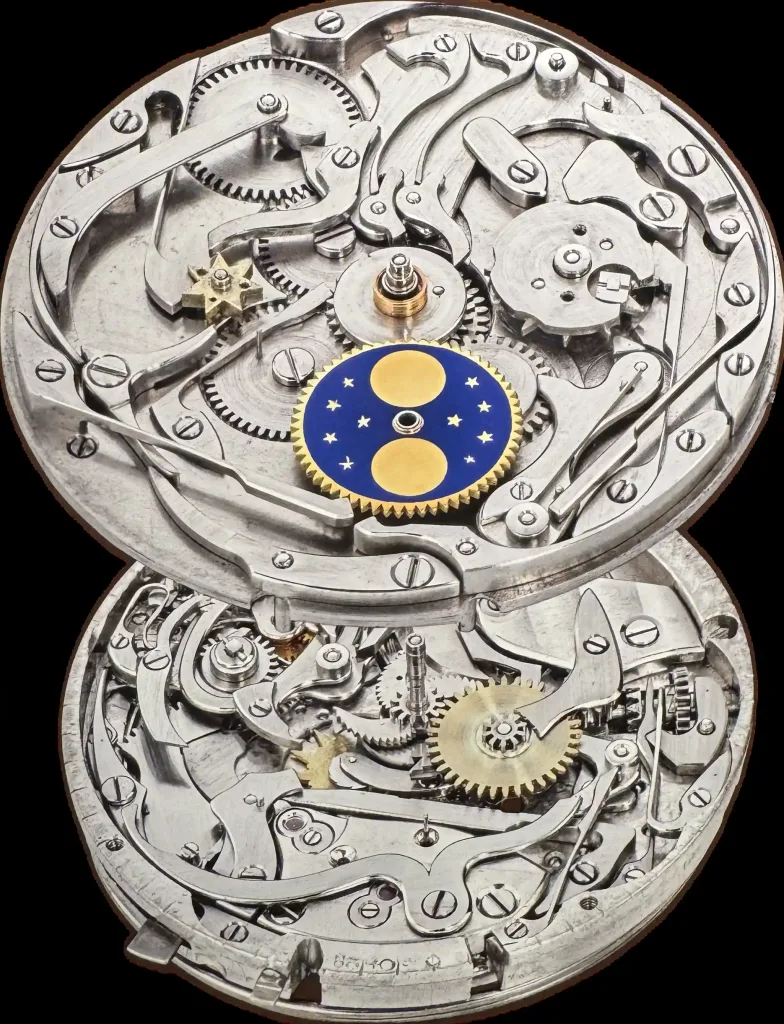
Patek’s own published book records this reference as 541; the Milan show catalogue prints 451. 541 is likely the correct one, a small typo worth noting only because the rest of the catalogue is so exact.
These twelve run from 1903 to 1985 and make one argument: at Patek, the complication is meant to be lived with, not displayed. The most complex mechanism is set in a quiet case and with a minimalistic dial, the essence of elegance.
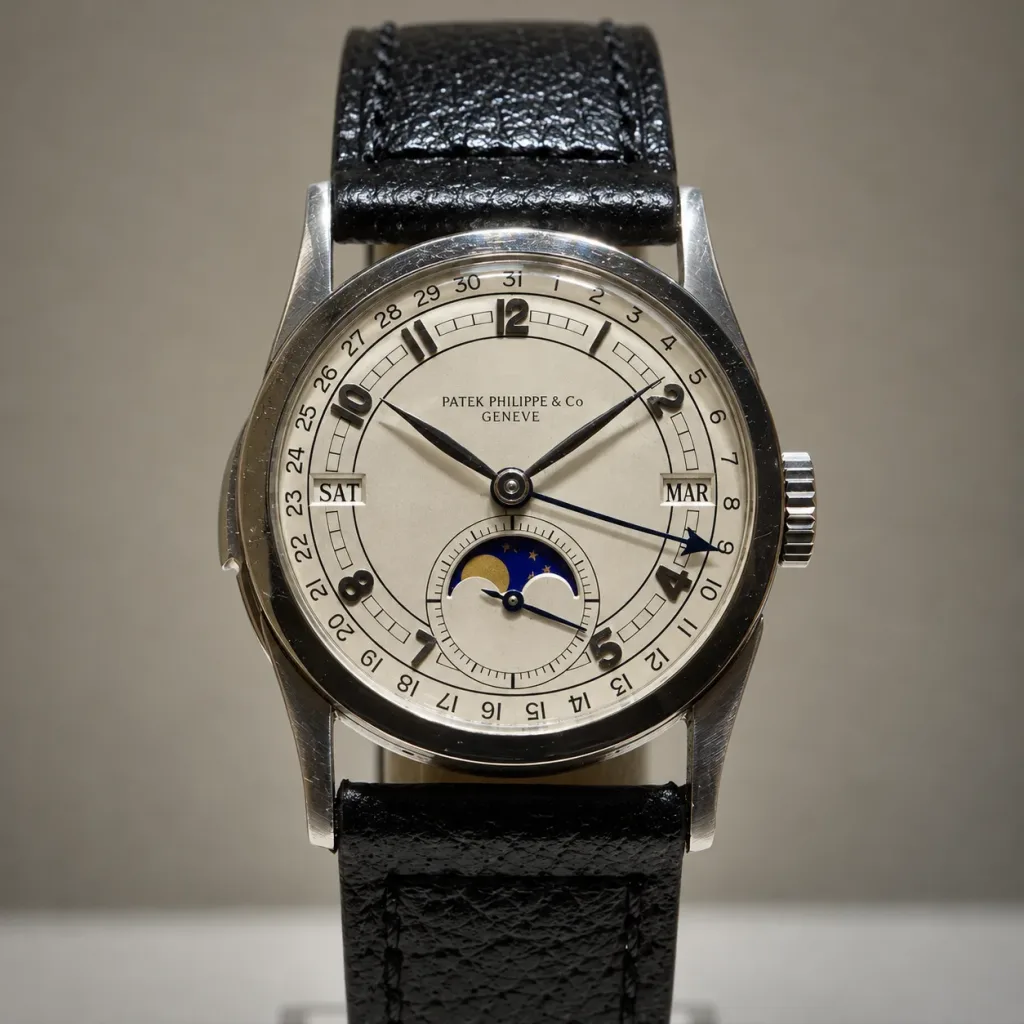
Ref. 541
Sources: Collectability — Patek Minute Repeaters · Wind Vintage — Ref. 541 Calatrava · Antiquorum — Ref. 2523 Europe cloisonné No. 720304 · Antiquorum — Ref. 1415 HU pink gold No. 964804 · Antiquorum — Ref. 1463/1563 No. 867196 · Fratello — Patek and jazz / Ellington
[contact-form-7 id=”4235″ title=”Contact form 1″]