
No products in the cart.

Newsletter
[contact-form-7 id=”4235″ title=”Contact form 1″]

The Patek Philippe reference 96, introduced in 1932, represents a watershed moment in wristwatch design and remains among the most historically significant timepieces in haute horlogerie. Launched shortly after the Great Depression under the newly established ownership of brothers Jean and Charles Henri Stern, the reference 96 embodied a strategic repositioning for Patek Philippe, which had previously concentrated on complicated pocket watches for a rarefied clientele.
The Sterns, who operated the dial manufacture Cadrans Stern Frères, recognized that economic pressures and shifting cultural preferences necessitated a simpler, more accessible product that could establish wristwatch production as a viable commercial foundation.
The reference 96 became the first serially-produced Patek Philippe wristwatch to receive a formal, tracked reference number, establishing organizational rigor that would define the manufacture’s cataloging system for decades.


The design of the reference 96 reflected fundamental Bauhaus principles that prioritized form following function and the elimination of superfluous decoration.
This minimalist philosophy manifested in a flat bezel, integrated lugs that flowed seamlessly from the midcase and restrained proportions that distinguished the reference 96 from contemporary models derived from pocket watch architecture.
The case construction, where the midcase transitions organically into downturned lugs, created a cohesive aesthetic that numerous manufacturers subsequently adopted.
While the Bauhaus influence has been widely documented, the reference 96’s design also incorporated practical innovations suited to serial production, including rationalized component manufacturing and case architectures that facilitated reliable water resistance through precise tolerancing rather than complex gasket systems.
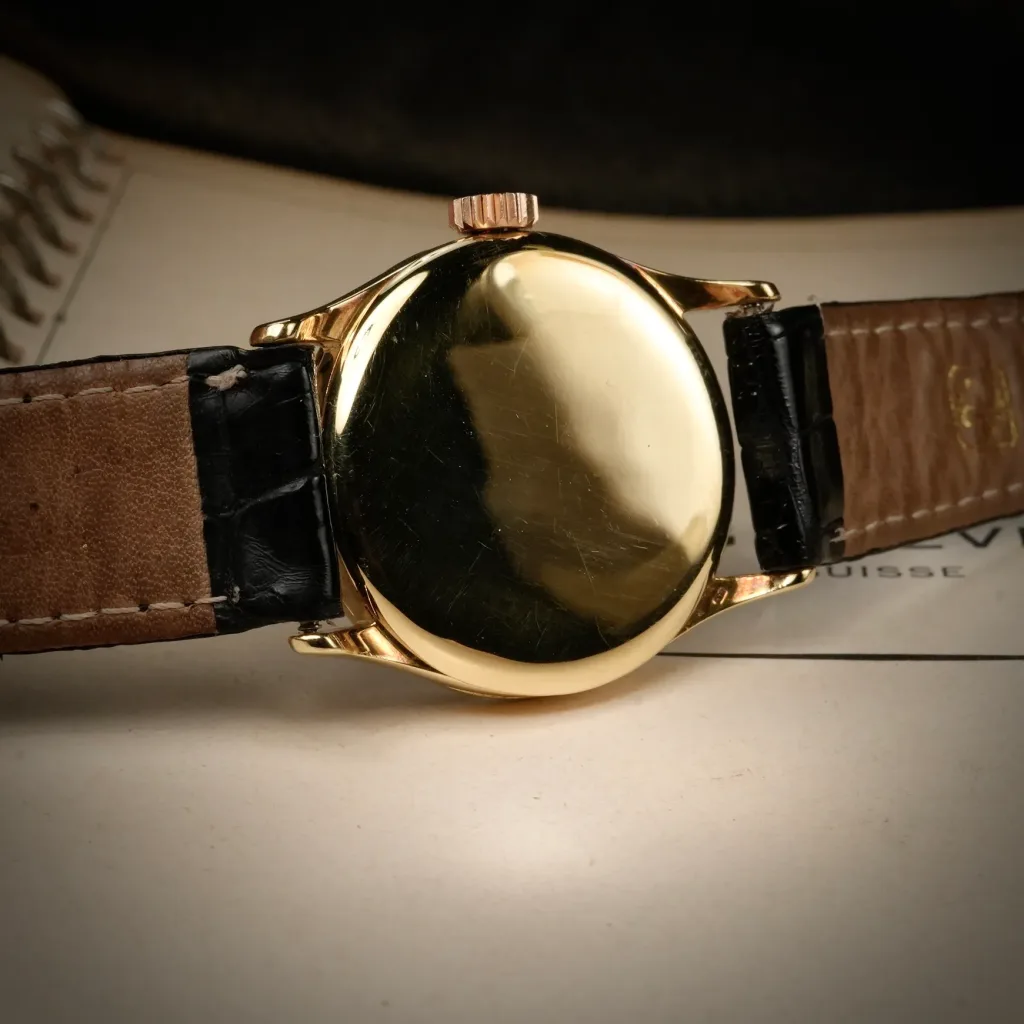
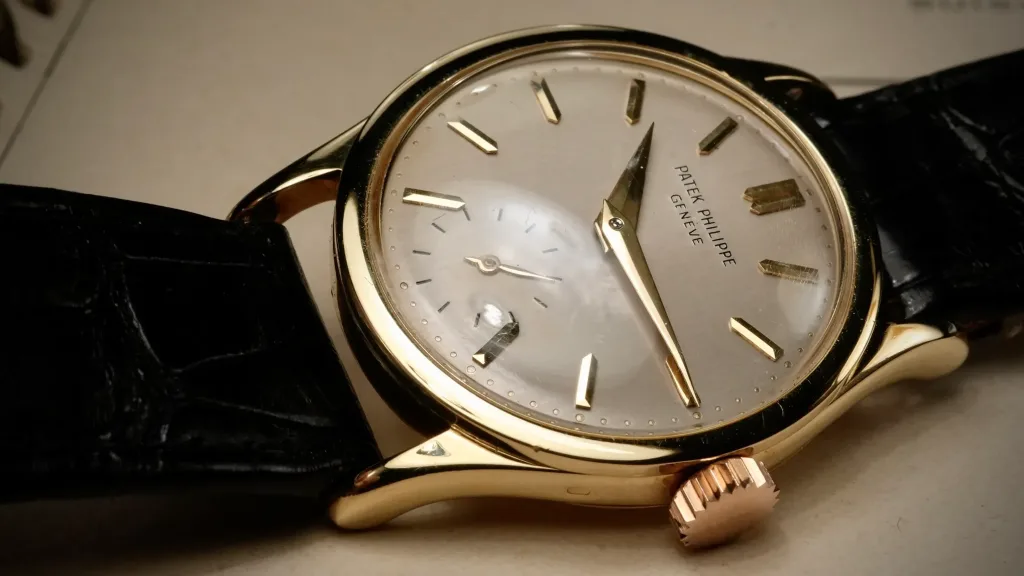
The reference 96 case measures 31mm in diameter excluding the crown, a dimension considered appropriately sized for 1930s tastes when wristwatches remained relatively novel for male consumers.
Production encompassed multiple precious metal variants, with yellow gold, rose gold, white gold, and platinum waatches. Steel cases remained exceptionally scarce with only 95 documented pieces, making the steel reference 96 among the most valuable configurations.
One of the key design elements that makes this reference so timeless—an enduring evergreen —is the wide entre-corne.
With an 18 mm lug width on a 31 mm case, the proportions are unusually generous for its size. This detail gives the watch unexpected visual presence, allowing it to sit with confidence on the wrist rather than feeling delicate or undersized. The wider stance creates balance and stability, visually anchoring the case and enhancing its versatility across different strap styles.
It is a subtle but crucial proportion choice: by widening the distance between the lugs, the design avoids the fragility often associated with small dress watches and instead achieves a harmony that feels as relevant today as it did at the time of its creation.
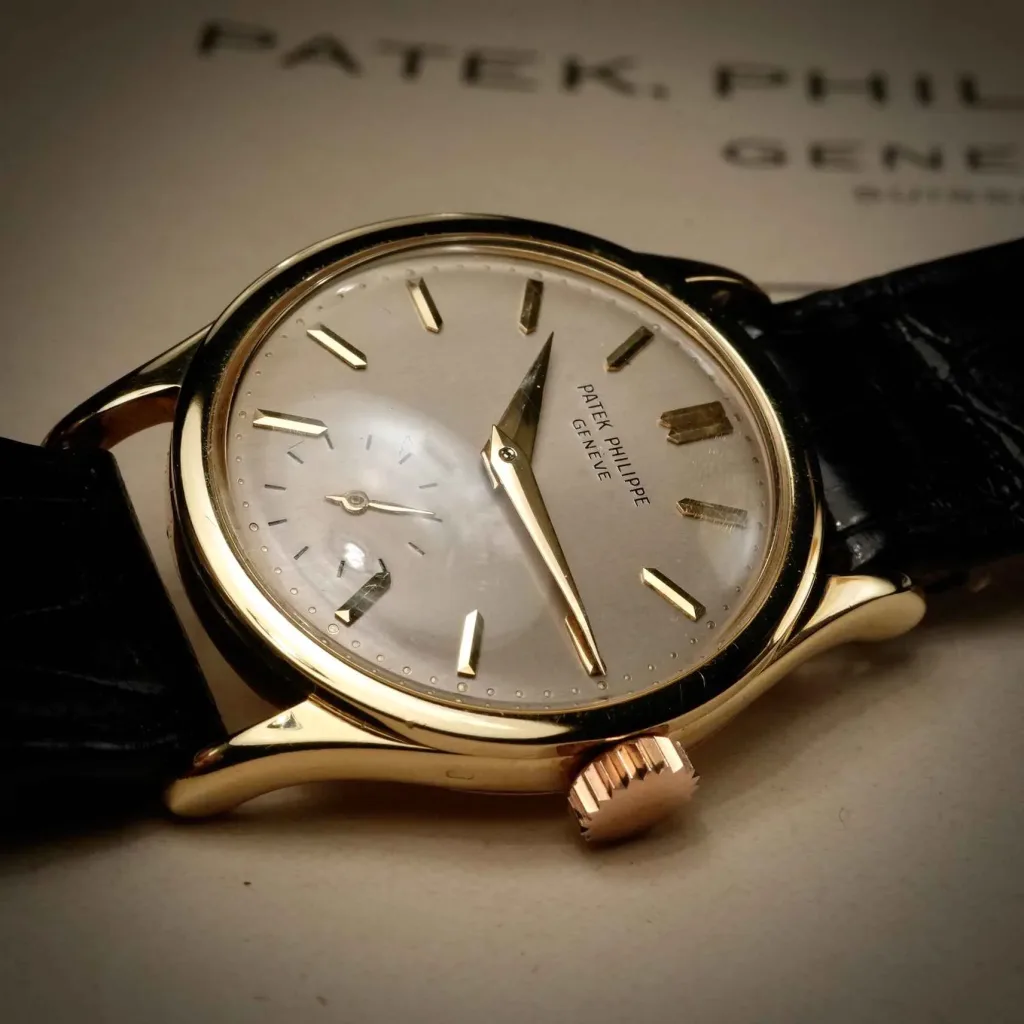

Case finishing varied across production batches, with early watches typically displaying polished surfaces on bezels and cases, while later iterations incorporated brushed finishes on case flanks.
The pressure-locked caseback employed a friction fit secured through precise dimensional tolerancing, a construction method that simplified manufacturing while maintaining adequate protection for the movement. Casebacks show the engraved serial numbers, reference markings, and metal hallmarks positioned at standardized locations.
Dial configurations for the reference 96 demonstrate considerable diversity across four decades of production, from 1932 through 1973. Most pieces have subsidiary seconds at 6 o’clock, while central seconds versions appeared from the mid-1930s onward. Because the ref. 96 spans much of Patek Philippe’s vintage production, understanding a few core principles of vintage Patek collecting is essential.
One key example is the transition, around 1948, from the long “Patek Philippe & Co./Cie”signature to the shorter “Patek Philippe” signature.
These signatures were engraved and filled with hard enamel, and the condition of this enamel is a critical factor in assessing both the collectability and value


The critical technical achievement defining reference 96 dials involved the engraved enamel technique employed by Stern Frères. This labor-intensive process required finely engraving the dial surface to create precise recessed channels for hour markers, minute tracks, and typography.
These channels received hard enamel composed of ground glass and metal oxides, then underwent kiln firing at approximately 850 degrees Celsius to fuse the enamel with the dial plate.
This technique, shared with Vacheron Constantin and Audemars Piguet during the mid-twentieth century, ensured dial longevity across generations, though improper restoration attempts frequently resulted in enamel loss visible as raised signatures or missing accents in the Patek Philippe name.
Collectors should note that original dials display characteristic tells: intact enamel showing appropriate depth, consistent printing without bleeding or raised lettering, and period-correct typefaces matching documented examples from the production year.
Redials, even sympathetic restorations, significantly diminish value for serious collectors, though certain restoration work executed by authorized Patek Philippe service centers during the watch’s operational lifetime may be considered acceptable within collecting circles.


The reference 96 can be grouped into four distinct series defined by movement architecture.
The first series, produced from 1932 through 1935, employed Jaeger-LeCoultre caliber 12 lignes movements sourced from the Le Sentier manufacture.
These ébauches, acquired through supply agreements established during the 1920s when Patek Philippe maintained traditional reliance on movement suppliers, represented well-executed constructions with lever escapements, bimetallic compensation balances, and finishing standards appropriate for haute horlogerie applications.
Rare examples have offset seconds at nine o’clock or eliminated the seconds display entirely, these latter variants commanding particular collector interest due to their scarcity.
The second series commenced in 1935 following technical director Jean Pfister’s strategic initiative to develop proprietary movements, thereby reducing dependence on external suppliers and establishing vertical integration.
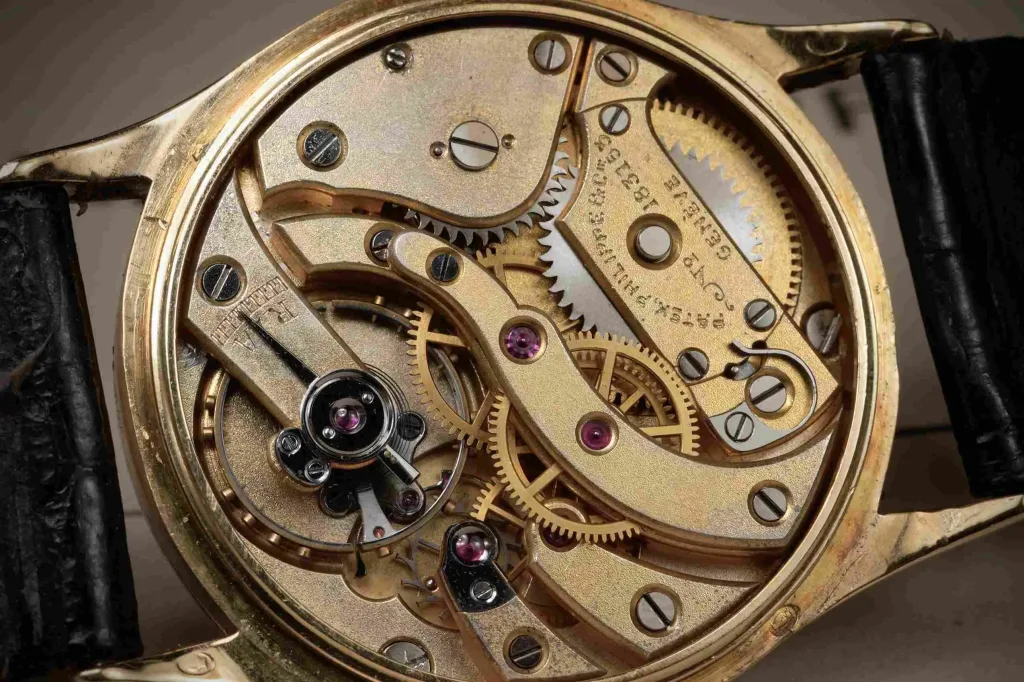
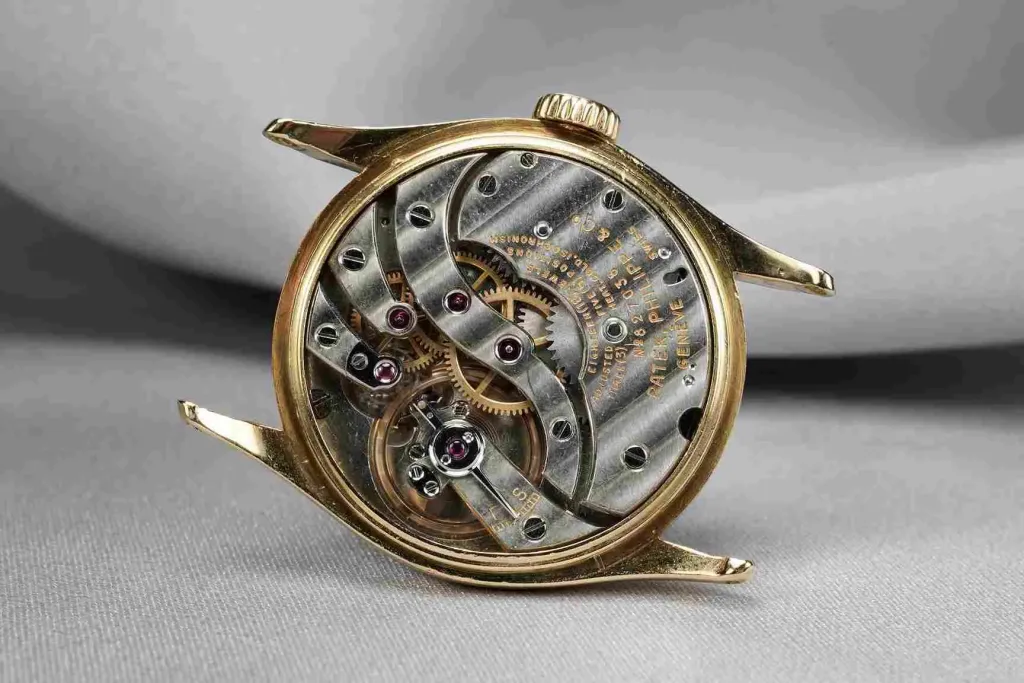
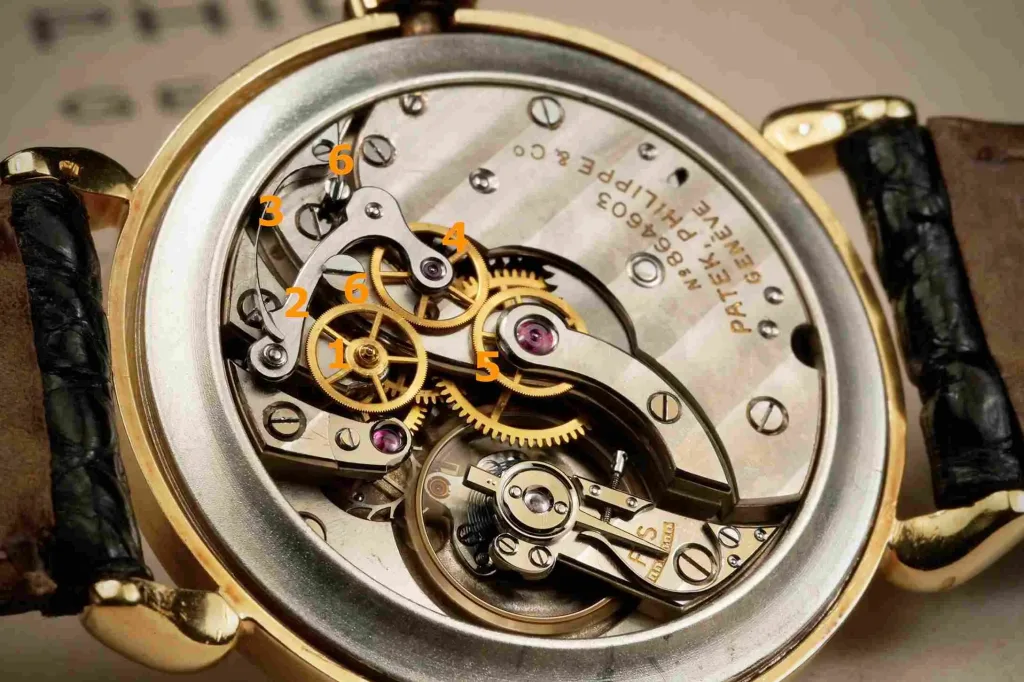
Caliber 12-120 marked Patek Philippe’s first movement, the caliber measured 27mm in diameter with 18 jewels in the base configuration, with traditional Genevan construction principles including separate cocks for the balance wheel, escape wheel, and fourth wheel, with a substantial bridge supporting the third wheel and center wheel.
Technical refinements distinguished caliber 12-120 from the LeCoultre ébauches it replaced, like a Breguet overcoil balance spring, whose terminal curve raised above the plane of the spiral improved isochronism by ensuring concentric breathing of the hairspring during expansion and contraction cycles.
A swan-neck regulator provided fine adjustment capability through a spring-loaded arm bearing against the regulator index.
Production variations included central seconds calibers designated caliber 12-120 SC (seconds centrales), which repositioned the seconds display while maintaining the fundamental architecture.
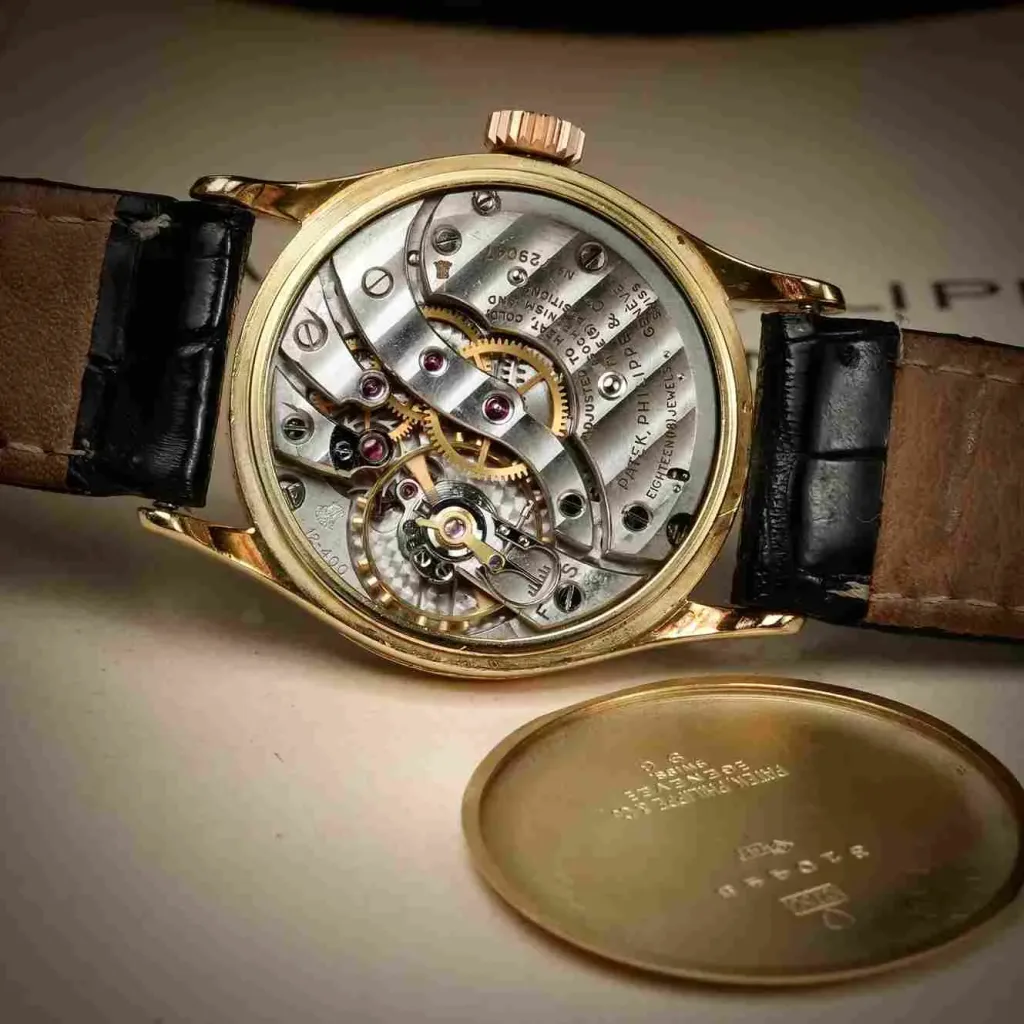
The third series, introduced approximately 1950 and continuing through 1961, was caliber 12-400, an evolutionary refinement rather than revolutionary redesign. The movement addresses practical concerns that emerged through two decades of service experience.
Most significantly, caliber 12-400 added shock-resistant suspension for the balance staff, employing spring-mounted jewel settings that absorbed impacts and reduced the risk of balance staff fracture.
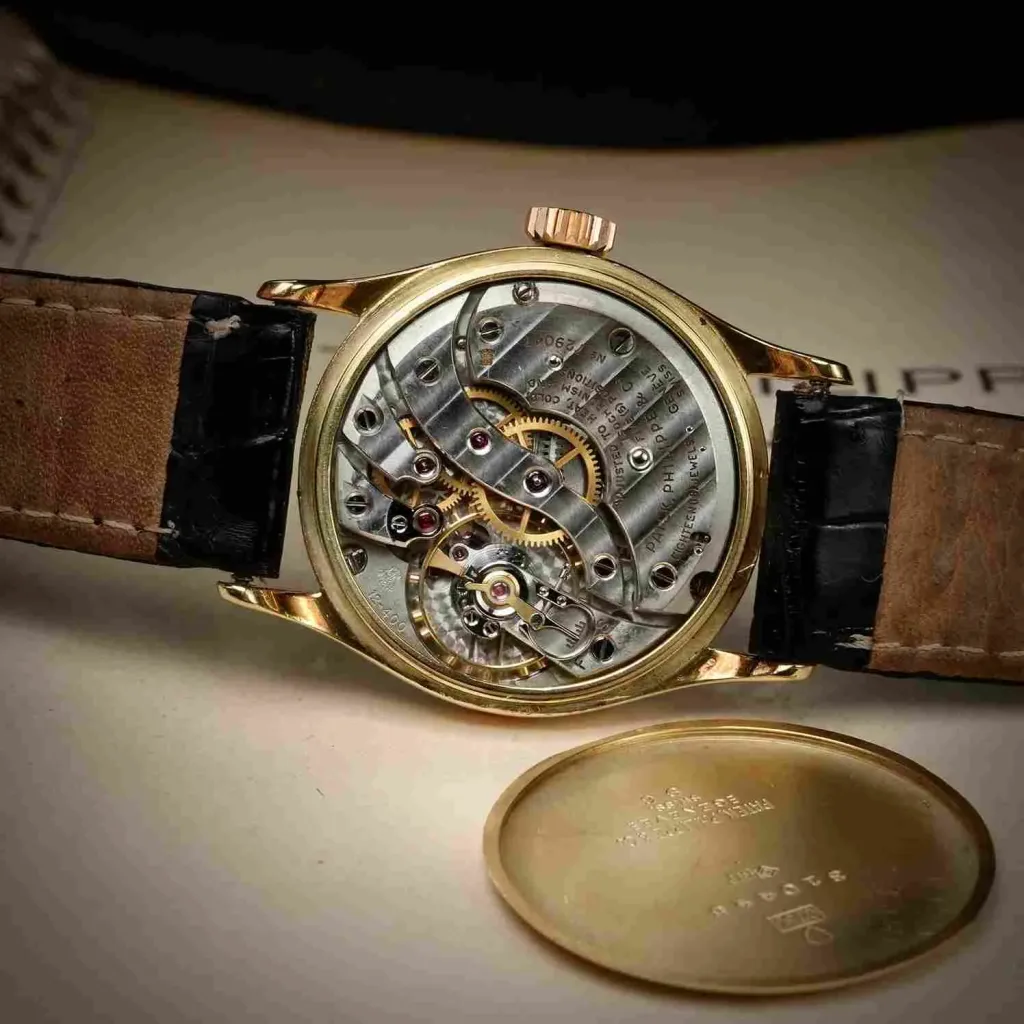
The regulator mechanism received redesign in caliber 12-400, replacing the swan-neck configuration with a simplified index bearing directly against the balance spring stud.
While this modification reduced visual sophistication, it improved serviceability and maintained adequate adjustment capability.
Central seconds variants designated caliber 12-400 SC employed the same modified gear train configuration as their caliber 12-120 SC predecessors, maintaining compatibility with existing dial layouts and case designs.

The fourth and final series, produced from 1960 through 1973, employed caliber 27-AM-400, representing the reference 96’s ultimate technical evolution.
The designation indicated several substantive modifications: the “27” reflected a shift in Patek Philippe’s nomenclature system from ligne-based measurements toward a rationalized numbering scheme, while “AM” denoted anti-magnetic protection incorporated through strategic material selections.
The movement employed beryllium alloys and other non-ferrous materials in the escapement and regulating organs, reducing susceptibility to magnetic field exposure that could affect rate stability in proximity to electrical equipment, radio transmitters, or magnetic closures increasingly common in mid-twentieth century environments.
Most significantly, caliber 27-AM-400 introduced the Gyromax balance wheel, a patented Patek Philippe innovation featuring a toothed annular rim with adjustable eccentric weights positioned at eight points around the circumference.
This configuration eliminated traditional regulator index adjustments, instead permitting rate regulation through inward or outward positioning of the Gyromax weights, altering the balance wheel’s moment of inertia and thereby its oscillation period.
The Gyromax system offered superior stability across positional variations and temperature fluctuations compared to conventional balance and hairspring configurations, representing a technical advancement that Patek Philippe subsequently incorporated across its movement families.
Production of reference 96 watches equipped with caliber 27-AM-400 extended through 1973, concluding the model’s forty-one-year manufacturing run and establishing it as among the longest-produced references in Patek Philippe’s twentieth-century catalogue.
picture courtesy of: Hodinkee


Collectors evaluating reference 96 watches should recognize that movement generation influences desirability and market valuation.
First-series watches with LeCoultre movements carry historical significance as representing the model’s earliest production, though their reliance on external suppliers may reduce appeal among collectors prioritizing manufacture movements. Second-series examples with caliber 12-120 represent the reference 96 in its most historically consequential form, embodying Patek Philippe’s transition toward vertical integration and establishing technical standards that defined subsequent production.
Third-series watches with caliber 12-400 offer improved robustness through shock protection while maintaining traditional finishing, appealing to collectors seeking references suitable for occasional wear.
Fourth-series examples with caliber 27-AM-400 demonstrate the reference 96’s final technical evolution, incorporating anti-magnetic protection and the Gyromax balance that would become signatures of Patek Philippe’s mid-century horological approach. Each generation merits consideration based on collecting priorities, whether emphasizing earliest production, technical significance, or ultimate technical refinement.


Collectors prioritizing reference 96 acquisition should evaluate multiple criteria:

Condition assessment requires examining case bevels for evidence of aggressive polishing that removes original finishing and sharpness, dial surfaces for signs of refinishing or amateur restoration attempts, and movement components for replacement parts that diminish authenticity.
Well-preserved examples retaining original proportions, unrestored dials on a very good to excellent condition, and period-correct components throughout represent the most desirable configurations for serious collectors.
The reference 96’s forty-one-year production run ensures availability for collectors at various price points, reflecting a growing appreciation for the model that established modern dress watch design conventions.


[contact-form-7 id=”4235″ title=”Contact form 1″]