No products in the cart.


Newsletter
[contact-form-7 id=”4235″ title=”Contact form 1″]

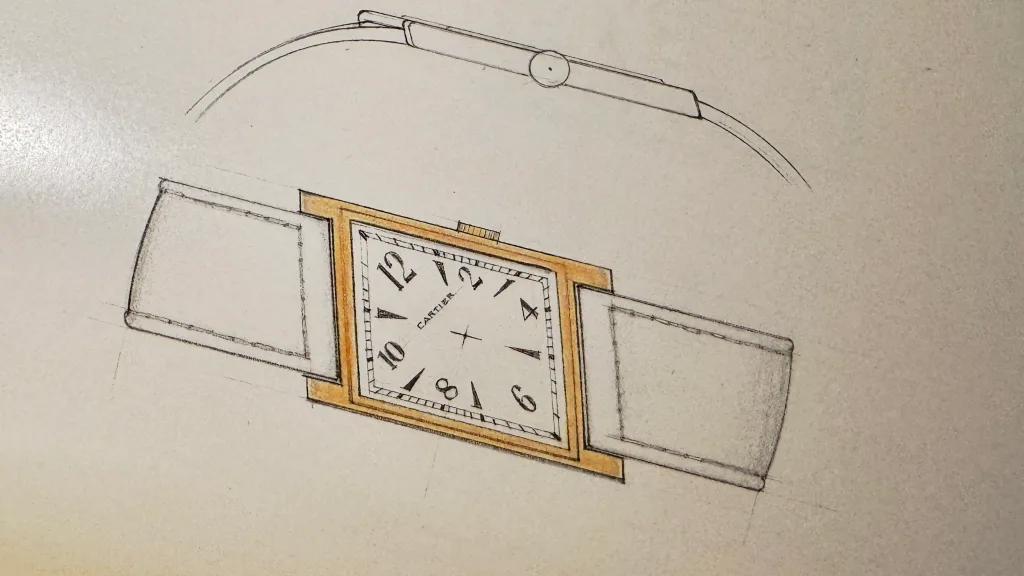
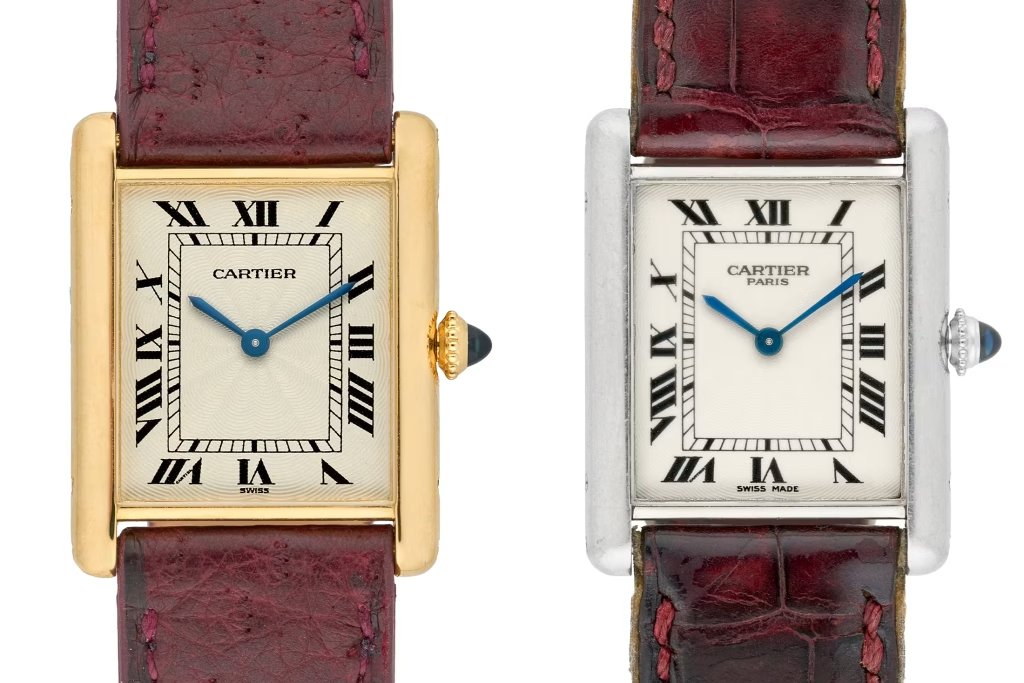
The Tank Louis Cartier was the natural starting point for the CPCP’s Tank collection — the model that carried the founder’s name and the design that most collectors associated with the maison. The CPCP Tank Louis Cartier was offered as a time-only watch in two metals.
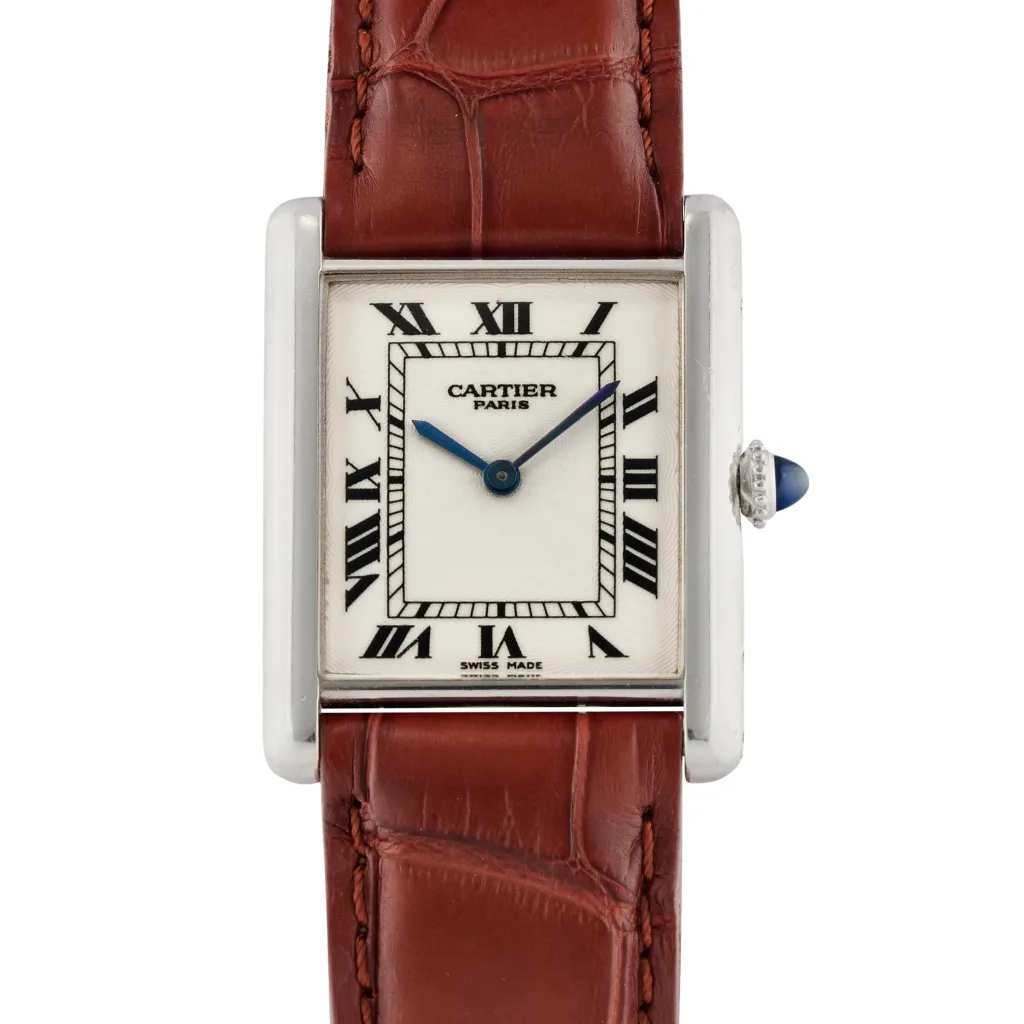
18kt yellow gold case measuring 30 × 24 mm. Manual-wind Cal. 021MC, based on the Frédéric Piguet Calibre 21. White guilloché dial with rose motif, black Roman numerals, chemin de fer minute track, blued steel sword-shaped hands (early examples) or Breguet-style hands (later examples), “Cartier Paris” inscription. Sapphire caseback. Crocodile strap with 18kt yellow gold deployant clasp. Production estimated at 250– 300 pieces.
cartier 1600 bulag & sons
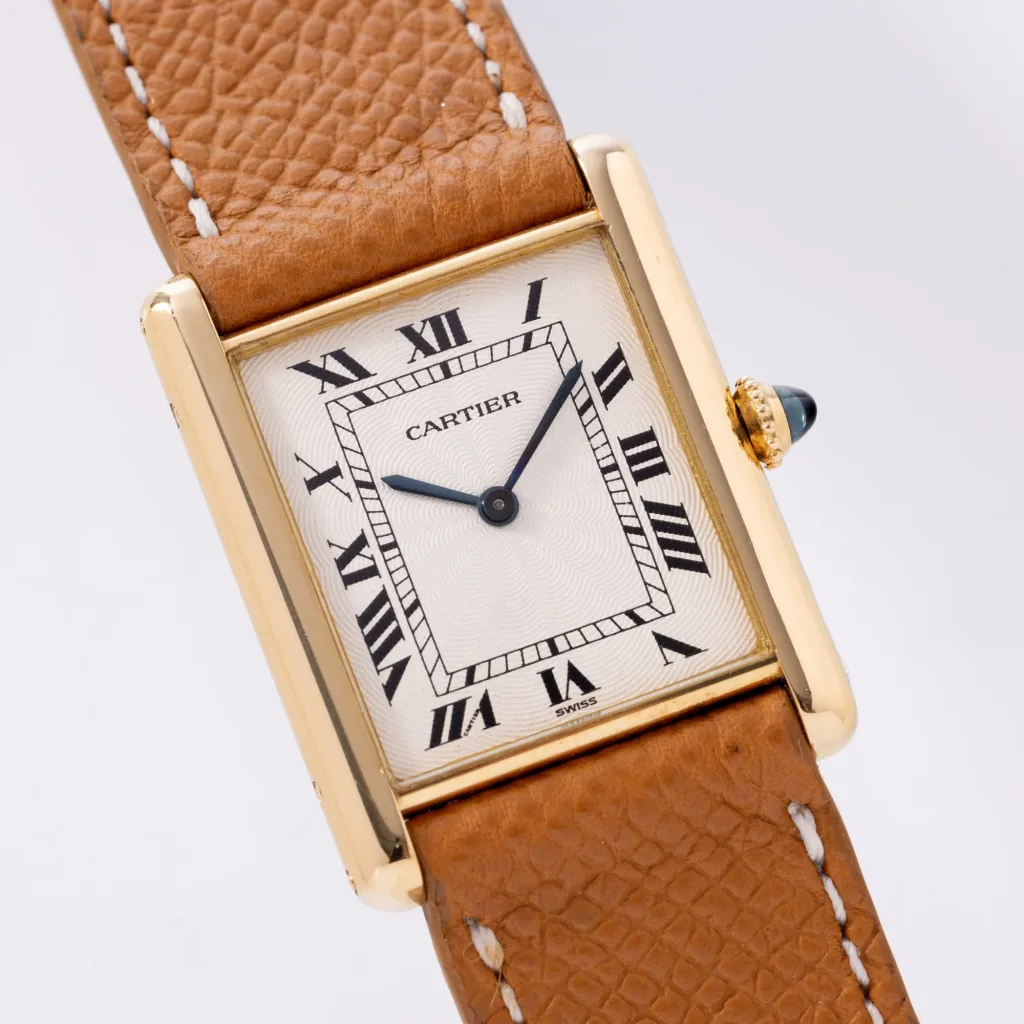
Early CPCP Tank Louis Cartier piece — like the early Tortue and Tonneau — are distinguished by their sword-shaped hands and the absence of the rose motif on the dial. These transitional pieces are a distinct sub-category for collectors.
cartier tank 1601B pt, finarte
Platinum case, same dimensions and movement as the ref. 1600. The platinum version was produced in smaller numbers than the yellow gold. This is one of the most sought-after CPCP Tank references.
CartierTankLC_1600 duo hodinkee
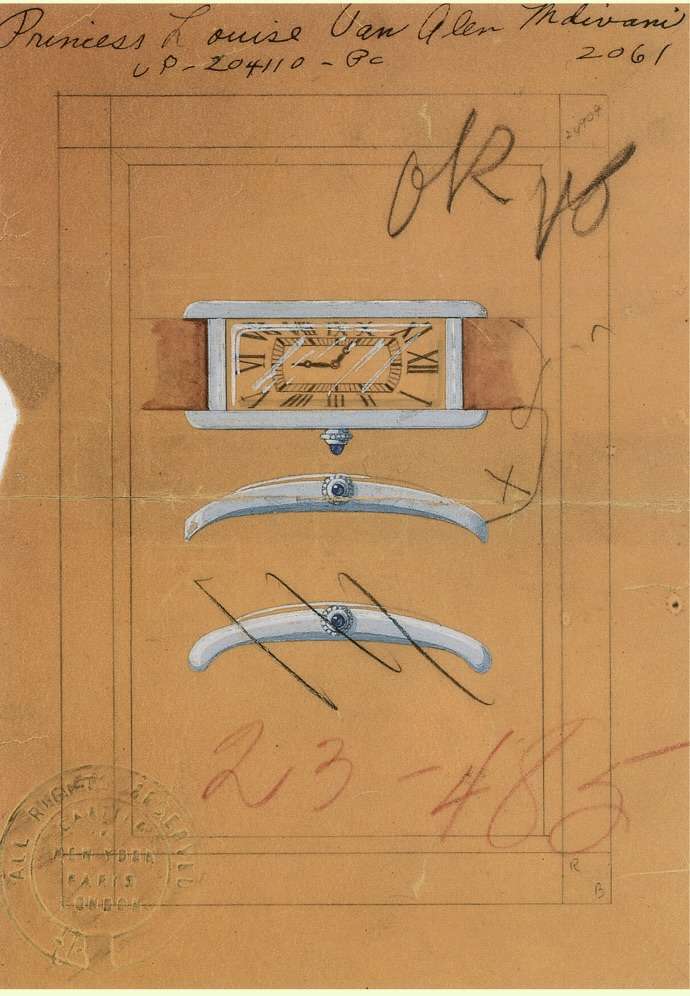
The Tank Américaine — Cartier’s curved, waterproof reinterpretation of the Tank Cintrée, first launched in 1989 — received extensive treatment within the CPCP. The initial intent was to market towards men, but the Américaine proved to be a versatile, un-gendered dress piece for those who appreciate unusual proportion. Not many cases of this volume are this vertical. Cartier’s 44 × 27 mm curved case wears more gracefully and more slender than its dimensions suggest — the elegant curve along the wrist is the key. The CPCP treatment stripped the Américaine back to its essentials: manual wind, guilloché dial, precious metal only.
CARTIER TANK AMERICAINE MECHANIQUE
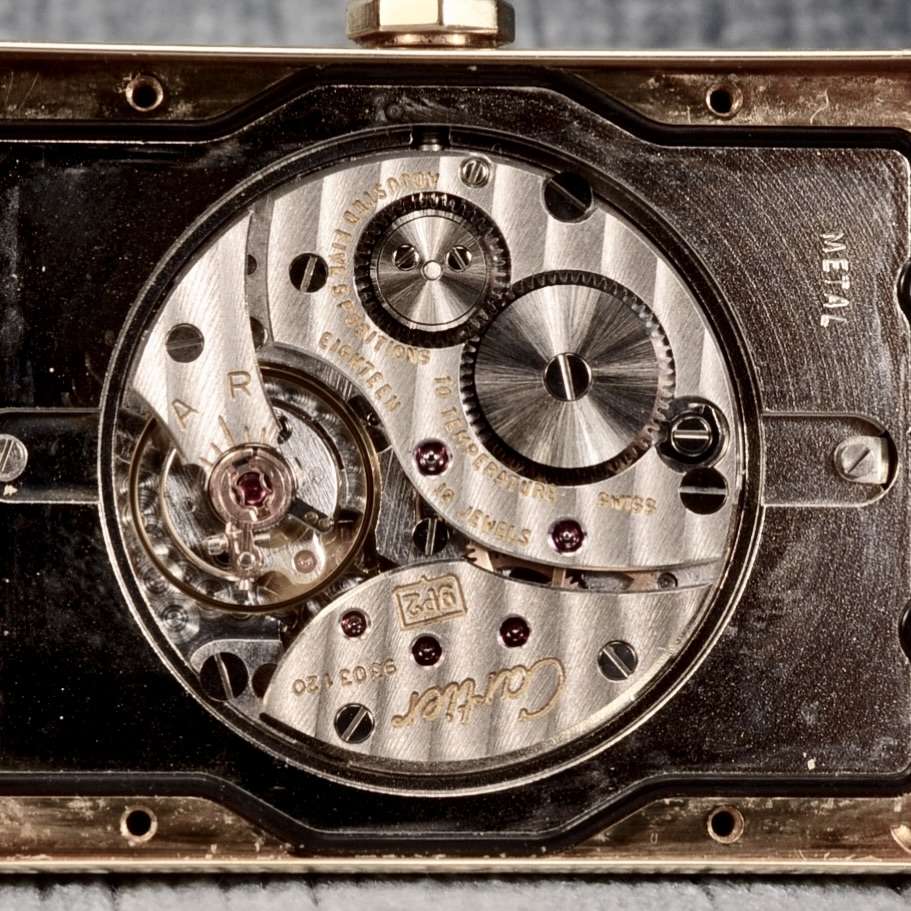
All CPCP Tank Américaine references are powered by the Piaget based Cal. 430MC, or the Cal 9P2 — both manual-wind calibres. The CPCP Américaine has no date aperture and no automatic rotor — details that immediately distinguish it from every standard-production Américaine in the catalogue.
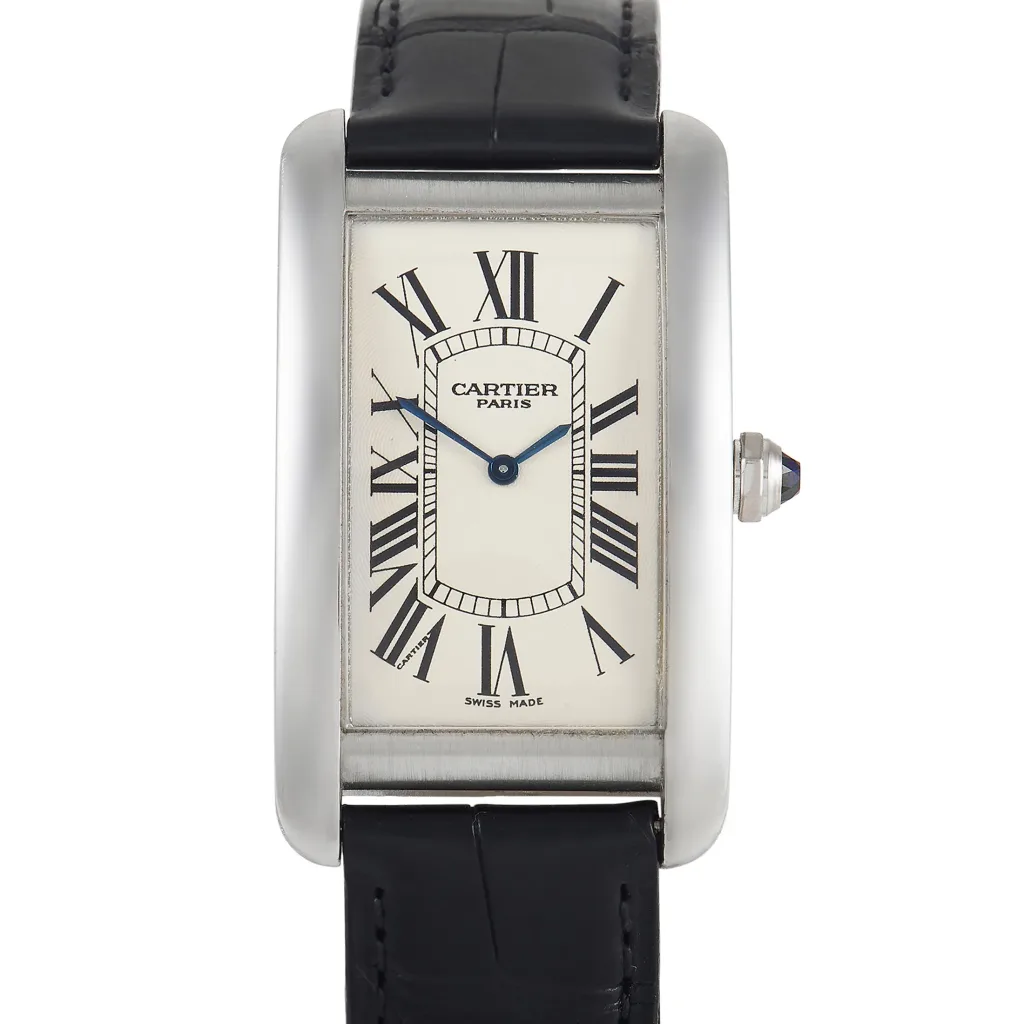
The standard CPCP Américaine. Curved case measuring 45 × 26.5 mm, thickness 7.5 mm. Silver guilloché dial with rose motif, “Cartier Paris” inscription, black Roman numerals, and blued steel hands. Sapphire cabochon crown. Solid caseback secured by eight screws. Crocodile strap with 18kt gold deployant clasp. Production estimated at 250–300 pieces in yellow gold. The platinum version (ref. 1735B) was produced in smaller numbers.

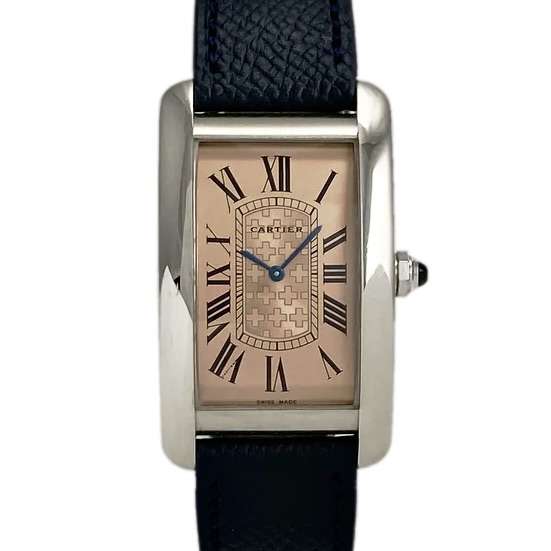
A CPCP platinum edition limited to 50 pieces, released c. 2000. Cream guilloché dial with black Roman numerals and blued steel hands. Platinum deployant clasp. Case size: 45 × 26.5 mm.
Created for the Italian market as a thank-you to collectors and retailers. Limited to 30 examples, produced in the mid- 2000s. The dial is finished in a deep green — close to British racing green — with full guilloché decoration and green-printed Roman numerals. Platinum case. Green crocodile strap. The last example to surface publicly went through Phillips. They are rarely traded, and this is among the rarest CPCP Américaine configurations.
cartier tank american swiss confederation
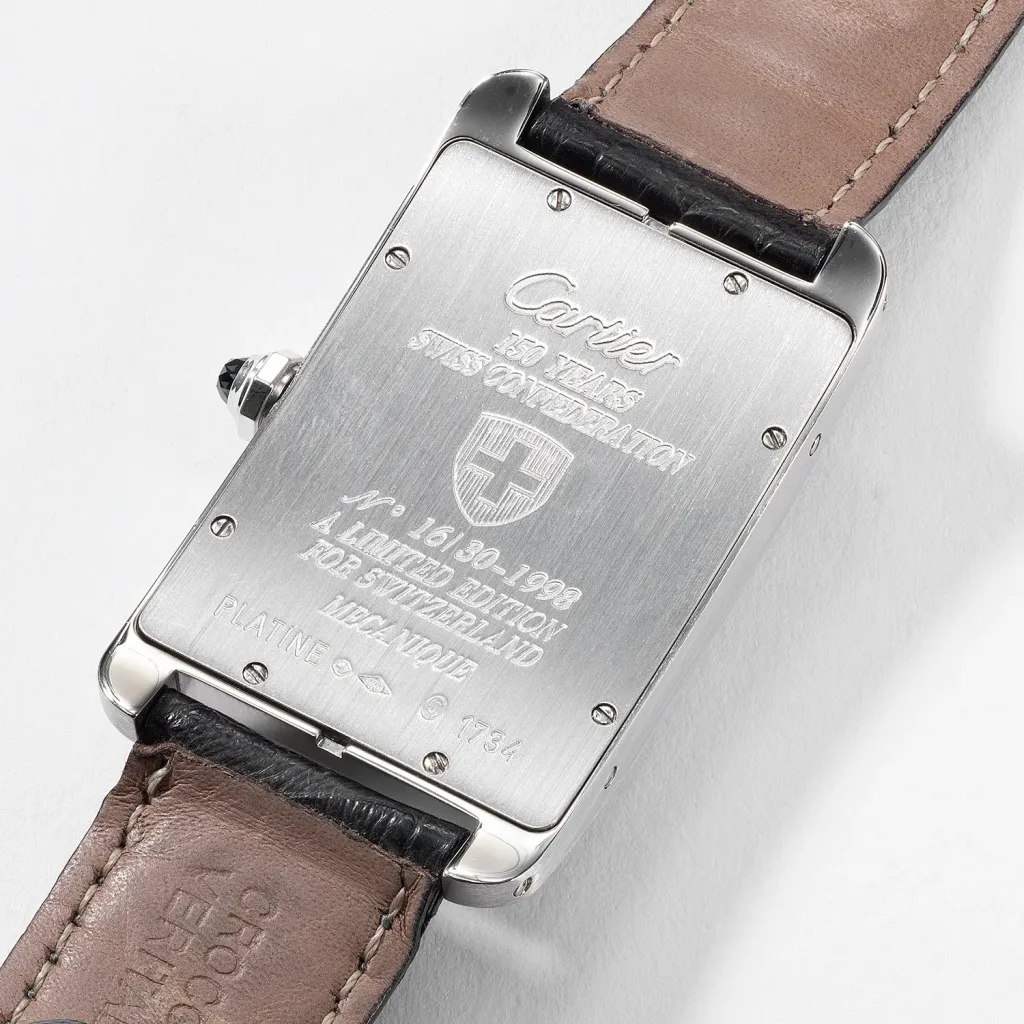
Produced to honour the 150th anniversary of the Swiss Confederation, and released in the same year the CPCP was formally launched. Two editions: 50 pieces in yellow gold with a silver dial, and 30 pieces in platinum with a salmon guilloché dial featuring a Swiss cross decoration at the dial’s centre. The case measures 37 × 27 mm — notably smaller than the standard CPCP Américaine. The caseback is engraved “150 Years Swiss Confederation, A Limited Edition for Switzerland” with a matching coat of arms and Swiss cross.
cartier tank american swiss confederation
The Tank Cintrée was first introduced in 1921 and is the most elongated and dramatic of all Tank designs. Its cambered case — curved to follow the wrist — established a silhouette that has no equivalent in the Cartier catalogue or elsewhere.
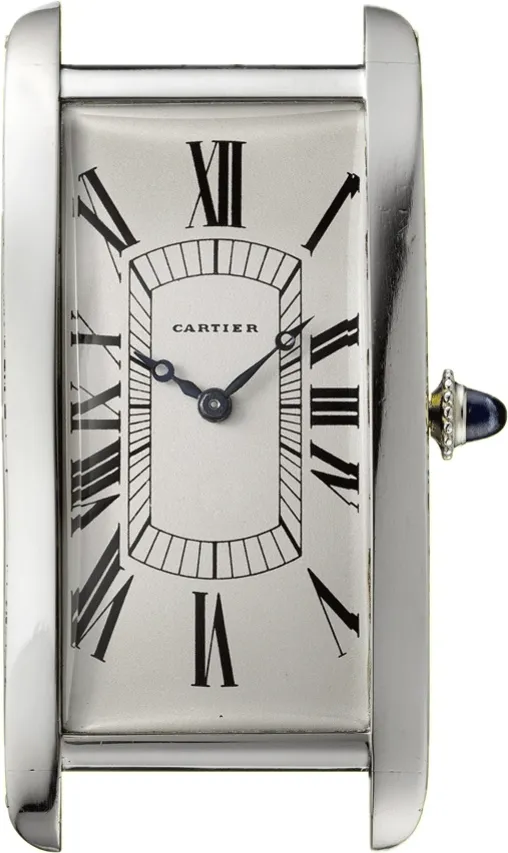
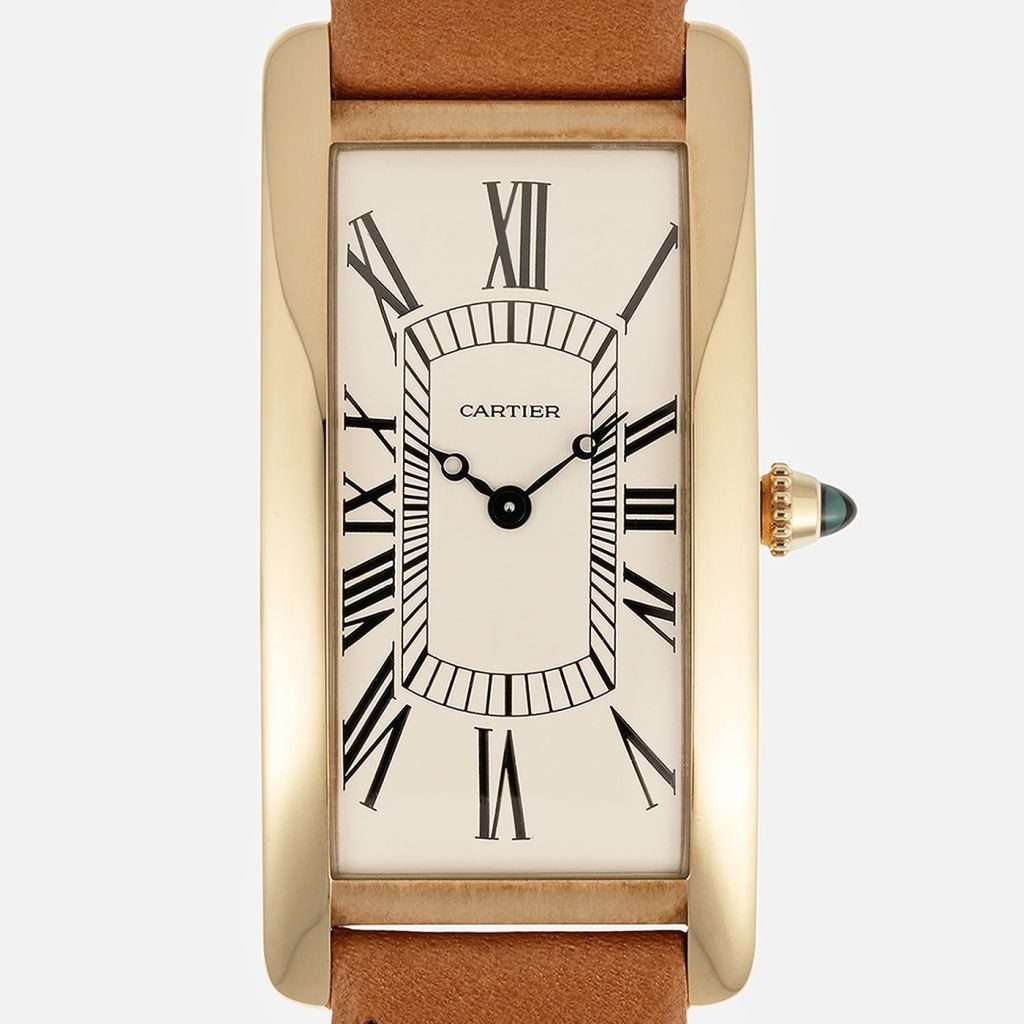
The CPCP Cintrée was modelled after the original full-sized “9 ligne” variant from the 1920s; the inspiration for the Arabic numeral dial was a Cintrée bought by Fred Astaire in 1929 and gifted to a friend with the engraving “Felix from Fred ’29.” Both Steve McQueen and Stewart Granger were also known to wear the Cintrée. Within the CPCP, this watch was offered as a time-only watch and in several dual-time editions.
Cartier-Tank-Cintree-2718-100th-Anniversary
The time-only Cintrée measures 46.3 × 23 mm with a thickness of 6.4 mm — making it, along with the 2021 Cartier Privé reissue, the thinnest Tank Cintrée ever produced: 3 mm thinner than the 1921 original, which measured 6.7 mm.
Cartier-Tank-Cintree-CPCP-Collection-Prive-Platinum
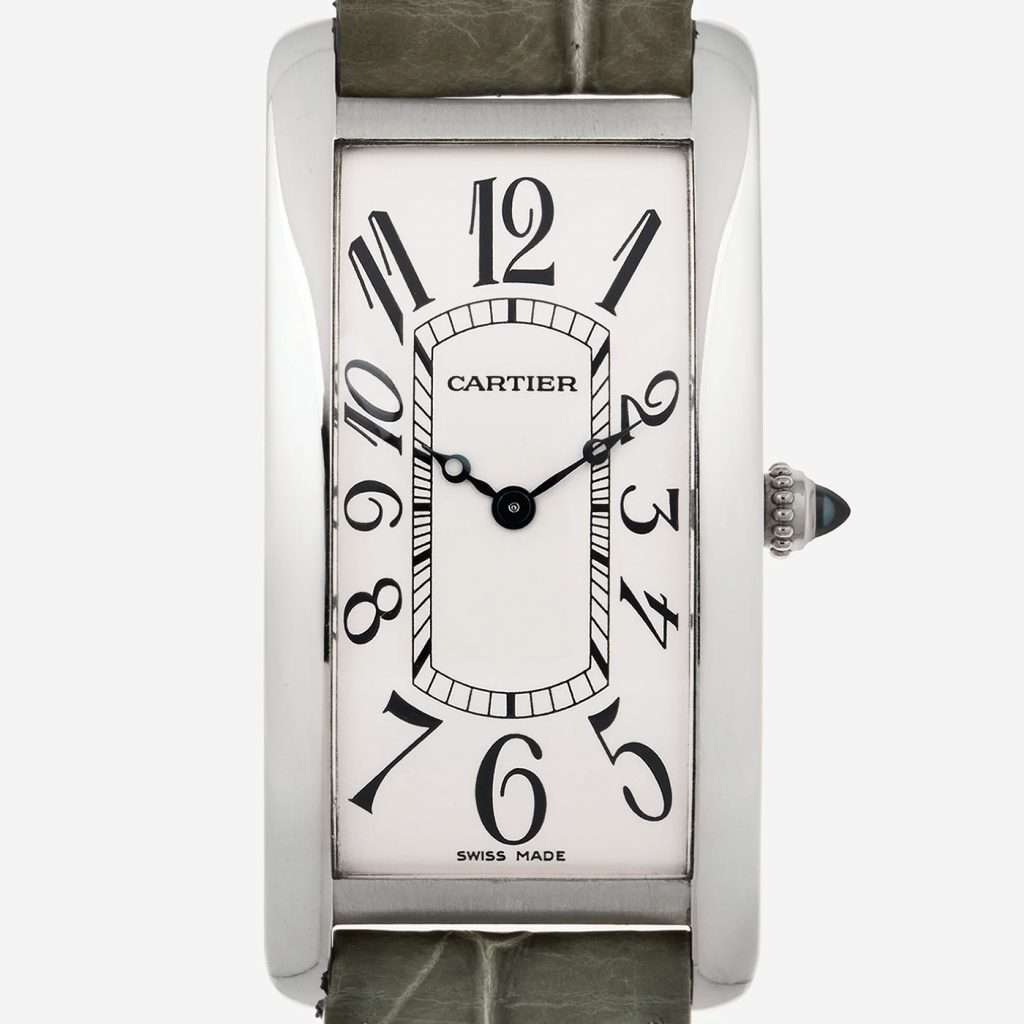
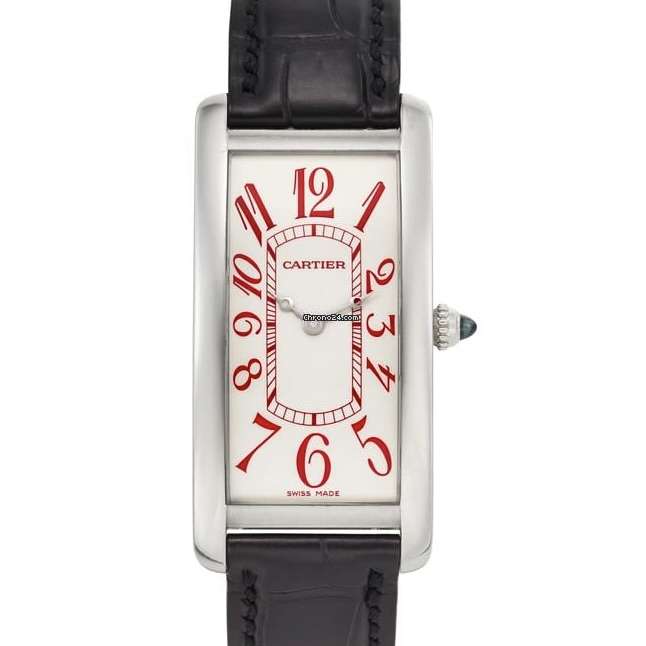
The movement is the Cal. 9780MC, a manually wound calibre based on a Jaeger-LeCoultre ébauche — one of the thinnest movements in the CPCP collection, chosen for the narrow, curved case. The dial has painted Arabic numerals — the only time the Tank Cintrée has been produced in series with an Arabic index dial. There have been special-order Cintrées with Arabic numerals but nothing in serial production.
The yellow gold version has a white dial with a blue sapphire cabochon crown; the platinum version has a silver dial with a black cabochon crown. Both have blued steel Breguet-style hands and the “Cartier Paris” inscription. Production: 150 pieces in yellow gold, 50 in platinum.
A platinum ref. 2843 variant with red Arabic numerals is also documented. The Revolution Watch source describes it as a custom order; the exact number of pieces produced is not confirmed.
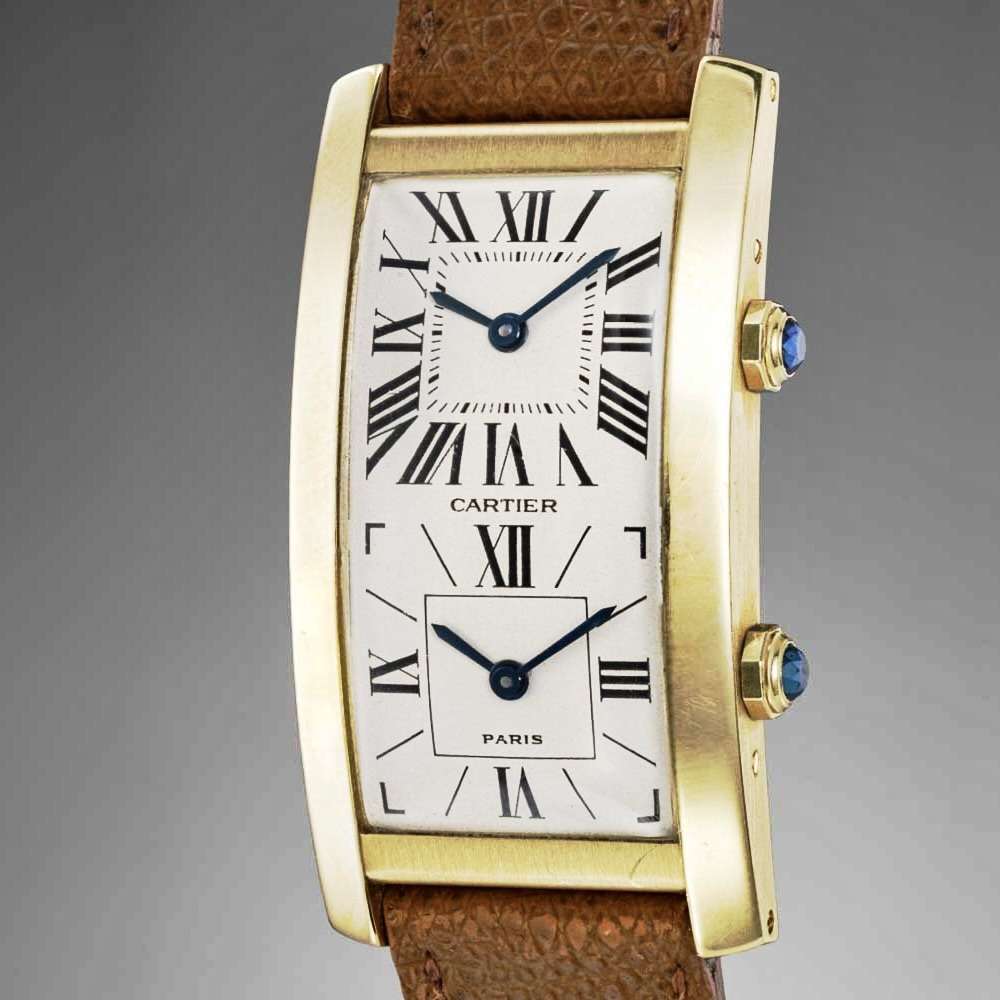
Several Dual Time editions of the Tank Cintrée were produced within the CPCP. All share the same case dimensions (46.3 × 23 mm) and the same mechanical architecture: two separate ETA 2412 calibres fitted into one case, each powering its own dial section and wound independently through its own sapphire cabochon crown — one on each side of the case.
The crowns are flatter and more octagonal than on the time-only version, with a flat cabochon rather than the pointed cabochon of the standard model. The case design is more angular than the time-only Cintrée, most visibly at the lugs and crowns.
Platinum, salmon guilloché dial — 50 pieces A platinum case with a salmon-coloured guilloché dial with both Roman and Arabic indices. The guilloché decoration emanates from the centre of the overall dial and flows continuously across both time displays — a different approach from the CPCP Tonneau Dual Time, where the guilloché radiates from the centre of each individual dial separately.
cartier 2767 PT monaco legend

White gold, black dial, white gold milanese bracelet — Ref. 2767, 100 pieces (2005) White gold case with a black dial. The upper dial displays all twelve Roman numerals; the lower shows Roman numerals at 3, 6, 9, and 12 only. Supplied with a solid white gold milanese mesh bracelet rather than the standard crocodile strap — giving the watch a distinctly more modern character. This variant appeared at Monaco Legend Group under ref. W1519951.


Rose gold, silvered dial, Asian market — Ref. 2768, 100 pieces (c. 2006) Rose gold case with a silvered dial. Roman numerals on the upper dial, Chinese characters on the lower. Both dials feature a central rose motif radiating into guilloché, enclosed within a printed black bracket. The hands are rendered in slightly different shades of blue — lighter on the Roman numeral dial, darker on the Chinese character dial.
The Tank Cintrée has experienced a significant increase in collector interest and market value in recent years. Among CPCP models, it is now considered second only to the Crash in terms of desirability across all Cartier categories — new, pre-owned, and vintage.
Several factors account for this trajectory: the broader critical momentum behind Cartier as a collectible brand under CEO Cyrille Vigneron; the growing recognition of the CPCP programme as a whole; The Dual Time variants, with their twin independent movements and their distinct dial executions — silvered, salmon, black, and Chinese character — add further layers of rarity to a model that was already produced in limited numbers.
The Tank Chinoise was first released in 1922, during a period of intense Western fascination with Asian decorative arts. Its square case — a departure from the rectangular form of all other Tanks — has horizontal bars at the top and bottom of the brancards that evoke the portico of a Chinese temple.
Cartier-Tank-Chinoise-CPCP-Ref.-2684G
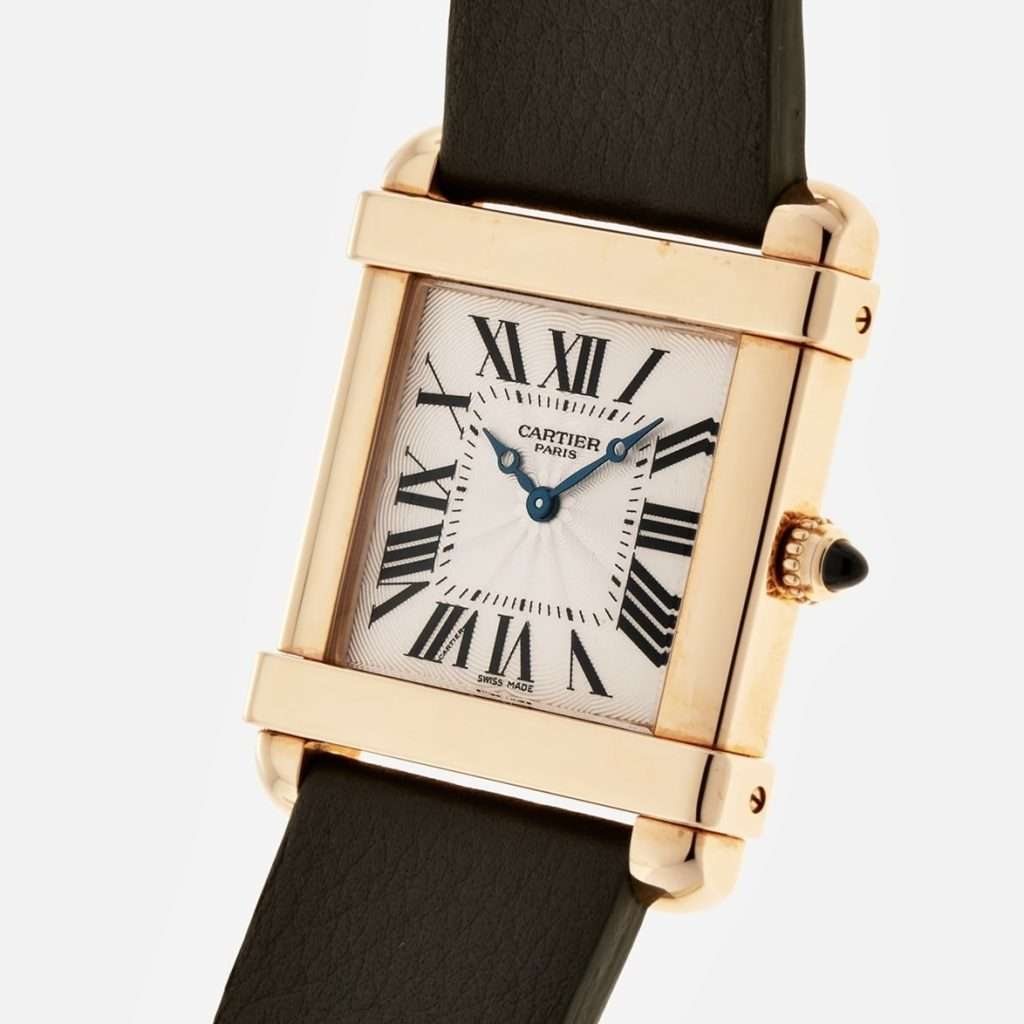
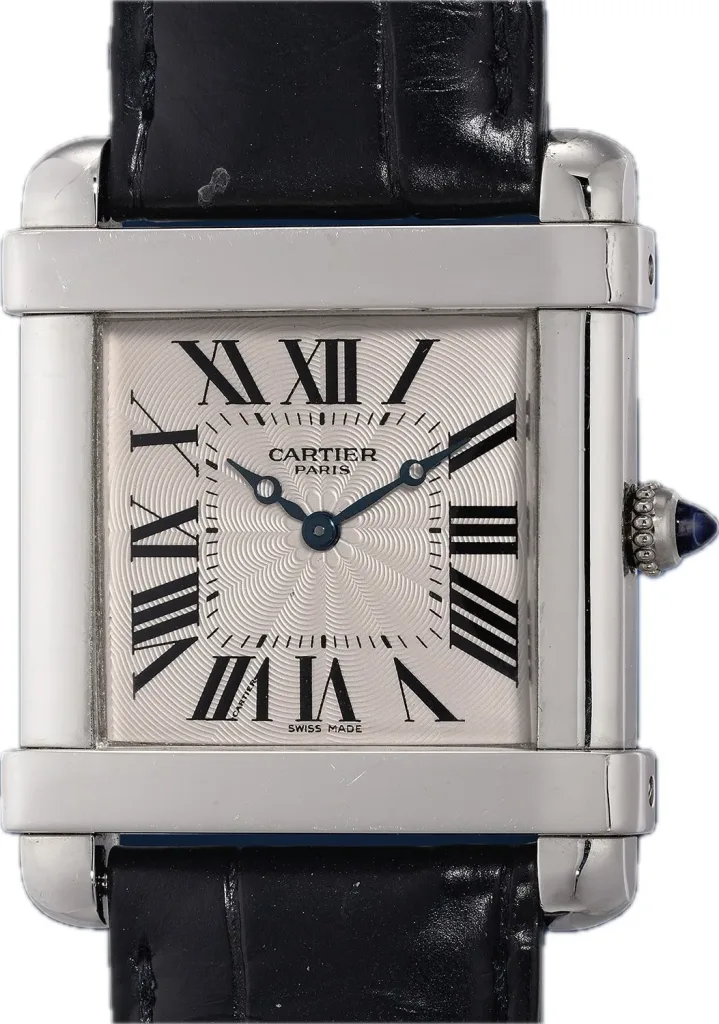
The CPCP reissue measures 28.7 × 28.2 mm — slightly larger than the 1922 original. The movement is the Cal. 437MC, based on a Piaget ébauche, manual-wind, 18 jewels, 2.1 mm thick. Sapphire caseback. The dial is silver guilloché with the rose motif, black Roman numerals, chemin de fer minute, and blued steel Breguet-style hands.
Both versions were unnumbered but produced in small quantities — the Chinoise was in production from approximately 2004 to 2008 and was completely sold out when the CPCP programme ended. In 2022, Cartier reissued the Chinoise under the Cartier Privé programme with a rectangular (rather than square) case and a skeleton movement — a significant departure from the CPCP version.
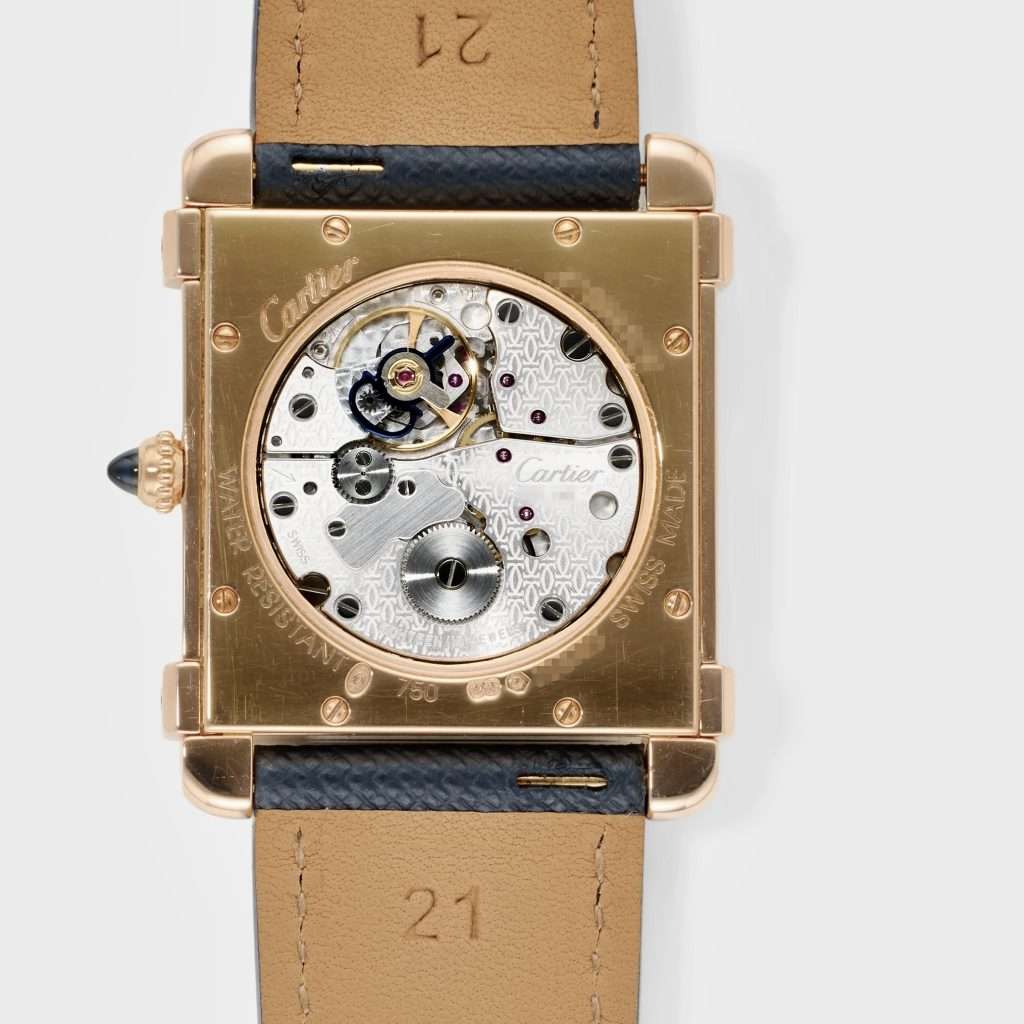
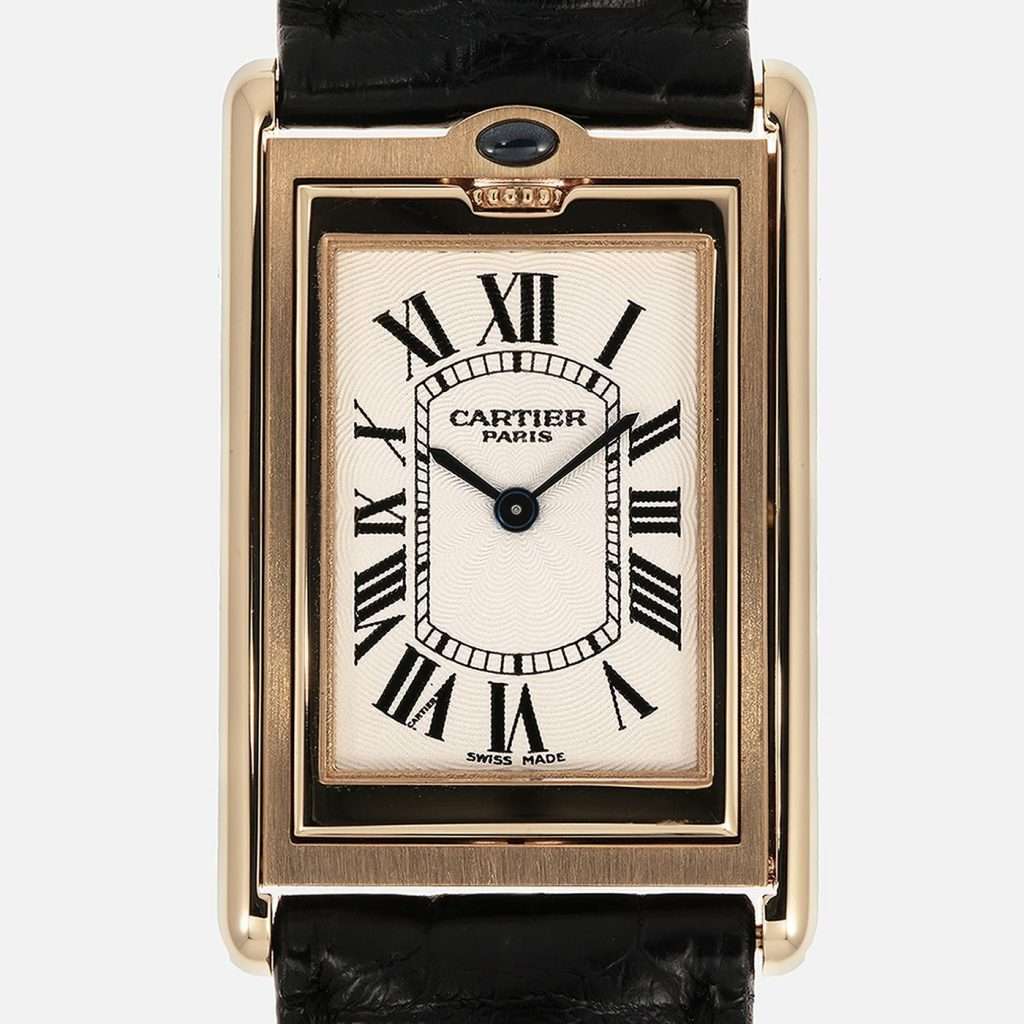
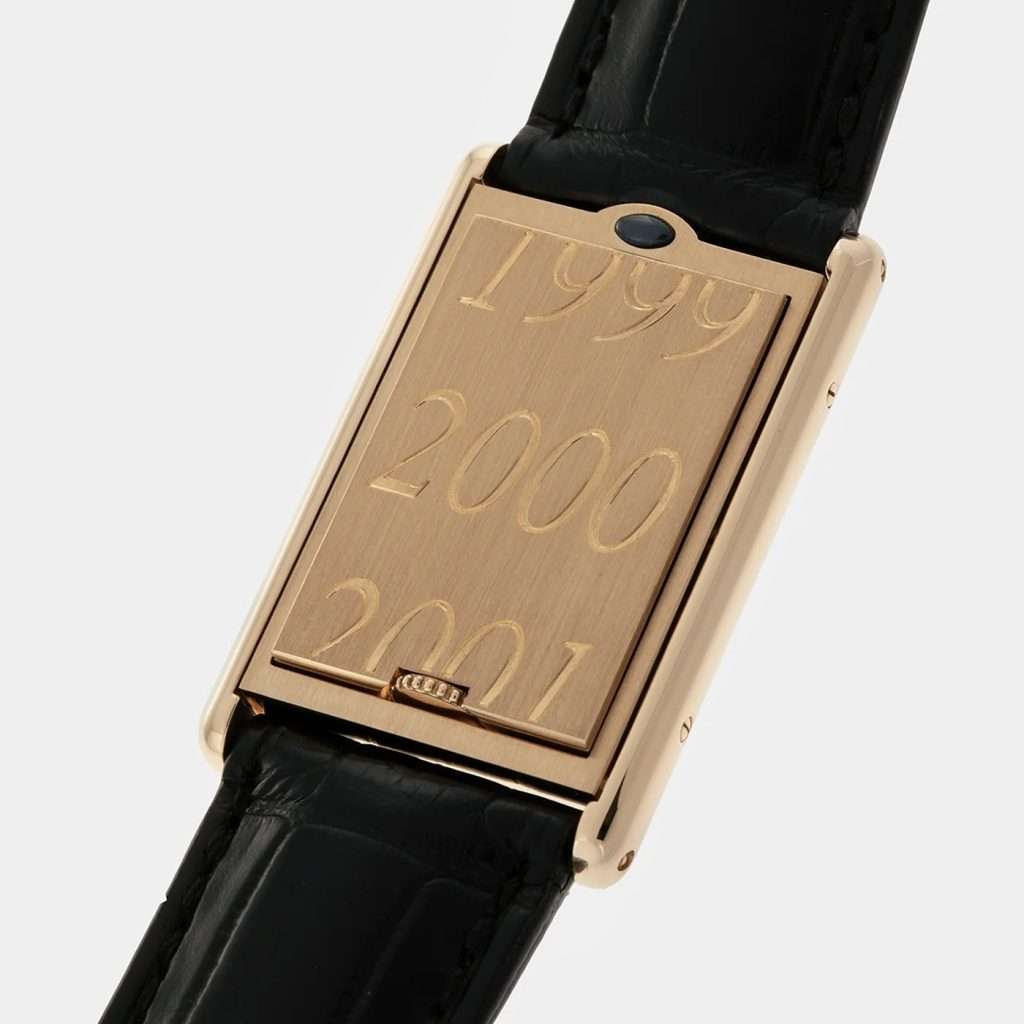
The Tank Basculante — French for “tilting” — was first patented by Cartier in 1932, one year after the 1931 JLC Reverso Patent. The case pivots on a vertical axis within its frame, allowing the dial to be concealed face-down for protection.
Cartier-Tank-Basculante-2391
A limited edition of 365 pieces, produced in 1999–2001 to commemorate the new millennium — one piece for each day of the year. The 18kt yellow gold case measures 38 × 26 mm. The case pivots 360 degrees on its vertical axis. The movement is the Cal. 060MC, based on a Frédéric Piguet ébauche, manual-wind, 21 jewels, 2.1 mm thick — thin enough to allow the case to rotate within its frame. The dial is silver guilloché with the standard CPCP codes.
The winding crown is positioned at the top of the case, below 12 o’clock, rather than at the conventional 3 o’clock position — a consequence of the pivoting mechanism. Crocodile strap. The Basculante was one of the first CPCP models released and is now among the more frequently traded references at auction, owing to its relatively larger production run of 365 pieces.
Cartier-Tank-Basculante-2391
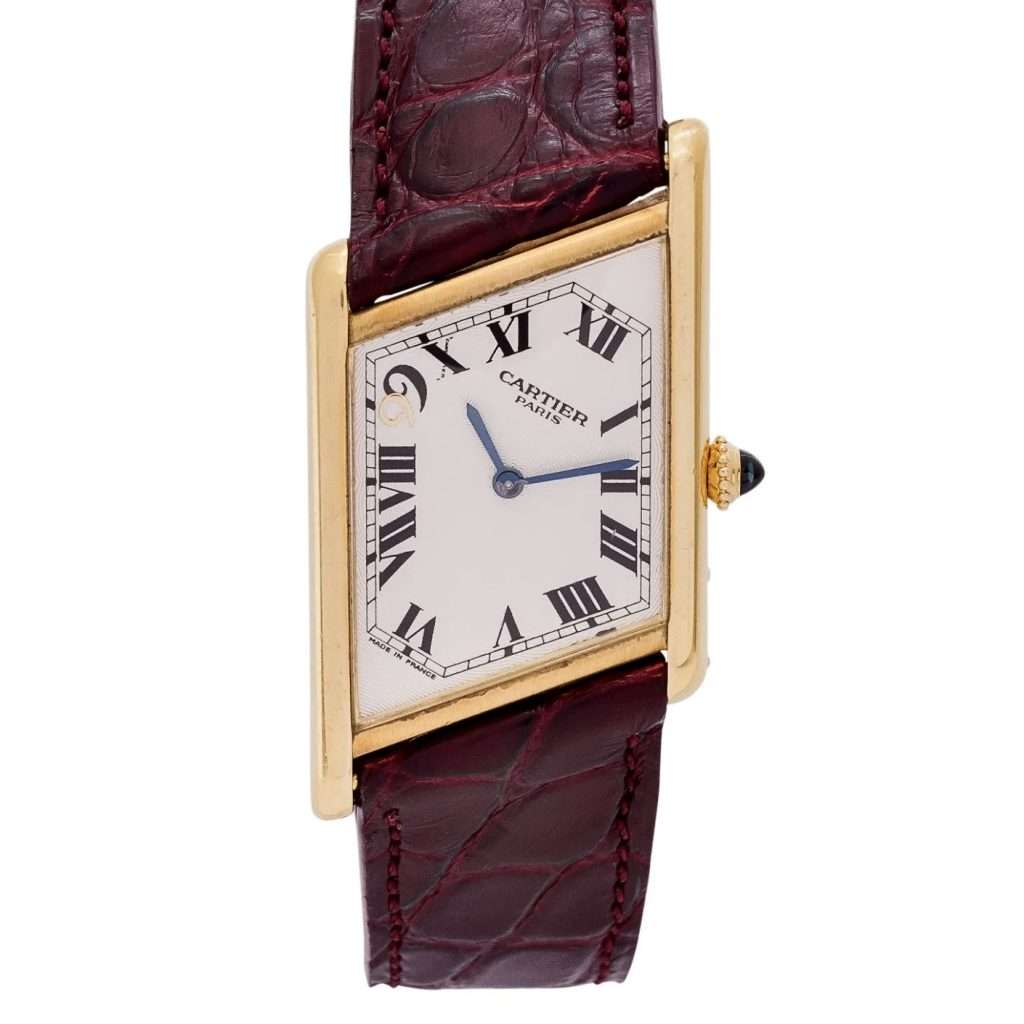
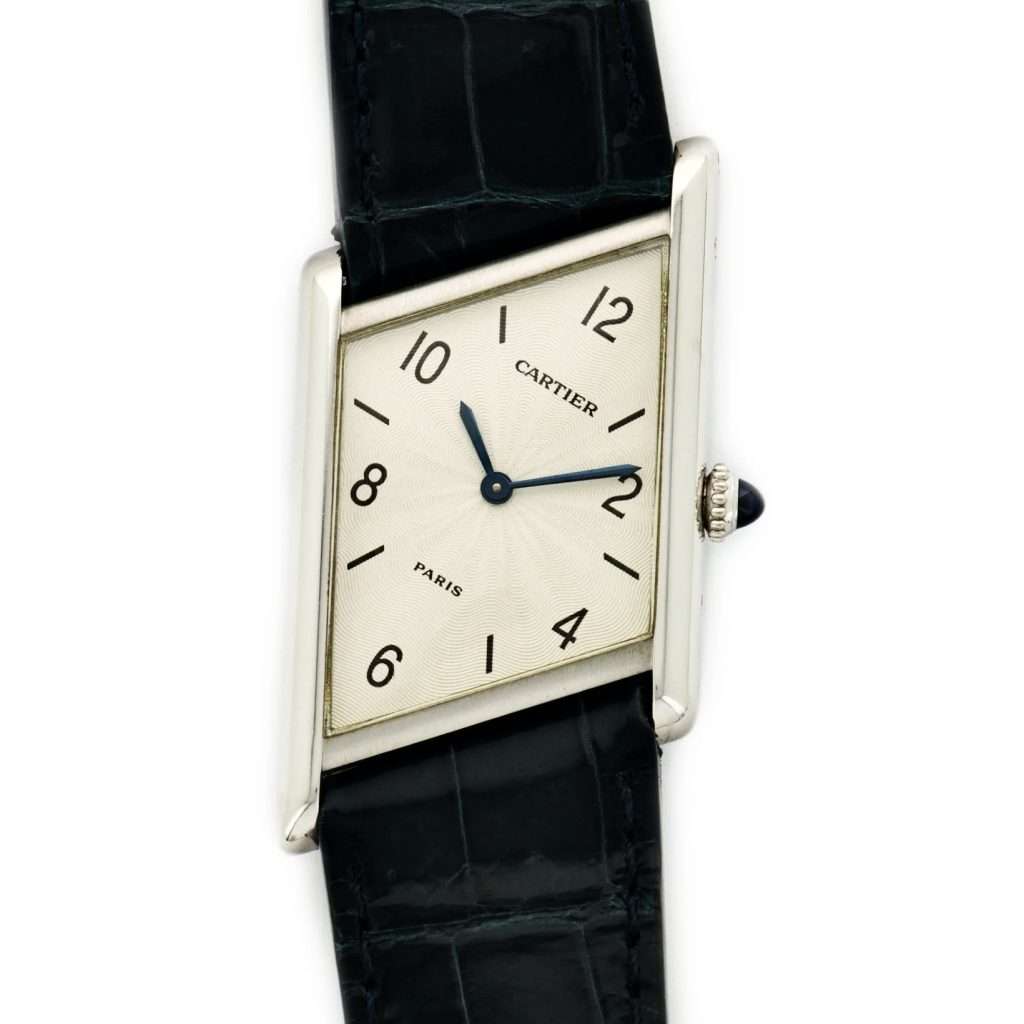
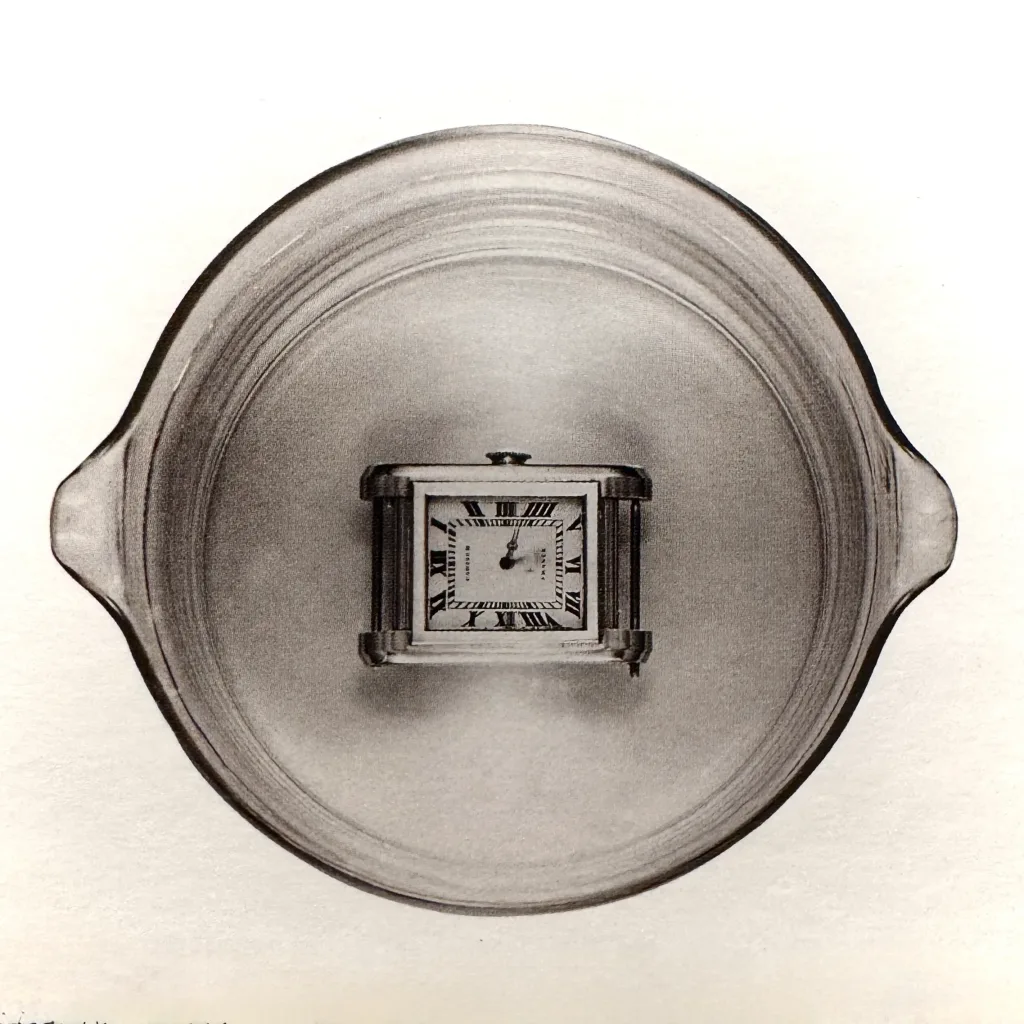
The Tank Asymétrique — originally known as the Tank Oblique or Losange — was first created in 1936 as a driver’s watch. The parallelogram-shaped case features a dial tilted diagonally, so that when the wearer’s hands are on a steering wheel, the dial reads upright.
cartier 2488 right maunder watches
Released in 1996 — technically before the formal CPCP launch in 1998, making it a “pre-CPCP” model, though it is universally grouped with the collection. The case measures 25 × 34 mm. 300 pieces were produced in yellow gold and 100 in platinum. The movement is a manual wind calibre. The dial has Arabic numerals (not Roman — consistent with the original 1936 design) tilted to follow the parallelogram orientation of the case.
Blued steel hands. Sapphire cabochon crown. The Asymétrique was launched alongside the thematic “Magical Art of Cartier” exhibition, and its bold, unconventional geometry made it one of the CPCP’s most visually distinctive models.
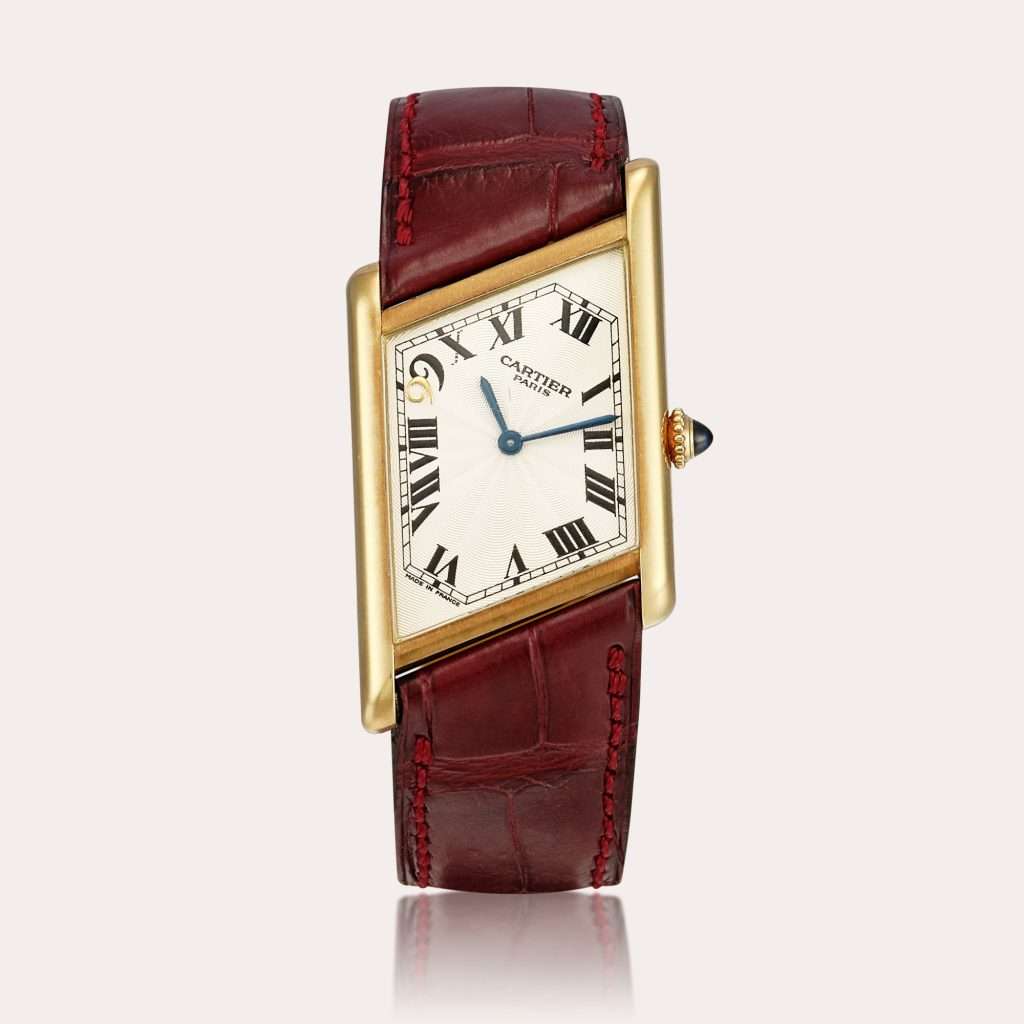
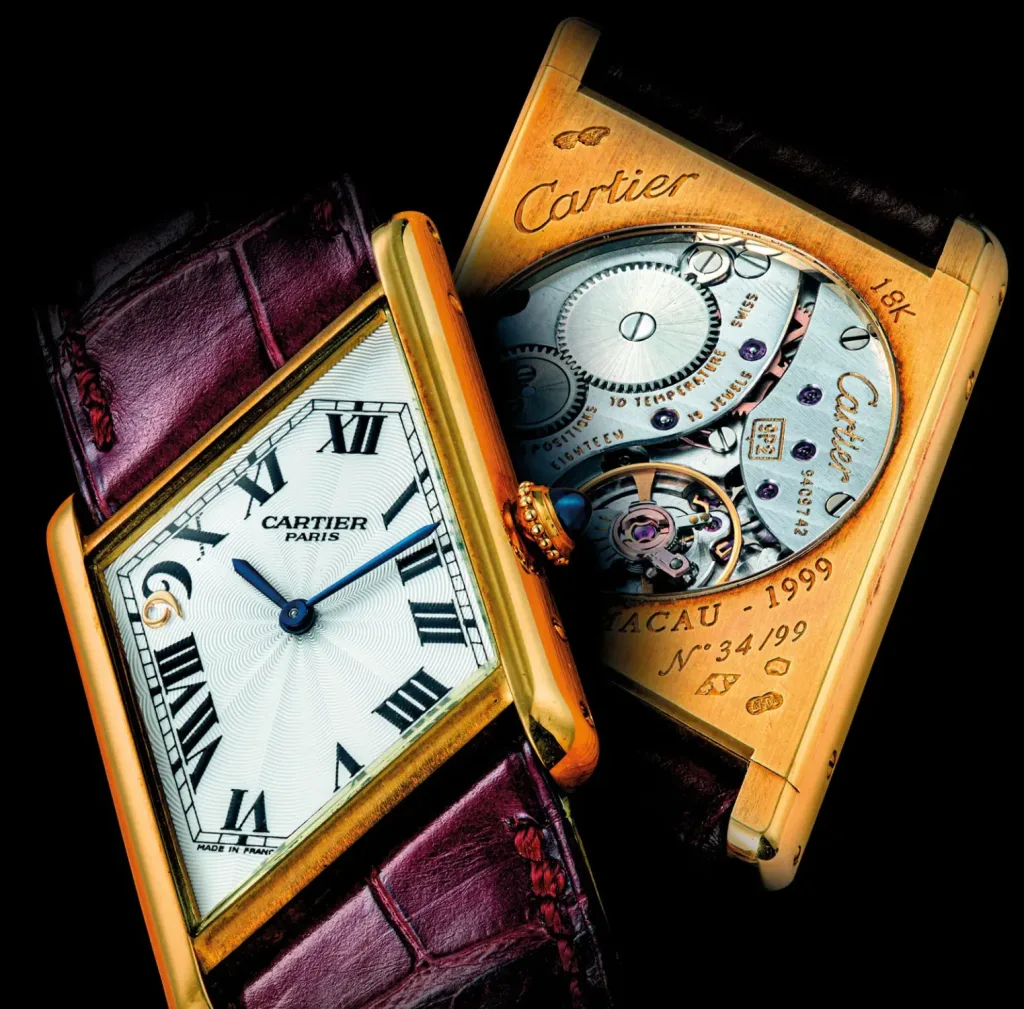
Produced to mark the handover of Macau from Portugal to China in 1999. 99 pieces in yellow gold, of which 22 are “lefties” — the parallelogram tilted in the opposite direction, with the crown on the left side — and 77 with the crown in the traditional position. The dial features the standard guilloché decoration and Roman numerals, with one distinguishing detail: the 9 o’clock marker carries an extra applied numeral in yellow gold, forming “99” — a direct reference to the production number and the year of the handover.
Sapphire caseback displaying the manual-wind Cal. 92P. Despite the Macau commemoration, this edition was available worldwide and was not exclusively distributed in Asia. The 22 left-handed examples are among the rarest configurations in the CPCP collection.
cartier asymmetrique macau 1 sotheby`s
cartier_18k_asymmetrical macau christie`s
cartier asymmetrique macau leftie phillips
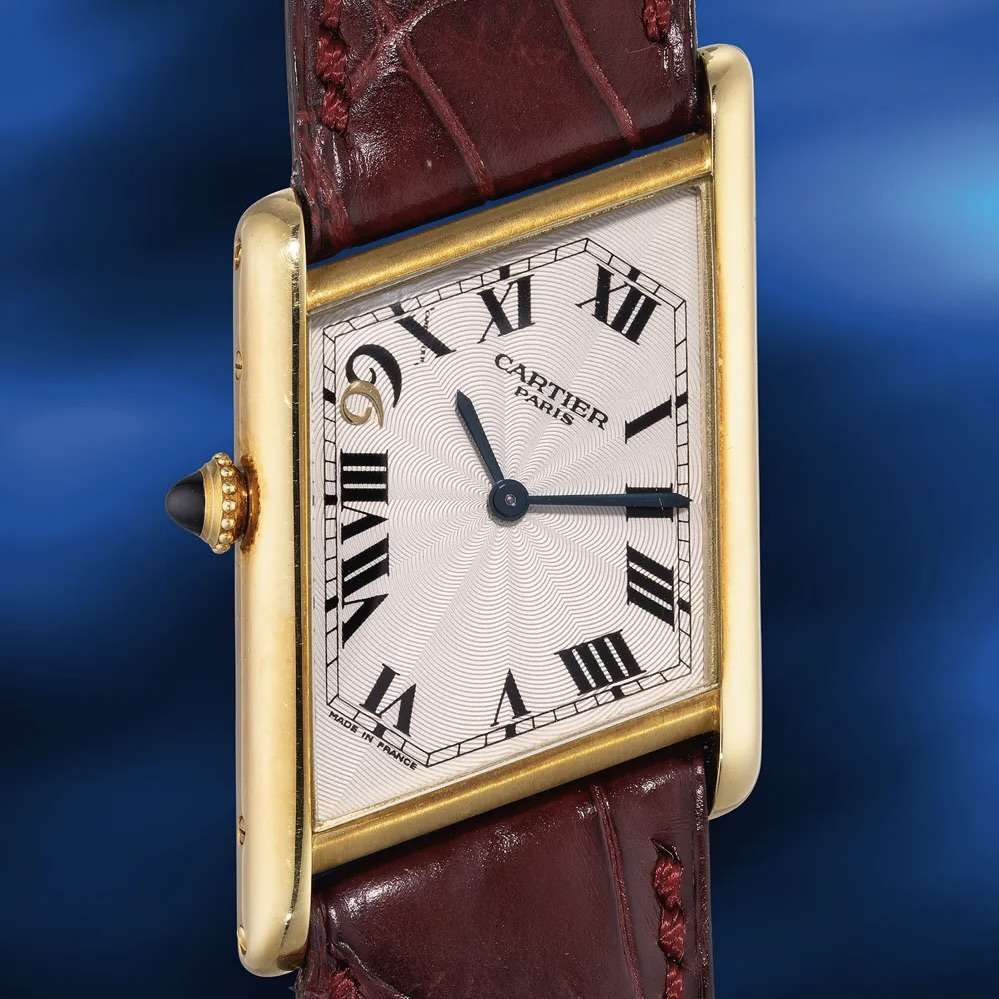
A later CPCP edition of 150 pieces in yellow gold, produced in 2006. The dial carries the full CPCP codes: guilloché decoration, “Cartier Paris” inscription, Roman numerals, and blued steel hands — distinguishing it from the 1996 launch edition, which had Arabic numerals.
Very few of the original 1936 Tank Asymétrique watches are known to survive — making the CPCP reissue effectively the only accessible version of this design. In 2020, Cartier reissued the Asymétrique again under the Cartier Privé programme, in a further limited edition.
The Tank à Vis takes its name from the French word “vis” (screw). The design is inspired by the 1931 Tank Étanche — Cartier’s first water-resistant wristwatch.
The Étanche has a rectangular case with a compressed rubber spacer between an inner and outer case, and a compressed crystal — an early and ingenious solution to waterproofing a fancy shape watch at a time when the technology was largely confined to round Oyster-type cases, a technology developed with Jaeger LeCoultre. The CPCP Tank à Vis added the four corner screws as a design reference to the Étanche, though the modern watch makes no claim to water resistance.
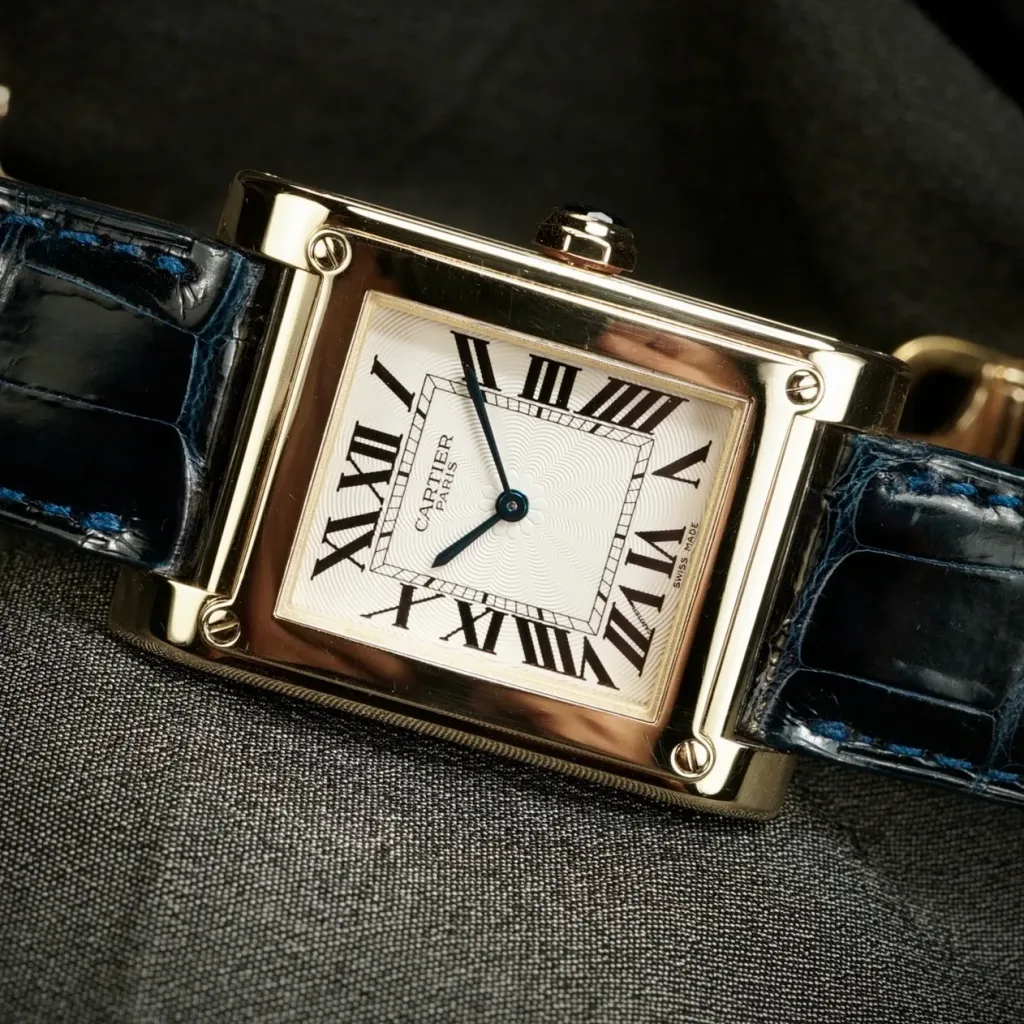
18kt yellow gold or platinum case measuring 27 × 31 mm (39 mm lug to lug), with a thickness of 8 mm. The H-shaped bezel features four screws at the corners. The movement is the Cal. 437MC, based on a Piaget ébauche, manual-wind. The dial is solid gold guilloché with rose motif, “Cartier Paris” inscription, black Roman numerals, and blued steel sword-shaped hands. Sapphire cabochon crown. Solid caseback.
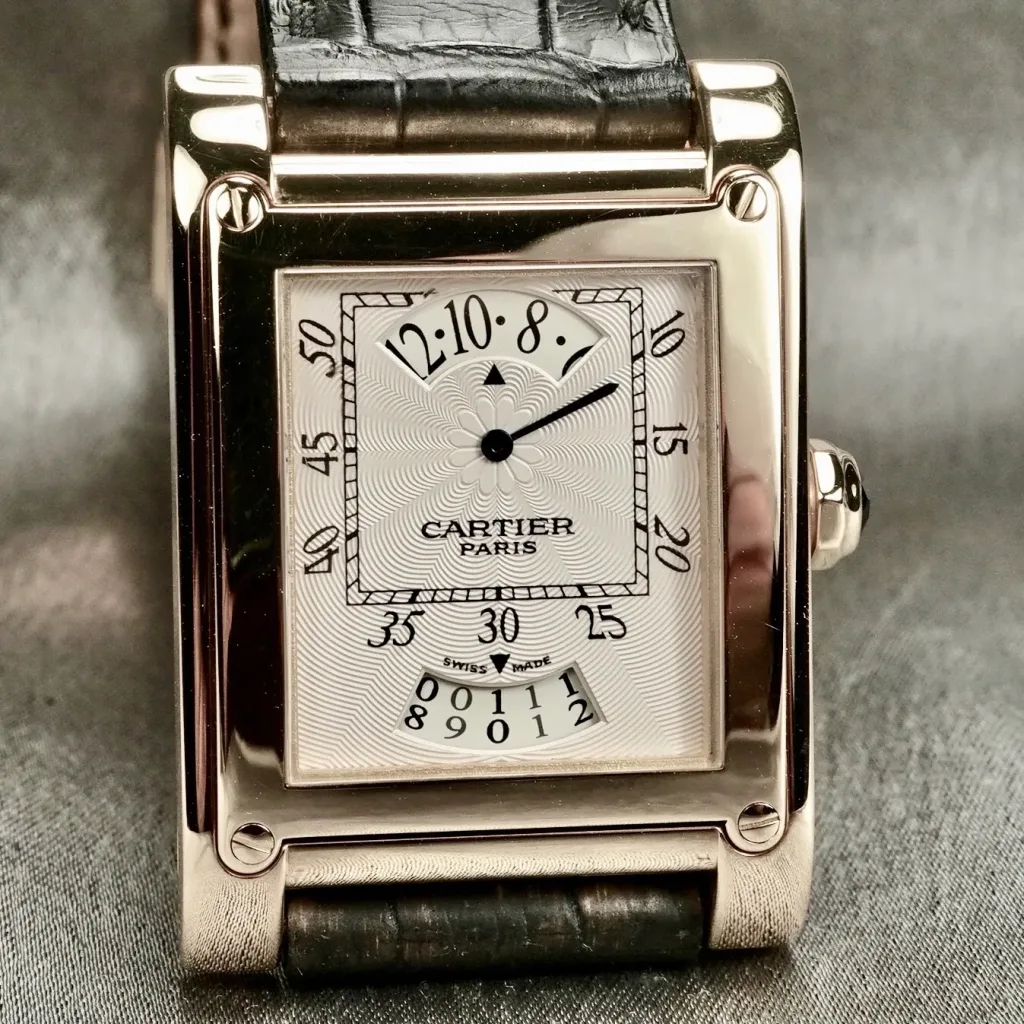
A complication variant using the Cal. 9902MC — a jump-hour movement with a wandering hours display and date window. The hour is displayed through a rectangular aperture that moves around the upper portion of the dial; the minutes are read on a retrograde arc. The case measures 28 × 40 mm. The same screw-compression crystal surround as the time-only version. This is one of the most unusual complications in the CPCP collection.
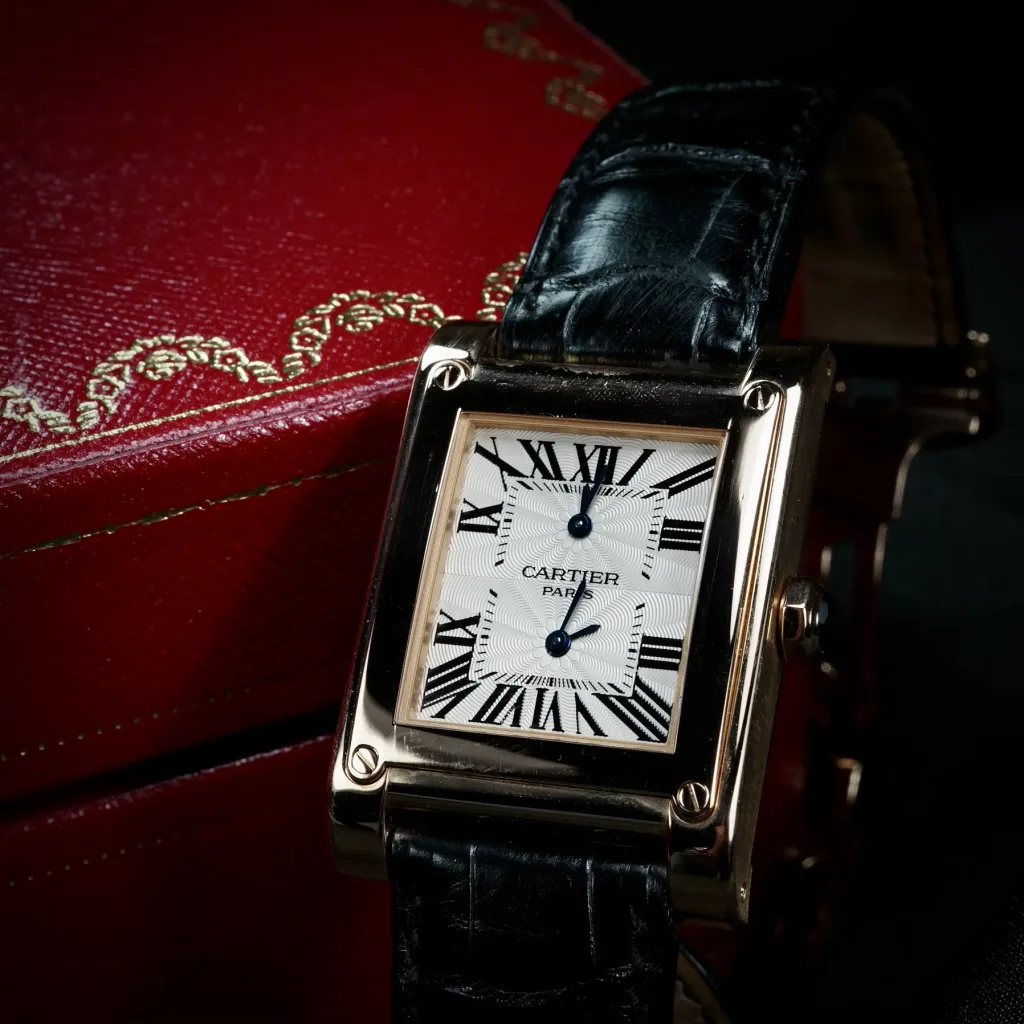
A dual-time variant powered by a single Cal. 9901MC, based on a Piaget ébauche. The watch displays two time zones on a single dial — home time on the upper section, second time zone on the lower — controlled through one crown. The first crown position independently jumps the hour hand of the lower dial; the second position adjusts time on both.
This distinguishes it from the Tank Cintrée Dual Time (ref. 2767), which houses two separate Cal. 430MC movements with two crowns. The single-crown, single- calibre solution on the Tank à Vis maintains the classic Tank silhouette without the need for a second crown.
Cartiers-Tank-Cintree-1990 phillips
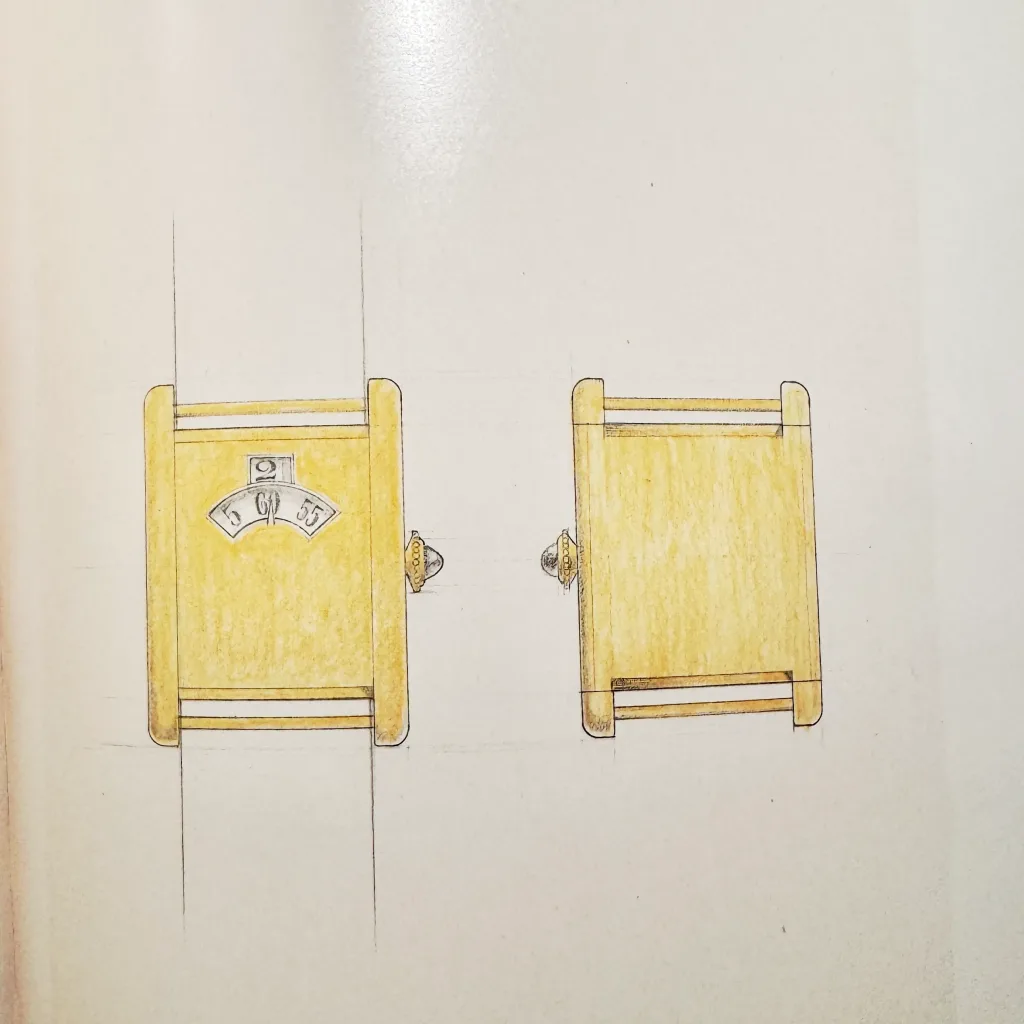
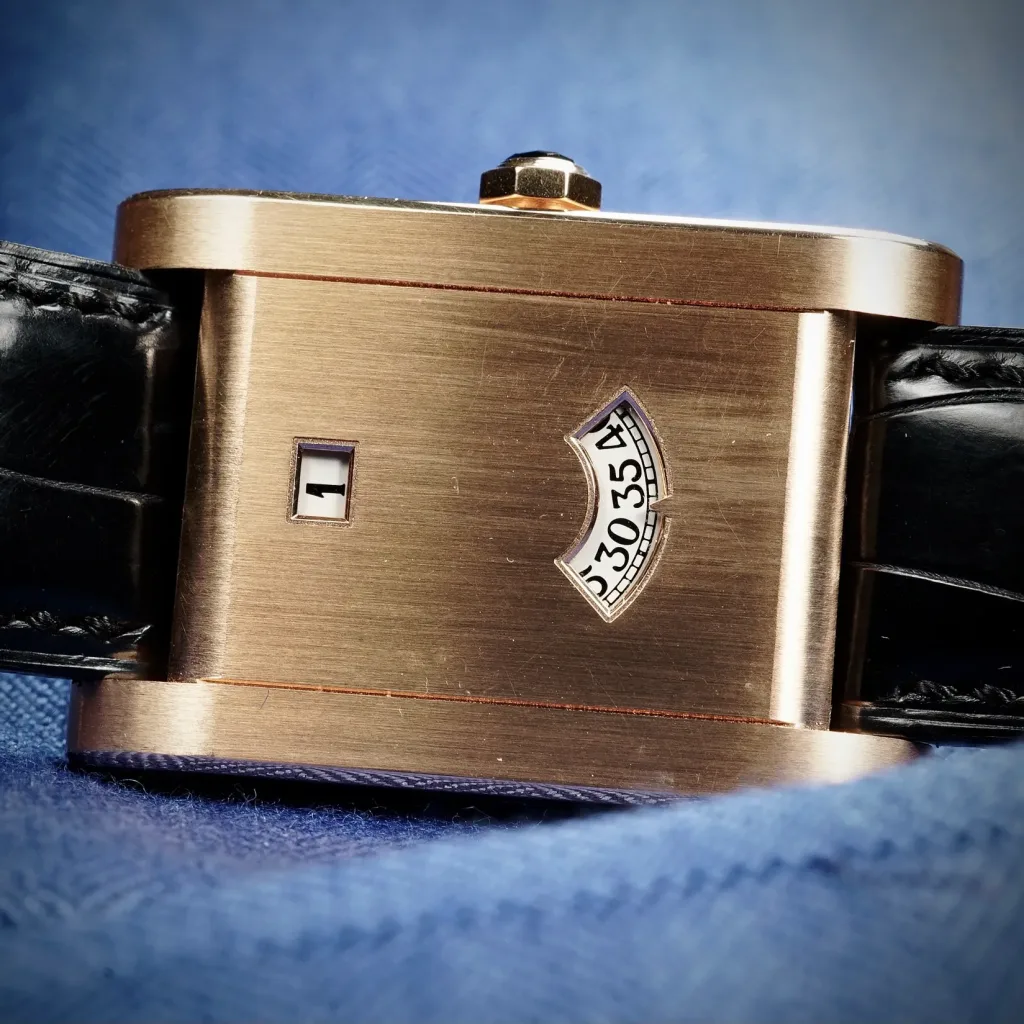
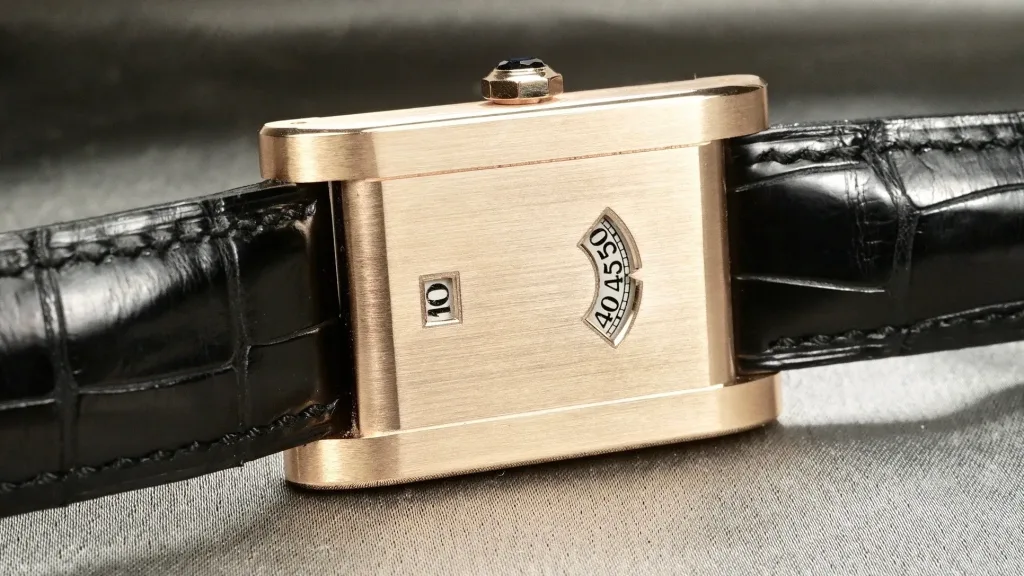
The Tank à Guichets — French for “windows” — is a jump-hour watch first produced by Cartier in 1928. The dial has no hands: the time is read through two apertures (“guichets”), one displaying the hour and the other a sweeping minute disc. It is one of the rarest and most conceptually radical watches in Cartier’s archive.
Released in 1997 for Cartier’s 150th anniversary — another pre-CPCP model universally grouped with the collection. The case measures 26 × 37 mm in rose gold or platinum. The movement is the Cal. 9752MC, based on a Piaget ébauche. A rectangular aperture at the upper half of the dial displays the current hour; an arc-shaped aperture below shows the sweeping minute disc. The top is closed — solid rose gold or platinum, with no indices, no numerals, and no hands. The crown has a red cabochon rather than the blue sapphire used on most CPCP models.
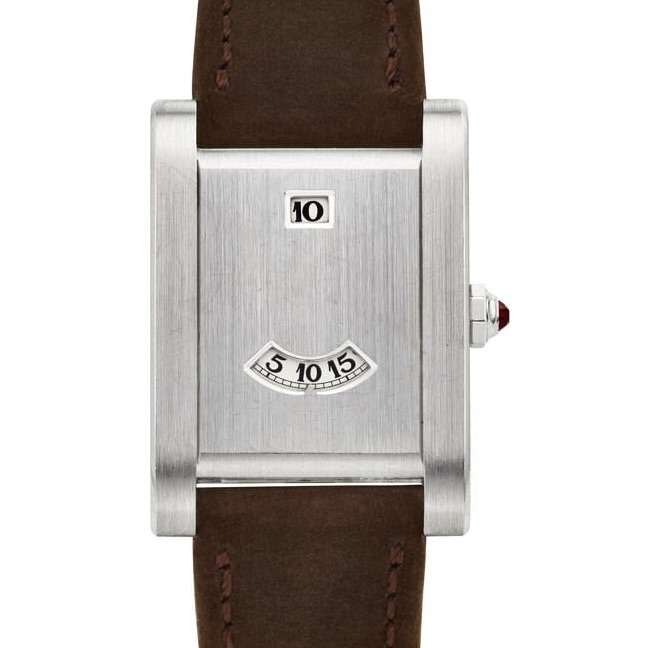
The platinum version was also limited to 150 pieces. Since the Tank à Guichets was distributed primarily to loyal Cartier collectors, few examples reach the open market. At Monaco Legend Group, a platinum tank sold for over €120,000.
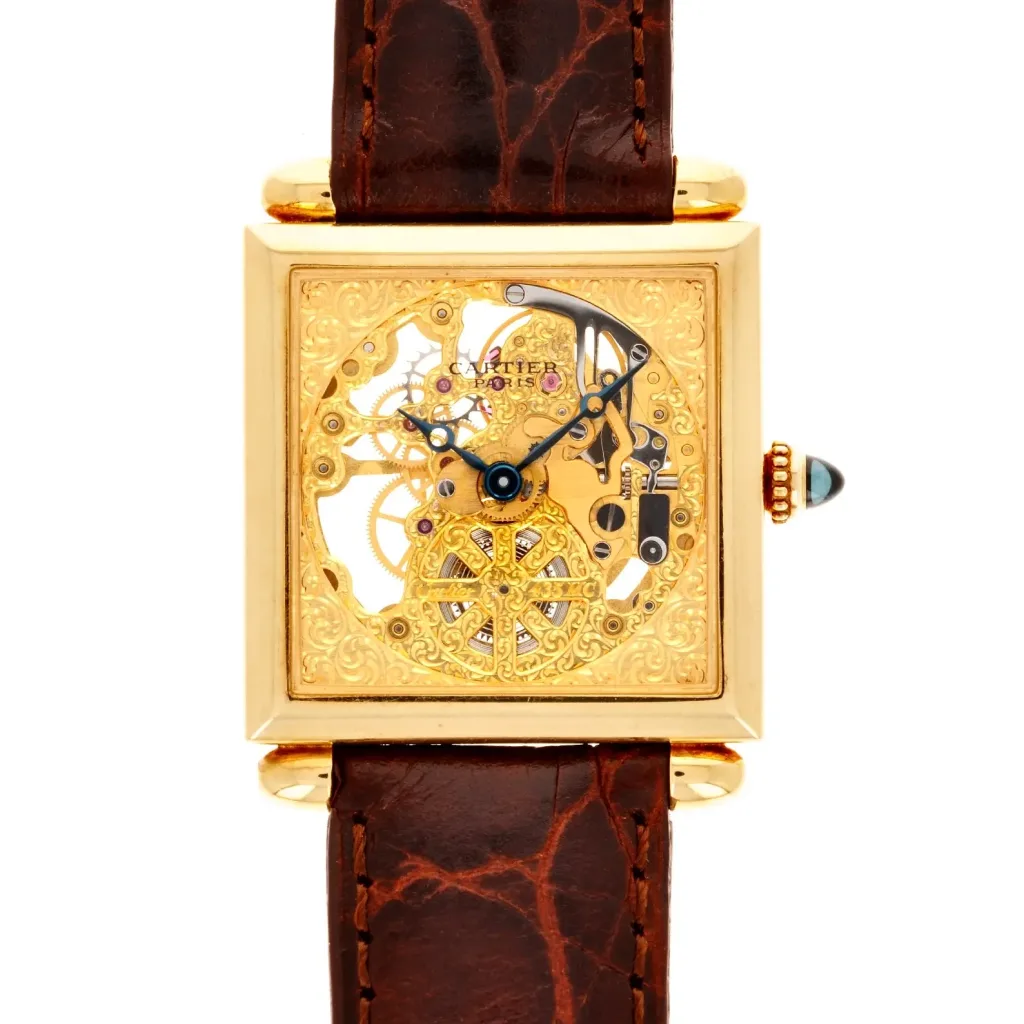
The Tank Obus was introduced in 1923. “Obus” is French for “artillery shell” — a reference to the bullet-shaped lugs that distinguish this model from every other watch in the Tank family. It is one of the very few square-cased models in the Tank collection, and its combination of a square bezel with oversized, projectile-shaped lugss gives it a silhouette that is immediately recognisable and unlike anything else. Production of the original Tank Obus was extremely limited, and the model remained dormant for decades before its inclusion in the CPCP.
cartier tank obus 2380 sotheby`s
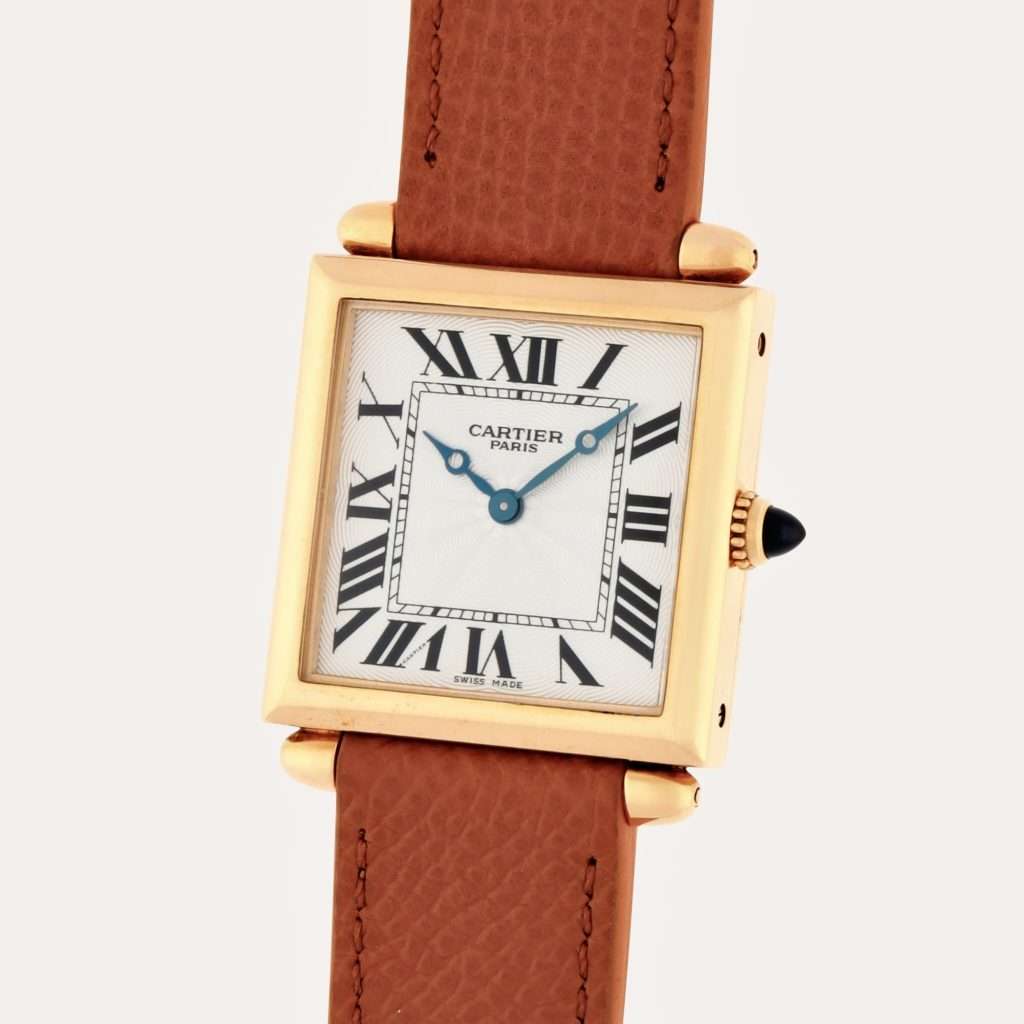
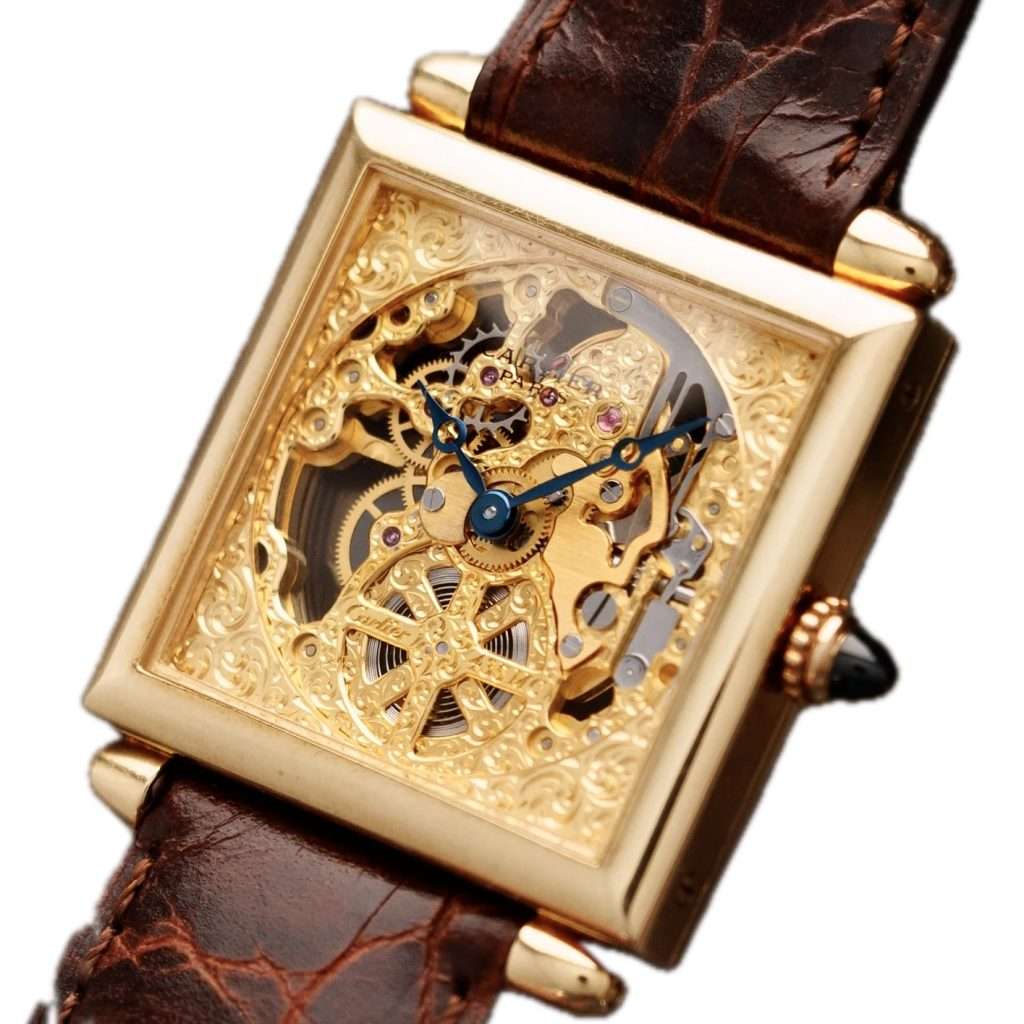
18kt yellow gold case measuring 26.5 × 33.5 mm, with a thickness of 7.6 mm. Silver guilloché dial with black Roman numerals, blued steel Breguet-style hands, secret Cartier signature at VII, and blue sapphire cabochon crown. Sapphire display caseback showing the manually wound movement decorated with Cartier’s interlocking double-C motif. Sources attribute different calibres to the ref. 2380 and its variants: Cal. 430MC (Piaget-based) for early examples and Cal. 437MC (also Piaget-based) for the ref. 2380E.
Crocodile strap with 18kt yellow gold deployant clasp. Production is estimated at 100– 150 pieces. The earliest documented purchase receipts date to 1999.
cartier tank obus 2380 keystone watches
A skeletonised variant in 18kt yellow gold, measuring 27 mm. The movement is the Cal. 435MC, a skeletonised manual-wind calibre visible through sapphire crystals on both the front and the back. The dial plate is hand-finished yellow gold with a blued steel Breguet hands. Production numbers are not confirmed but are believed to be smaller than the guilloché-dial version.
The Tank Obus was not reissued under the Cartier Privé programme that succeeded the CPCP, and it remains one of the least discussed models in the collection — produced in the smallest quantities and rarely seen.
cartier tank obus 2380 keystone watches
| Model | Ref. | Case Size | Metal | Calibre | Production | Notes |
|---|---|---|---|---|---|---|
| Tank Louis Cartier | 1600 | 30 × 24 mm | YG | 021MC (FP 21) | Est. 250–300 | |
| Tank Louis Cartier | 1601B | 30 × 24 mm | Pt | 021MC (FP 21) | Est. 250–300 | Smaller run than YG |
| Tank Américaine | 1735 | 45 × 26.5 mm | YG | 430MC (Piaget) | Est. 250–300 | |
| Tank Américaine | 1735B | 45 × 26.5 mm | Pt | 430MC (Piaget) | Limited | |
| Tank Américaine | 1734B | 45 × 26.5 mm | Pt | 430MC (Piaget) | 50 pcs | Cream guilloché dial |
| Tank Américaine | 1734D | 45 × 26.5 mm | Pt | 430MC (Piaget) | 30 pcs | Green dial, Italian market |
| Tank Américaine 150th | 1734 | 37 × 27 mm | YG | 430MC (Piaget) | 50 pcs | Silver dial, Swiss cross |
| Tank Américaine 150th | 1734 | 37 × 27 mm | Pt | 430MC (Piaget) | 30 pcs | Salmon dial, Swiss cross |
| Tank Cintrée (time-only) | 2718 | 46.3 × 23 mm | YG | 9780MC (JLC) | 150 pcs | Arabic numerals, closed back |
| Tank Cintrée (time-only) | 2843 | 46.3 × 23 mm | Pt | 9780MC (JLC) | 50 pcs | Closed back; some with WG brick bracelet |
| Tank Cintrée (time-only) | 2843 | 46.3 × 23 mm | Pt | 9780MC (JLC) | Custom order | Red Arabic numerals variant |
| Tank Cintrée Dual Time | — | 46.3 × 23 mm | Pt | 2× ETA 2412 | 50 pcs | Salmon guilloché dial |
| Tank Cintrée Dual Time | 2767 | 46.3 × 23 mm | WG | 2× ETA 2412 | 100 pcs | Black dial, WG milanese bracelet |
| Tank Cintrée Dual Time | 2768 | 46.3 × 23 mm | RG | 2× ETA 2412 | 100 pcs | Silvered dial, Asian market, Chinese characters |
| Tank Chinoise | 2684G | 28.7 × 28.2 mm | RG | 437MC (Piaget) | n.a. | Sold out by 2008 |
| Tank Chinoise | 2685G | 28.7 × 28.2 mm | Pt | 437MC (Piaget) | n.a. | Sold out by 2008 |
| Tank Basculante | 2391 | 38 × 26 mm | YG | 060MC (FP) | 365 pcs | Millennium edition, 1999–2001 |
| Tank Asymétrique | 2488 | 25 × 34 mm | YG | Manual | 300 pcs | 1996, Arabic numerals |
| Tank Asymétrique | 2488 | 25 × 34 mm | Pt | Manual | 100 pcs | 1996, Arabic numerals |
| Tank Asymétrique | 2488 | 25 × 34 mm | YG | Manual | 150 pcs | 2006, Roman numerals, guilloché |
| Tank Asymétrique Macau | 2488 | 25 × 34 mm | YG | 92P | 99 pcs | 1999; 22 lefty, 77 standard; applied “99” at 9; sapphire back |
| Tank à Vis | 2484 | 27 × 31 mm | YG | 437MC (Piaget) | n.a. | Closed back |
| Tank à Vis | 2485D | 27 × 31 mm | Pt | 437MC (Piaget) | n.a. | Closed back |
| Tank à Vis Wandering Hours | 2553 | 28 × 40 mm | YG | 9902MC | n.a. | Sapphire back |
| Tank à Vis Wandering Hours | 2554 | 28 × 40 mm | WG | 9902MC | n.a. | Sapphire back |
| Tank à Vis Dual Time | 2594 | 28 × 40 mm | RG | 9901MC (Piaget) | n.a. | Single crown, single calibre |
| Tank à Guichets | 2817 | 26 × 37 mm | RG | 9752MC (Piaget) | n.a. | Red cabochon crown |
| Tank à Guichets | 2817 | 26 × 37 mm | Pt | 9752MC (Piaget) | 150 pcs | Red cabochon crown |
| Tank Monopoussoir | 2846 | 34 × 43 mm | RG | 045MC (THA) | 100 pcs | 2007 |
| Tank Monopoussoir | 2846 | 34 × 43 mm | WG | 045MC (THA) | 100 pcs | 2007 |
The CPCP Tank variants, taken together, constitute a survey of nearly every significant Tank design produced between 1917 and 1936 — the Tank Louis Cartier (1922), the Cintrée (1921), the Chinoise (1922), the Basculante (1932), the Asymétrique (1936), the Étanche/à Vis (1931), and the à Guichets (1928). Only the Tank Normale (1917) is absent from the programme. Each reissue was executed with fidelity to the original design but with CPCP-era refinements: guilloché dials with the rose motif, “Cartier Paris” inscriptions, sapphire casebacks (where applicable), and mechanical movements sourced from the network of independent qualitative Swiss ébauche makers. The Tank Américaine — a 1989 design rather than a pre-war original — was the only modern addition to the group. For collectors, the CPCP Tanks represent the last moment when Cartier produced these historical designs using traditional movement suppliers before the transition to in-house calibres under the Fine Watchmaking Collection. In this sense, the CPCP Tanks — like the Tortue complications covered in Part 2 — are considered among the most collectable modern Cartier watches.
This concludes the three-part series on the Collection Privée Cartier Paris. A dedicated article on the Cal. 045MC and THA will follow separately.
[contact-form-7 id=”4235″ title=”Contact form 1″]